La Capitana: The Shipwreck Legend Off Ecuador’s Santa Elena Coast
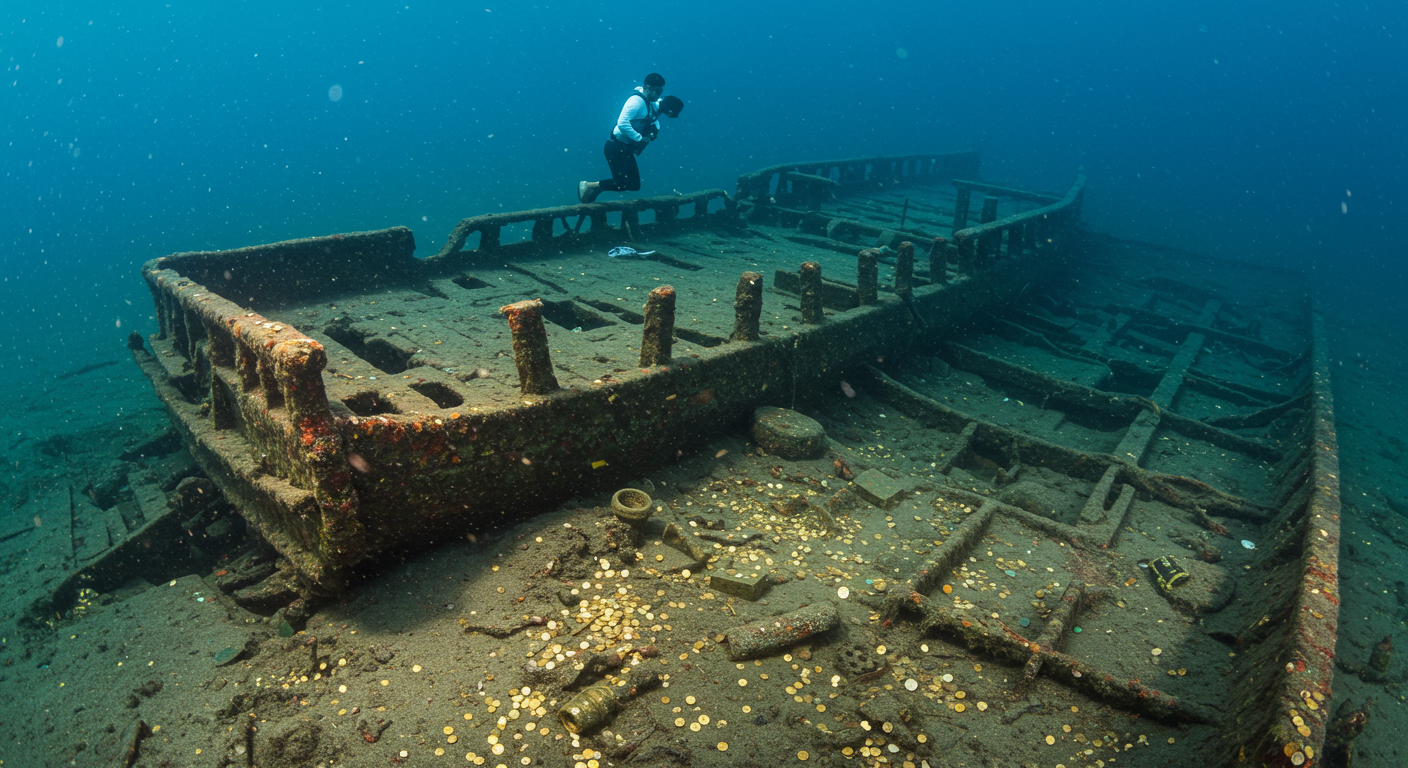
Along Ecuador’s Santa Elena coast, few old maritime stories capture the imagination quite like La Capitana. The name is commonly linked to a Spanish treasure galleon said to have sunk near present-day Chanduy in 1654, carrying enormous wealth during the colonial era.
Like many stories passed down across centuries, La Capitana exists somewhere between documented history, coastal memory, and treasure legend. The broad outline is widely repeated, but the exact details—its cargo, the location of the wreck, and how much was later recovered—often shift from one retelling to another.
The Legend of La Capitana on Ecuador’s Coast
For many people in Ecuador, especially along the coast, La Capitana is more than a shipwreck story. It has become part of the region’s folklore: a symbol of Spanish colonial trade routes, the dangers of Pacific navigation, and the irresistible mystery of wealth lost at sea.
The story is closely associated with Chanduy and the Santa Elena Peninsula, where fishing traditions, local history, and oral storytelling still shape how the past is remembered. In that sense, La Capitana survives not just as a historical event, but as a cultural legend that continues to spark curiosity among residents, travelers, and expats alike.
What La Capitana Was Carrying in 1654
La Capitana is typically described as a Spanish galleon heavily laden with treasure. Accounts often mention silver, gold, precious stones, and private fortunes moving through the colonial trade network. Some modern retellings place the value of that cargo at around $4 billion in today’s terms.
That figure should be treated carefully. It is better understood as a modern estimate repeated in popular storytelling than as a settled historical fact. Cargo lists and valuations from the era are not always presented consistently in popular accounts, and dramatic totals tend to grow as legends spread.
Even so, the core idea remains compelling: La Capitana is remembered as a vessel of exceptional wealth, which helps explain why its story has lasted so long.
How the Galleon Sank Off Present-Day Ecuador
The ship is generally said to have gone down in 1654 during a voyage along the Pacific coast of Spanish South America. In many versions of the story, the loss is tied to a storm, difficult coastal navigation, or the broader risks faced by heavily loaded treasure ships of the period.
As with other parts of the legend, the precise circumstances are not always clear. Some accounts emphasize weather, others suggest navigational trouble, and still others focus on the vulnerability of overloaded vessels carrying valuable cargo. The exact wreck position is also described inconsistently.
What remains consistent is the sense of disaster: a valuable colonial-era ship was reportedly lost off the coast of what is now Ecuador, leaving behind both historical questions and centuries of speculation.
Why the Wreck Still Captures Attention
Lost treasure stories have a special hold on coastal communities, and La Capitana is no exception. The idea that a famous galleon may have sunk near Chanduy gives the surrounding landscape an added layer of mystery. Beaches, coves, and fishing waters become more than scenery; they become part of a larger historical imagination.
For expats living in Ecuador, this kind of story is a useful reminder that the country’s coastal identity has many layers. Santa Elena is not only about sun, seafood, and shoreline life. It is also a place where colonial routes, maritime danger, and long-circulating legends remain part of the cultural backdrop.
That helps explain why La Capitana continues to draw attention. Some people are interested in the ship as history. Others are drawn by the possibility of treasure. Many simply enjoy the way the story connects the sea to the past in a vivid, memorable way.
Treasure Recoveries, Salvage, and Ongoing Mystery
Part of the legend’s staying power comes from repeated claims that treasure linked to the wreck and nearby waters has been found over time. Stories of salvage, scattered recoveries, and continuing searches have kept La Capitana alive in public conversation for generations.
At the same time, these accounts deserve caution. It is reasonable to say that the wreck has long been associated with search and recovery efforts, but much harder to confirm every dramatic claim about what was found, when it was found, and how much may still remain underwater.
That uncertainty is central to the legend. If everything had been cleanly documented and fully recovered long ago, La Capitana might be little more than a historical footnote. Instead, it remains a mystery—one that invites the same question each time it is retold: how much was truly recovered, and how much may still be lost?
What Expats Should Take From the Story
For expats in Ecuador, La Capitana is worth seeing as more than a tale of sunken riches. It offers a window into how history survives in coastal places—through fragments of documentation, local memory, and stories repeated across generations.
It also reflects something important about Ecuador’s coast itself. Communities around Chanduy and Santa Elena live at the intersection of working maritime life, colonial legacy, and folklore. A shipwreck legend like this one endures because it speaks to all three.
If the story draws you in, it helps to hold curiosity and caution at the same time. The broad narrative is powerful and plausible. The most dramatic details, however, are best treated as part of an evolving legend unless they are confirmed by archival, museum, or archaeological sources.
That balance may be the real value of La Capitana. Whether or not every treasure tale is true, the story still reveals something meaningful about Ecuador’s coast: its past is never far from the surface, and sometimes the most memorable local history is the kind that remains partly unresolved.