Josefina Barba's Warning: The Legend Behind Guaranda's Independence Eve
Josefina Barba's Warning: The Legend Behind Guaranda's Independence Eve
In Guaranda, a city tucked into the Andean highlands of Ecuador's Bolívar Province, locals sometimes speak of a woman named Josefina Barba and the warning she is said to have given on the eve of the city's independence. The story places her at the center of a skirmish at a place called Camino Real on November 9, 1820, just one day before Guaranda threw off Spanish colonial rule on November 10, 1820. It's a compelling narrative, and by the best available evidence, it's also a piece of local legend rather than confirmed historical record.
This distinction matters, and it's worth stating plainly from the outset: no independent historical, journalistic, or academic source currently confirms the existence of Josefina Barba, the battle at Camino Real, or the specific sequence of events attributed to her. What follows is an exploration of the story as it circulates in local memory, set against what is actually documented about Guaranda's path to independence.
A Legend from the Eve of Guaranda's Independence
The year 1820 was a turning point across what is now Ecuador. Patriot movements rose up in cities and towns throughout the region, part of a broader wave of resistance against Spanish colonial authority that would eventually culminate in full independence. Guayaquil's declaration of independence on October 9, 1820 is often cited as the spark that encouraged similar uprisings inland, and Guaranda's own independence on November 10, 1820 fits within this pattern of cascading local revolts.
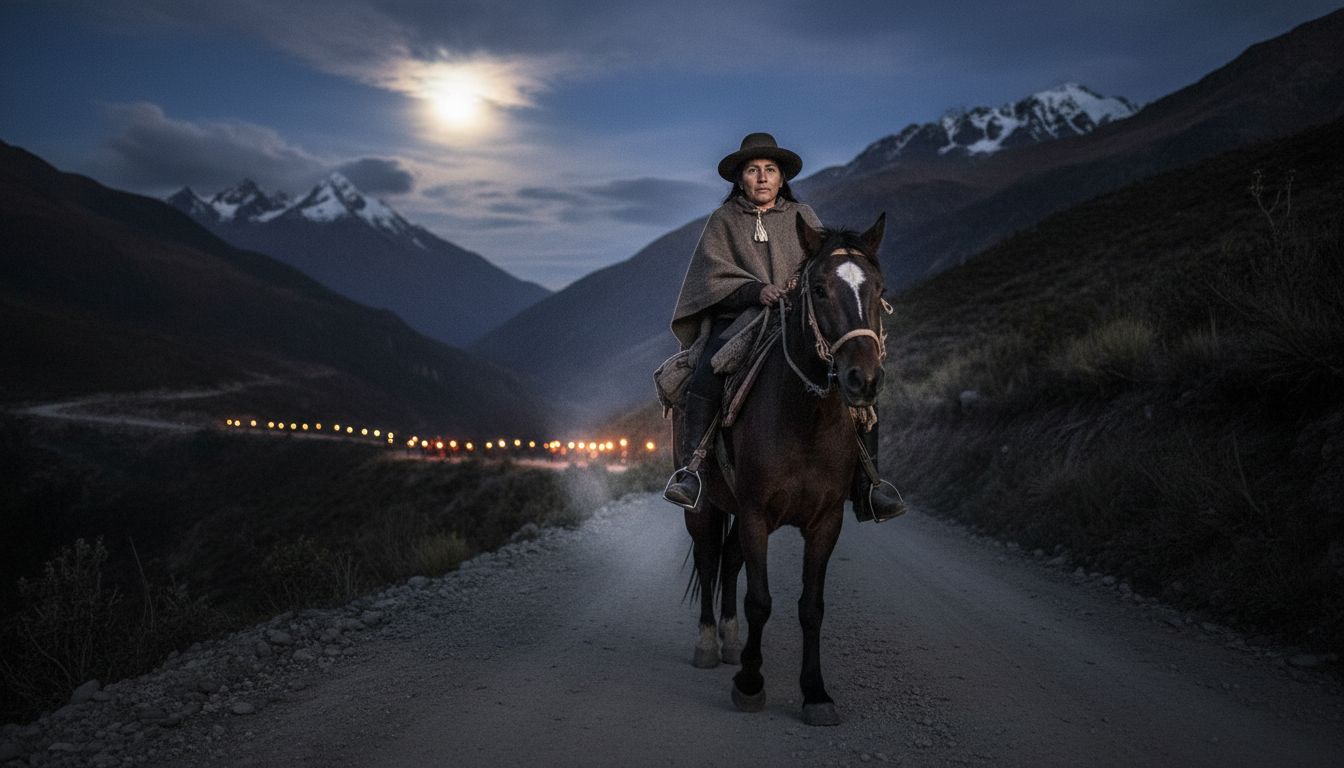
It's within this charged atmosphere that the story of Josefina Barba is said to take place. According to local tradition, on November 9, 1820, a day before Guaranda's formal break from colonial rule, a woman by this name delivered a timely warning to Patriot forces that allegedly helped them prevail in a confrontation at a location known as Camino Real. Many who share this story treat it as a point of local pride, an intimate human moment layered onto the larger, documented history of independence.
Yet it should be understood as oral tradition first and foremost. Stories like this one often arise in the space between documented history and community memory, filling in emotional and narrative gaps that formal records leave open.
The Claimed Battle at Camino Real
As the story is passed down, the events at Camino Real on November 9, 1820 involved some kind of armed encounter between Patriot forces and colonial troops or sympathizers, with Barba's warning credited as a decisive factor in the outcome. The details vary depending on who tells it, a common feature of oral histories that have been passed through generations without the anchoring effect of written documentation.
A reasonable question follows: did this battle actually happen? At present, there is no corroborating evidence in historical archives, academic studies, or journalistic accounts confirming a battle at Camino Real on this date, or naming Barba as a participant. This absence doesn't necessarily mean the event was fabricated. Many local skirmishes during this turbulent period went unrecorded, especially those involving ordinary residents rather than formally commissioned military units. If such an encounter did occur, it would fit plausibly into the broader pattern of Patriot resistance that defined the weeks surrounding Guaranda's independence, even without a surviving documentary trail.
Who Was Josefina Barba?
Local tradition offers few concrete details about Josefina Barba beyond her alleged act of warning Patriot forces. She is sometimes described as a local resident with ties to the area around Camino Real, someone whose ordinary position in the community gave her access to information that proved militarily useful. Beyond this, the record, such as it is, remains thin.
No birth records, contemporary accounts, or later historical studies have been identified that name her specifically or detail her actions with any verifiable precision. This isn't unusual. Figures like Barba often emerge in regional lore as symbolic stand-ins for the collective contribution of ordinary people, particularly women, whose roles in independence movements were rarely documented with the same care given to military commanders and political leaders. Whether or not a historical Josefina Barba existed exactly as described, the persistence of her story reflects a community's desire to honor the quieter, less visible forms of resistance that surely accompanied the more formally recorded events of 1820.
From Camino Real to Guaranda's Independence Day
What is documented with reasonable historical confidence is that Guaranda achieved independence from Spanish colonial rule on November 10, 1820, part of the broader Ecuadorian War of Independence that would eventually see the region incorporated into Gran Colombia. The legend of Josefina Barba's warning the day before this milestone creates a tidy narrative arc: an unsung act of courage setting the stage for a documented triumph.
It's worth considering why this particular sequence resonates so strongly in local memory. Connecting an intimate, personal act of warning to a larger documented historical event gives the community a sense of agency and continuity, a way of seeing ordinary residents as active participants in, rather than passive witnesses to, the forces of history. A recurring theme in oral tradition generally is this blending of the unverified and the documented, where legend fills in the emotional texture that formal records often leave flat. This doesn't make the legend true in a factual sense, but it illuminates why such stories persist and are retold.
Legend, Memory, and the Expat Lens
For expats and newcomers settling in Guaranda, encountering a story like this one can be an early lesson in how local identity is constructed. Communities throughout Ecuador, and indeed across Latin America, maintain rich oral traditions that run parallel to, and sometimes diverge from, the official historical record. These stories aren't lesser forms of history; they're a different kind of historical resource, one that reveals what a community values and remembers even when it can't be fully verified.
Approaching the story of Josefina Barba with curiosity rather than skepticism alone allows newcomers to appreciate it on its own terms. It's less important to definitively prove or disprove the battle at Camino Real than to understand why this particular legend has endured, what it says about local pride in the events of November 1820, and how it connects residents today to the broader, well-documented story of Guaranda's independence. Readers encountering this story for the first time are invited to hold it as what it is: a vivid thread in Guaranda's living cultural heritage, worth sharing and preserving, even as it remains, for now, outside the boundaries of settled historical fact.