Isabel Godin of Riobamba: The Woman Who Crossed the Amazon Alone
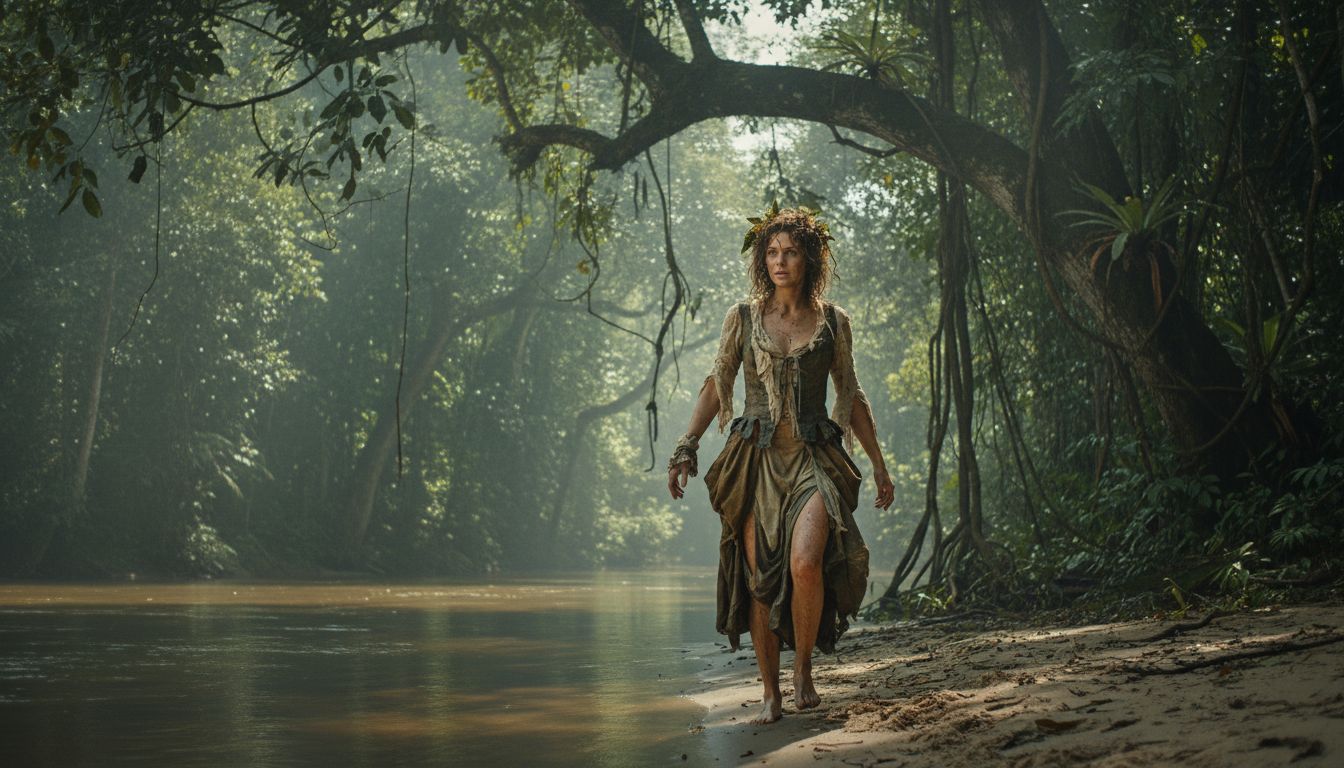
Isabel Godin of Riobamba: The Woman Who Crossed the Amazon Alone
Few stories tied to Riobamba carry the dramatic weight of Isabel Godin des Odonais, a woman whose name is often invoked in Ecuadorian and expatriate lore as a symbol of endurance. Her tale, set in the eighteenth century, is widely retold but unevenly documented. Historians who have studied the period note that the version passed down today likely blends verified history with embellishment accumulated over two and a half centuries of storytelling.
A Marriage Separated by an Ocean and an Empire
Isabel Godin was born into a prominent family in Riobamba, then part of the Royal Audiencia of Quito under Spanish colonial rule. She married Jean Godin des Odonais, a French scientist who had arrived in the region as part of the French Geodesic Mission, an expedition sent to measure the shape of the Earth near the equator in the 1730s and 1740s.
Following the completion of the mission's scientific work, Jean became entangled in the complexities of colonial bureaucracy and travel restrictions that made a return to Riobamba exceedingly difficult. Over time, he settled in French Guiana, separated from his wife by both geography and the political constraints of the era. What is generally understood is that the couple remained apart for roughly two decades, corresponding when possible but unable to reunite.
The Decision to Cross a Continent
By 1769, Isabel resolved to attempt what was, for the time, an extraordinary undertaking: a journey from the Andean highlands around Riobamba, across the mountains, and then down the Amazon basin toward French Guiana, where her husband waited. The scale of this journey should not be understated. It required traversing difficult mountain terrain before committing to river travel through dense, largely uncharted rainforest.
Historical accounts suggest she did not travel alone but set out with an extended party that reportedly included relatives, servants, and guides, a detail that underscores how seriously the expedition was planned and resourced. That said, precise dates, the exact route taken, and the size of the traveling party vary considerably across different historical retellings, and these specifics should be approached as part of an evolving oral and written tradition rather than settled fact.
Catastrophe on the River
What is consistently described across most versions of the story is that the journey turned disastrous. Members of the expedition are said to have succumbed to illness, exhaustion, and the general disorientation that dense rainforest terrain can impose on travelers unfamiliar with the environment. Over the course of the journey, companions reportedly died or vanished, one by one, until the group's numbers dwindled dramatically.
A recurring theme in retellings is the isolation and growing desperation felt by the remaining travelers as their situation deteriorated. However, specific causes of death and precise casualty figures are not consistently reported across sources and should be treated as part of the narrative's lore rather than confirmed historical record.
The Sole Survivor
According to the widely circulated account, Isabel Godin emerged as the only member of her traveling party to survive the ordeal. Her reported resourcefulness and endurance in the aftermath, navigating alone or with diminishing support after losing her companions, form the emotional core of the story as it has been passed down.
Accounts suggest she was eventually found and assisted by local inhabitants or other travelers along the river, who helped her recover and continue toward her destination. The psychological and physical toll of surviving such an experience alone in the jungle is often emphasized as central to why the story has endured, even as many of its specific details remain difficult to verify independently.
Reunion and Legacy
Isabel Godin is said to have eventually reunited with her husband, Jean Godin des Odonais, in French Guiana, bringing an end to their decades-long separation. Their later life together, and the gradual spread of Isabel's story to a wider audience, contributed to the narrative becoming known well beyond the region where it originated.
The story is often situated within the broader context of eighteenth-century scientific exploration and the personal hardships faced by those connected to expatriate and colonial life during that era. Many observers regard it as a remarkable survival narrative, one that speaks to themes of resilience and determination that resonate with expatriate experiences more broadly. At the same time, the gaps and inconsistencies in the historical record are worth acknowledging, as they remind readers that much of what circulates today reflects generations of retelling as much as documented fact.