I Was Abducted by Bigfoot, Twice
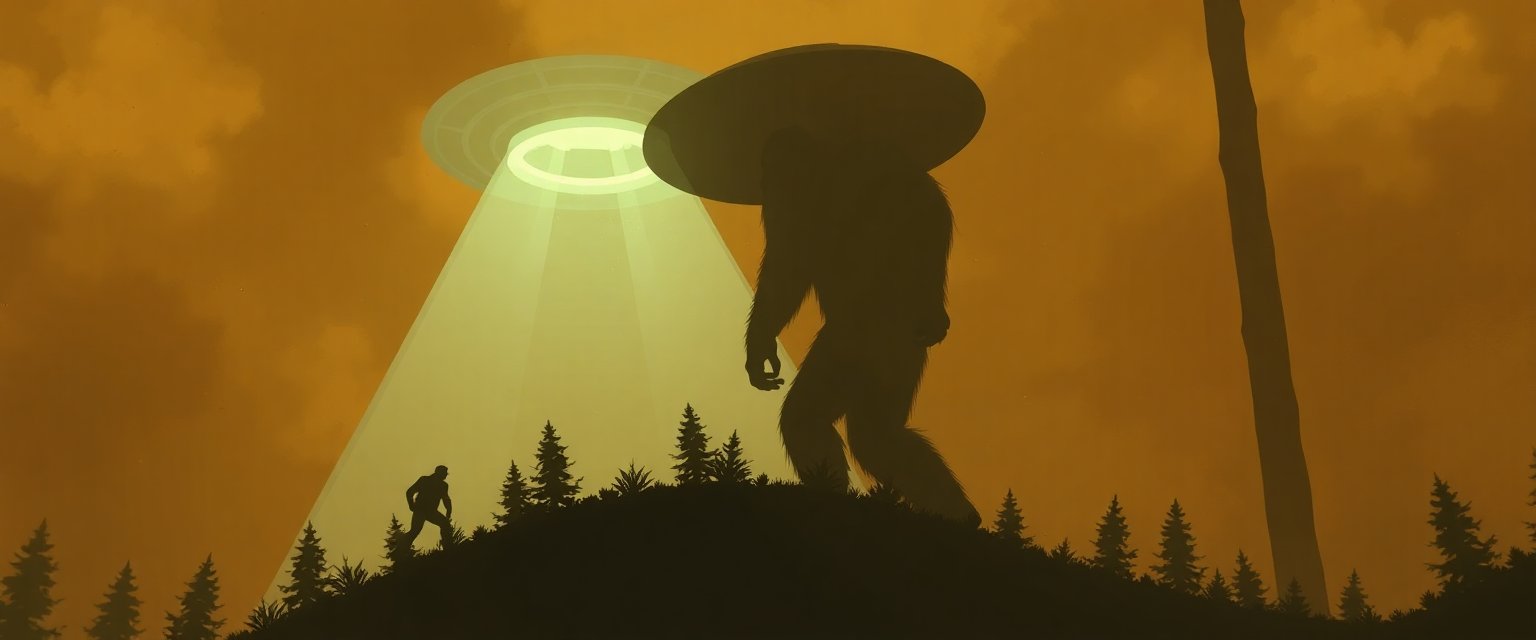
When I moved to the Pacific Northwest from Europe three years ago, I expected challenges—navigating healthcare systems, understanding tax codes, maybe struggling with regional slang. What I didn't expect was to become intimately acquainted with one of America's most enduring cryptids. Twice.
As an expat, you learn to question your assumptions about what's normal. But some experiences push far beyond cultural adjustment into territory that defies explanation entirely.
Setting the Scene: Life as an Expat in the Pacific Northwest
My relocation from London to rural Washington State was driven by work—a software consulting contract that promised mountain views and a slower pace of life. The reality delivered on both fronts, along with an unexpected immersion into a landscape unlike anything I'd known.
The forests here are different from European woodlands. They're older, denser, more primordial. Towering Douglas firs create cathedral-like spaces where sound behaves strangely and shadows shift in ways that can trick the eye. Local conversations casually reference "Sasquatch country" with a mixture of humor and genuine respect that took me months to understand.
As an outsider, I approached these references with typical European skepticism tinged with anthropological curiosity. Indigenous peoples of the region have rich traditions surrounding forest entities, and European settlers brought their own folklore that eventually merged into the modern Bigfoot phenomenon. I found it fascinating from a cultural perspective—until culture collided with personal experience.
The First Encounter: When Logic Met the Impossible
It happened during my second autumn here, on a hiking trail I'd grown comfortable with near Mount Baker. The afternoon was crisp, visibility excellent, and I was about two miles from the trailhead when the forest went unnaturally quiet.
The silence struck me first—no bird calls, no rustling, nothing. Then came a smell I still struggle to describe: musky, organic, but not like any animal I knew. Sweet and sour simultaneously, with an undertone that made my sinuses burn.
I remember turning toward a stand of old-growth cedars and seeing movement that didn't match the wind patterns. Something large, dark, moving with deliberate purpose between the trees. My rational mind immediately began cataloging possibilities—bear, elk, another hiker in dark clothing. But the proportions were wrong, the gait was wrong, everything was wrong.
What happened next challenges every framework I use to understand reality. I remember a sense of time distortion, of being observed by something intelligent, and then—nothing. A gap. I found myself three hours later, sitting on a fallen log nearly a mile off-trail, with no memory of how I'd gotten there. My backpack was beside me, contents undisturbed but reorganized in a way I would never have done.
The rational explanations came quickly: dehydration, altitude effects, a minor medical episode. I'm a logical person by training and temperament. But logic felt inadequate to address the lingering sensations—the feeling of having been carried, examined, then gently returned.
Living with the Unbelievable: Between Encounters
Sharing the experience proved nearly impossible. My family back in London received my tentative account with concerned suggestions about stress and adjustment difficulties. Local acquaintances, when I finally worked up courage to mention it, responded with knowing nods that somehow made me feel worse rather than better.
I dove into research as a coping mechanism. The Pacific Northwest has a rich history of Sasquatch encounters, from indigenous traditions predating European contact to modern eyewitness accounts that follow remarkably consistent patterns. The Lummi, Quinault, and other regional tribes speak of forest beings with matter-of-fact acceptance that contrasts sharply with the sensationalized treatment in popular media.
My behavior changed in ways I didn't initially recognize. I stopped hiking alone. When I did venture into the woods, I stuck to popular, well-traveled trails. I found myself checking over my shoulder constantly and feeling genuinely anxious in environments I'd previously found peaceful.
The isolation was perhaps the worst part. As an expat, you're already somewhat outside normal social circles. Adding an inexplicable experience that sounds like either delusion or attention-seeking creates another layer of separation. I felt caught between two communities—my origin culture that had no framework for such experiences, and my new home where the frameworks existed but came with baggage I wasn't prepared to carry.
The Second Time: Confirmation or Coincidence?
Fourteen months later, I'd convinced myself the first incident was some combination of environmental factors, stress, and an overactive imagination influenced by local folklore. I'd returned to solo hiking, though never without my phone fully charged and multiple people aware of my planned route.
The second encounter happened in a completely different location—a trail system near North Cascades National Park that I'd never visited before. I was photographing fall colors when I noticed I was being followed.
This time, there was no time gap, no memory loss. I observed clearly as a large, bipedal figure paralleled my path through the forest, staying perhaps fifty yards away but making no attempt at concealment. The creature—I struggle with terminology here—moved with an economy of motion that suggested familiarity with the terrain. It was easily eight feet tall, covered in dark hair or fur, with proportions that were humanoid but scaled beyond any human variation.
We observed each other for what felt like hours but was probably no more than ten minutes. I remember feeling curious rather than afraid, as though the fear response had been somehow dampened. When I finally looked away to check my camera settings, it was gone. No sound of departure, no trace of passage through the underbrush.
This time, I had evidence—or thought I did. My camera had malfunctioned during the encounter, producing only corrupted files despite working perfectly before and after. My GPS showed inconsistencies in the timeline that suggested either equipment failure or something interfering with satellite signals.
Making Sense of the Unexplained as an Outsider
Processing these experiences as an expat has been uniquely complicated. My cultural background provides no context for such encounters—they simply don't exist in British folklore or modern European worldview. Yet living here, I've discovered that dismissing them entirely means dismissing not just my own experiences but the traditions and accounts of indigenous peoples and long-term residents.
The reactions from my two communities couldn't be more different. Family and friends back home respond with concern for my mental health or suggestions that I'm "going native" in ways that compromise my judgment. Local acquaintances, particularly those from indigenous backgrounds, listen with respect and share their own family stories or cultural knowledge that puts my experiences in broader context.
I've learned that being an outsider can be an asset when processing unexplained experiences. I have no social investment in either believing or disbelieving. I'm not carrying generational trauma or cultural expectations about what encounters should mean. I can approach these experiences as data points rather than validation or challenge of existing belief systems.
Three years later, I continue hiking in these forests. I've had no further encounters, but I remain alert to possibilities my previous life never required me to consider. I've developed a healthy respect for indigenous knowledge systems that acknowledge realities beyond current scientific understanding.
Do I believe I was abducted by Bigfoot twice? The terminology feels inadequate. Something happened during those encounters that challenged my understanding of what's possible. Whether that something aligns with popular cryptozoology, represents phenomena science hasn't yet explained, or reflects aspects of consciousness I don't understand—I can't say.
What I can say is that living as an expat teaches you to hold multiple realities simultaneously. The reality of your origin culture, the reality of your adopted home, and the personal reality of your own experiences. Sometimes those realities contradict each other. Sometimes that's okay.
The Pacific Northwest has taught me that some mysteries are worth living with rather than solving. As an outsider looking in, maybe that's the most valuable lesson of all.