Hunters Sheltered in Sígsig's Cueva Negra de Chobshi 10,000 Years Ago, 62 Kilometers From Cuenca
Hunters Sheltered in Sígsig's Cueva Negra de Chobshi 10,000 Years Ago, 62 Kilometers From Cuenca
A Detour Toward Sígsig
Most weekend trips out of Cuenca follow familiar routes: south to Loja, west to the coast, or up into Cajas National Park. On this particular Saturday, the plan was simpler and less charted—a drive southeast into Azuay Province toward the small town of Sígsig, about 62 kilometers away. The road climbs and dips through classic Andean highland terrain, with patchwork fields, eucalyptus groves, and views that open suddenly onto deep valleys before closing again around the next bend.
Sígsig is best known to many visitors as one of the birthplaces of the so-called Panama hat, where generations of weavers have shaped toquilla straw into fine hats by hand. Less advertised, at least to newcomers, is the town's other claim to distinction: it sits near one of the oldest known sites of human habitation in Ecuador. That combination—straw hats and deep prehistory—made the detour feel worth the drive.
Arriving at Cueva Negra de Chobshi
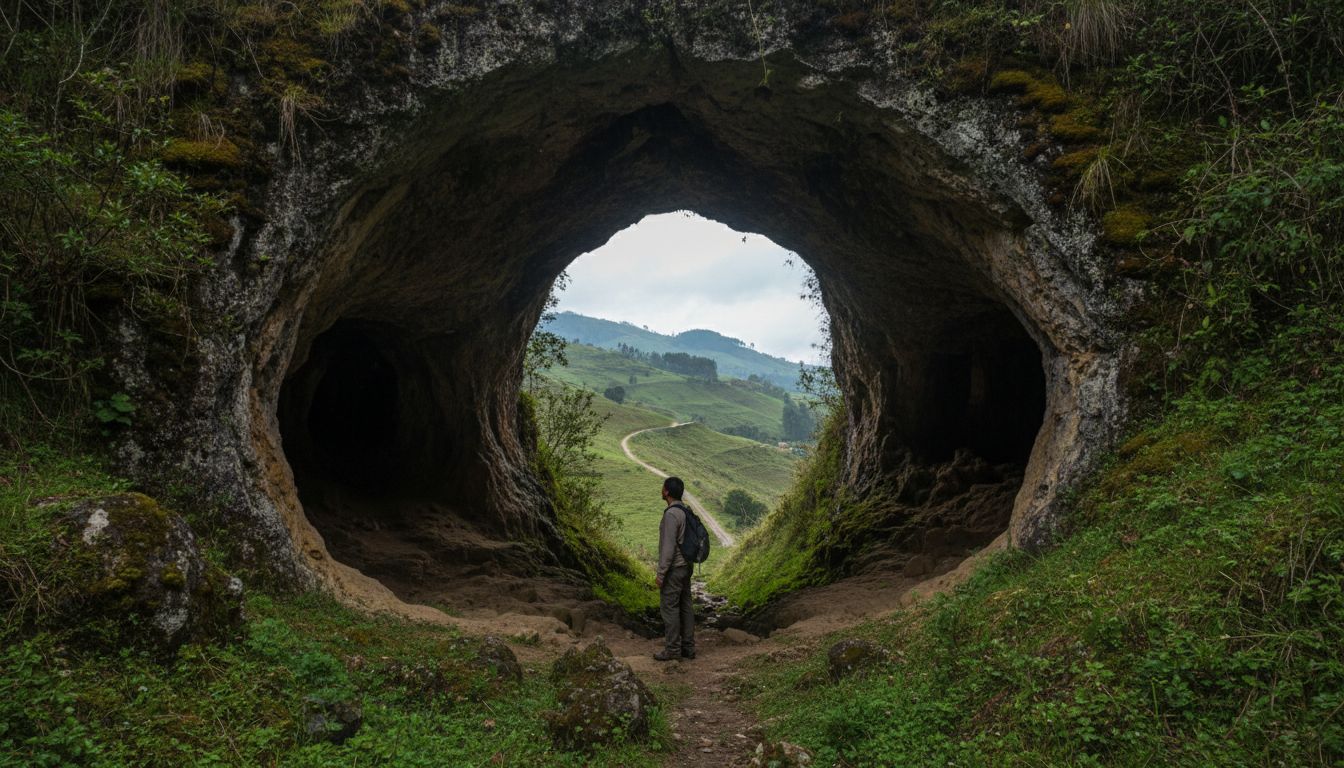
A short distance outside the town center, the road narrows toward a rocky outcrop where the Cueva Negra de Chobshi, or "Black Cave," is tucked into the hillside. The name comes from the dark coloration of the rock walls, stained over centuries by mineral deposits and, according to local guides, possibly by ancient fires as well. The cave itself is not enormous or dramatic in the way some famous caverns are; it is a modest rock shelter, more overhang than deep cavern, set within a quiet landscape of scrub vegetation and exposed stone.
Standing inside that shelter, it is easy to underestimate the site at first glance. There are no dramatic formations, no echoing chambers. What makes Chobshi remarkable is not its scale but its age. Local guides are quick to frame the space not as a curiosity but as a kind of threshold—a place where visitors can stand exactly where small groups of hunter-gatherers once took refuge from rain, cold, and predators roughly ten millennia ago. That framing changes how the space feels almost immediately.
Traces of the First Ecuadorians
Archaeological investigations at Chobshi, carried out over decades, have turned up stone tools, projectile points, and scrapers consistent with a hunting and gathering way of life. Alongside these artifacts, researchers have recovered faunal remains—bones from deer and paca, among other species—that offer clues about what these early inhabitants hunted and ate. Taken together, these findings paint a picture of small, mobile groups using the cave as a seasonal or intermittent shelter rather than a permanent settlement.
Ecuadorian archaeologist Jaime Idrovo Urigüen is among the researchers associated with the study of Chobshi, part of a broader tradition of mid-20th-century archaeological work that helped establish the site's significance. This research has positioned Chobshi as one of the earliest known points of human presence in what is now Ecuador, placing it within the broader story of Paleoindian occupation across the Andes.
Life for Paleoindian Hunter-Gatherers
The Andean highlands near Sígsig would have presented both challenges and opportunities to early hunter-gatherer groups. The terrain blends open highland areas with pockets of forest, creating a mix of habitats that could support a variety of game. The presence of deer and paca remains among the excavated materials suggests that these groups adapted their hunting strategies to the animals available in this specific ecological zone, rather than relying on a single dominant prey species.
Life for these early groups likely involved seasonal movement, tracking game and favorable conditions across the landscape, with rock shelters like Chobshi serving as temporary bases rather than year-round homes. Sites like this one fit into a larger pattern documented across South America, in which early human populations moved through and adapted to a remarkable range of environments—from coastal plains to high Andean valleys—within a relatively short span of time after initial migration into the continent.
Sígsig Today: Heritage Meets Eco-Tourism
Today, the town of Sígsig has embraced Chobshi as part of its identity, promoting the cave alongside its hat-weaving heritage as a draw for visitors interested in culture and history. The site is generally presented as a modest eco-tourism attraction rather than a heavily developed one, with guided visits available through local operators or municipal tourism offices in town.
Visitors typically combine a stop at the cave with time spent in Sígsig itself, wandering streets lined with workshops where artisans still weave toquilla straw hats by hand. The juxtaposition is striking: a living craft tradition dating back generations, practiced just a short distance from evidence of human presence stretching back thousands of years. For those planning a visit, checking current access details and guide availability locally is worthwhile, as offerings can shift with the season and demand.
Reflections on an Unexpected Encounter with Deep Time
What began as a casual day trip out of Cuenca turned into something more contemplative than expected. Standing inside a modest rock shelter, learning that people much like ourselves had sheltered there roughly 10,000 years earlier, offered a kind of perspective that is hard to manufacture intentionally. It is one thing to read about early human migration in the Americas; it is another to stand in a specific, physical place where that history unfolded.
For expats settling into life in and around Cuenca, it can be easy to default to well-trodden weekend itineraries. Chobshi is a reminder that some of the most striking historical encounters lie just off the usual path, requiring little more than a short drive and a willingness to seek them out. Many observers note that Ecuador's highland towns hold layers of history that rarely make it into standard guidebooks, and Sígsig's cave is a quiet but powerful example. The takeaway, in the end, is less about the specific artifacts or dates and more about the feeling of personal connection to a much longer human story—one that stretches back far earlier than any hat workshop, colonial church, or modern city street.