Huairo: The Shinbone Dice Game That Once Filled Sígsig's Wakes With Sound
Huairo: The Shinbone Dice Game That Once Filled Sígsig's Wakes With Sound
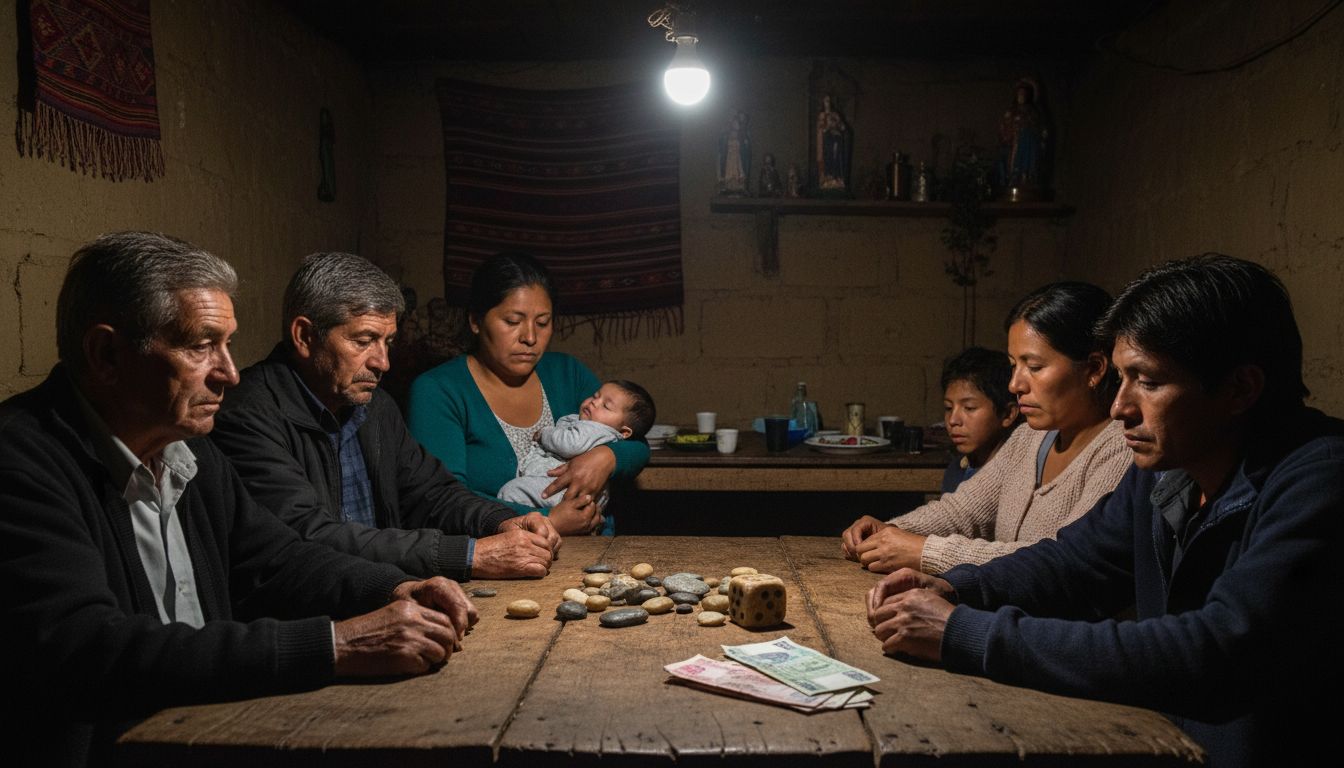
The first time I was invited to a velorio in a rural parish outside Sígsig, I expected hushed voices, candlelight, and the particular stillness that settles over a house in mourning. What I did not expect was laughter—restrained, almost apologetic, but unmistakably laughter—rising from a corner of the room where a handful of men sat hunched over a small, worn object passed hand to hand. Someone murmured the word huairo, and I understood, slowly, that I was watching a game being played beside a coffin.
The object at the center of it all was a small bone, polished smooth by what must have been decades of handling. I later learned it was a shinbone die, something akin to what is called a taba in other parts of the Andes and broader Latin America—an astragalus or knucklebone taken from livestock and repurposed as a kind of dice. In that dim room, it seemed to carry more weight than its size suggested, as though it were older than anyone present.
What follows is not a documented history. I want to be upfront about that. Huairo, as far as I have been able to determine, exists almost entirely in oral tradition—passed down through family memory, told and retold at the very wakes where it is played, with no formal record I could locate to confirm its origins, rules, or reach beyond individual households in and around Sígsig. This piece is an attempt to sit with that uncertainty rather than paper over it, and to explore what it might mean that a community still carries a custom this specific, this strange, and this fragile.
What Is Huairo? Piecing Together a Vanishing Custom
From conversations with people who grew up around the game, the basic premise of Huairo seems to involve tossing the shinbone die and reading the position in which it lands—much like other astragalus-based games found across Andean and broader Latin American folk traditions. Players reportedly take turns, with outcomes tied to simple scoring or small wagers, though accounts of the exact rules vary enough that I hesitate to present any single version as definitive.
The die itself is, by most descriptions, taken from the hind leg of a sheep, goat, or similar animal—a bone shaped in such a way that it can rest in a small number of distinct positions when thrown. This practical origin, repurposing a piece of a slaughtered animal into a gaming tool, seems to carry its own quiet symbolism: nothing wasted, even the skeleton given a second life as entertainment.
What struck me most, in piecing together these accounts, was how differently people described the same game. One family member would insist on a particular scoring system; another, from a neighboring household, would describe something subtly different. Whether this reflects genuine regional variation within Azuay, generational drift, or simply the natural blurring that happens when a tradition is held only in memory, I cannot say with confidence. It may be all three.
Why Play at a Wake? Grief, Community, and Ritual Distraction
To an outsider, the pairing of a dice game with a wake can seem jarring. But the logic becomes more legible once you understand the shape of a rural Andean velorio: these are not brief visitations but extended vigils, often stretching through the night and sometimes across multiple nights, with family and community expected to remain present throughout.
In that context, a game like Huairo may function less as disrespect and more as endurance—a way of filling the long, heavy hours of a vigil with something that keeps hands and minds occupied without demanding the kind of forced solemnity that can become exhausting to sustain. Observers of Andean mourning customs have noted a broader pattern across the region: grief and communal ritual are rarely kept entirely separate from social activity, food, and even quiet amusement. The wake becomes not only a space for sorrow but for the community to hold itself together through the night.
I find myself speculating, admittedly without hard evidence, that Huairo may have traveled this way for generations precisely because it served this dual purpose—a discreet, low-key diversion that could be set aside instantly if the mood of the room shifted, and picked back up just as easily hours later.
Sígsig's Rural Identity and the Threads of Indigenous Influence
Sígsig sits in a part of Azuay Province known for its rural character and its enduring connections to indigenous and mestizo traditions, including a long-standing reputation for craftsmanship, particularly in weaving and hatmaking. It is the kind of place where small, close-knit communities have historically had the conditions—geographic distance, strong family networks, limited outside documentation—that allow specific local customs to persist quietly, sometimes for generations, without ever being written down.
Oral history plays an outsized role in places like this. Without institutional records, traditions like Huairo survive because someone remembers, tells a child, and that child eventually tells their own. This is both the strength and the fragility of such customs: they are remarkably resilient as long as the chain of memory holds, and remarkably vulnerable the moment it breaks.
It is worth stating plainly that I have not been able to independently verify Huairo beyond these community accounts. I have found no academic study, museum record, or published ethnography that documents the game by this name or confirms its specific association with Sígsig. That absence does not mean the tradition is invented or insignificant—oral customs routinely exist outside the written record—but it does mean that everything here should be understood as lived testimony rather than established fact.
A Fading Tradition? Reflections on Memory and Loss
When I asked whether younger generations in the area still know Huairo, the responses were mixed, and often tinged with a kind of resigned wistfulness. Some described children who had never seen the game played, having grown up in a period when wakes themselves have shortened, modernized, or moved away from some of their older rhythms. Others mentioned a grandparent or great-uncle who still kept an old shinbone die somewhere, rarely used now, more memento than game piece.
There is a particular poignancy in a "game of bones" facing its own quiet disappearance—a custom built around marking death now at risk of fading from memory itself. It feels, at times, like watching the last embers of something settle into darkness, not through any dramatic rupture but through the slow, ordinary erosion of generational change.
As an outsider who stumbled into this tradition by invitation and circumstance, I am aware of the limits of what I can claim to understand. I did not grow up with Huairo, and I will not pretend to speak for the families who carry it. What I can offer is curiosity, and an invitation: if you have family knowledge of Huairo—how it was played, where it came from, whether it is still played today—I would welcome hearing your account. Traditions like this survive only as long as someone is willing to tell them, and I suspect there is far more to this story than any single conversation could capture.