'How Long, Father Almeida?': The Christ of Quito's San Diego Convent Who Scolded a Runaway Friar
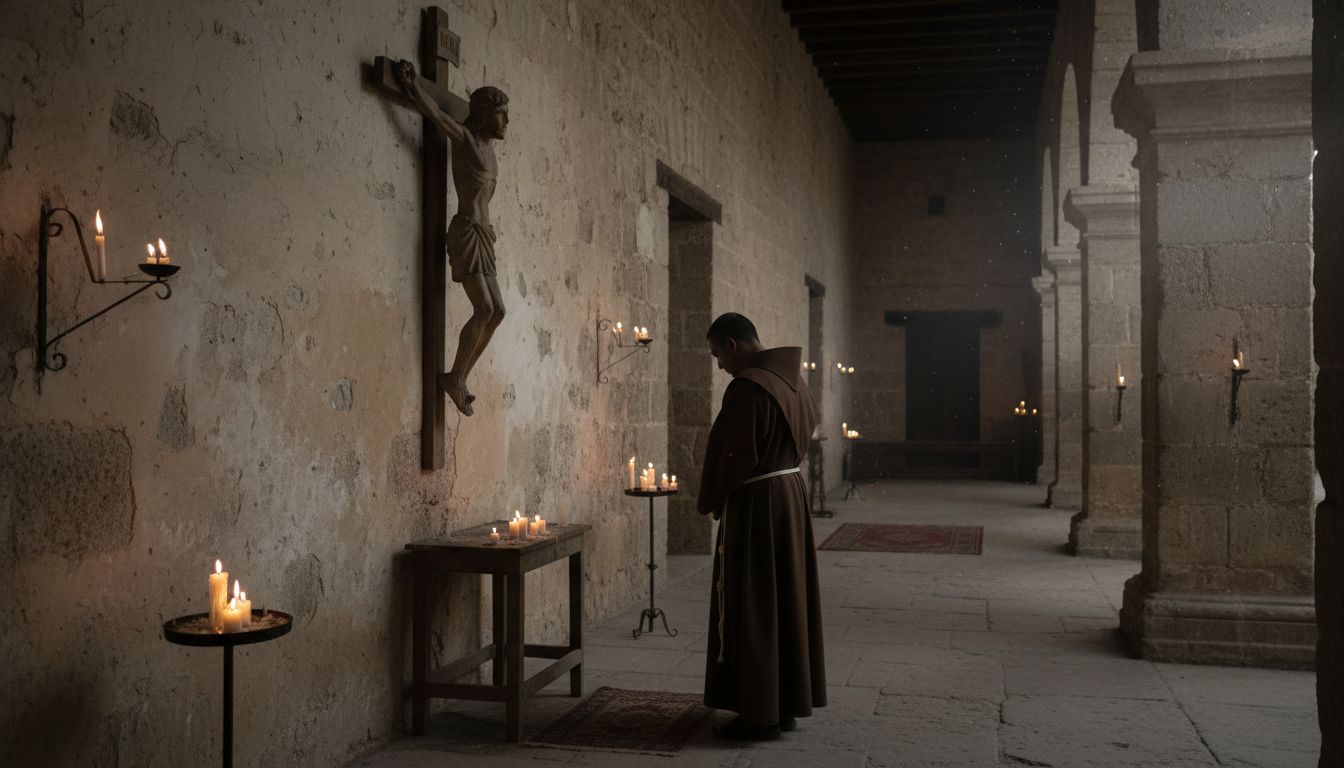
'How Long, Father Almeida?': The Christ of Quito's San Diego Convent Who Scolded a Runaway Friar
I had not planned to learn about ghosts, talking statues, or wayward friars on the afternoon I first walked through the gate of the San Diego Convent. Like many newcomers to Quito, I had come for the architecture: the thick colonial walls, the quiet cloisters, the sense of stepping back several centuries in the space of a few cobblestones. The historic center has a way of doing that to you, hushing the present until all that is left is stone, shadow, and the occasional bell.
It was in that hush that a guide, almost offhandedly, mentioned a name: Padre Almeida. I asked who he was, expecting a founder, a bishop, some dutiful figure of record. Instead I got a story. A friar who slipped out at night. A crucifix that spoke. A warning that still echoes, apparently, in the way Quiteños tell the tale today.
I will admit my first reaction was polite skepticism. I had grown up with a different relationship to folklore, one that tends to file talking statues under metaphor rather than memory. But something about the way the guide told it, matter-of-factly, without performance, made me want to hear more.
The Tale of Padre Almeida and the Talking Christ
The legend, as it is most commonly told, concerns a friar attached to the San Diego Convent who had a habit of leaving his cell after dark. Rather than spending his nights in prayer or rest, he would climb out to pursue the pleasures of the city: drink, company, and the general revelry that colonial Quito apparently offered in abundance to those willing to risk discovery.
One night, returning late and presumably unrepentant, he is said to have passed before a crucifix in the convent. According to the story, the figure of Christ spoke aloud, addressing him directly: 'Hasta cuándo, Padre Almeida?' — 'How long, Father Almeida?' The phrase was not simply a rhetorical question. In the telling, it carried an implicit warning that his conduct, and perhaps his very life, could not continue indefinitely on its current path.
It is worth being clear about what this story is and is not. It belongs to oral tradition and local folklore rather than to any confirmed historical record. No verified documentation accompanies the tale as presented here, and the specific details — names, dates, the exact wording attributed to the crucifix — vary across tellings. What follows should be read as an account of a legend, not a historical claim.
Why This Story Still Resonates in Quito
Stories like this one did not arise in isolation. Quito's historic center is layered with colonial-era religious narratives that served, among other things, as moral instruction. A talking Christ scolding a wayward friar fits a recognizable pattern: the miraculous intervening to correct human failing, offered as both caution and comfort to a community shaped heavily by Catholic practice and imagery.
Local historians and guides often group the Padre Almeida story with a broader cycle of legends sometimes referred to as 'El Fraile de la Calle' — the friar of the street — tales of clergy who slip between sacred duty and worldly temptation, usually interrupted by some supernatural reckoning. These narratives circulate well beyond any single convent, suggesting a shared cultural vocabulary rather than an isolated anecdote.
Why do these stories persist? Part of the answer may simply be that they are good stories: vivid, morally legible, and tied to specific, visitable places. Walking through San Diego's courtyard today, it is not hard to imagine why a guide might reach for this tale rather than a dry architectural fact. The legend gives the stones a voice.
An Expat's Reflection on Belief, Place, and Memory
Hearing the story as an outsider, I found myself less concerned with whether it 'really' happened and more interested in what it revealed about how Quito remembers itself. A recurring thought among newcomers, myself included, is that encountering local folklore can reshape one's relationship to a city far more than any guidebook fact ever could. A convent is no longer just a convent once you know someone believes, or once believed, that its walls once spoke.
There is a tension here worth sitting with: the difference between literal belief and cultural appreciation. I do not know whether the friar existed, whether the words were ever spoken, or whether the tale has been reshaped by generations of retelling into something quite different from its origin. What I can say is that the story asks to be taken seriously as culture, even if not as courtroom fact. That distinction feels important, and perhaps instructive, for anyone trying to find their footing in a new place with its own long memory.
For an expat, these moments of folklore can become small anchors. They are not about conversion or belief in the supernatural sense, but about recognizing that meaning in a new city often arrives sideways, through stories rather than statistics.
Visiting San Diego Convent Today
The San Diego Convent remains an active site with religious, historical, and cultural significance within Quito's historic center, and it welcomes visitors interested in its art, architecture, and history. Travelers curious about the Padre Almeida legend may find it worthwhile to ask on-site guides directly, since oral retellings can vary in detail and emphasis from one telling to the next.
Those visiting might also keep an eye out for related references to the broader 'Fraile de la Calle' legend cycle elsewhere in the historic center, as similar tales are attached to other convents and churches in the city.
Whatever the historical basis, the persistence of the Padre Almeida story is itself a kind of evidence: evidence that a place's history survives not only in official records but in the stories people choose to keep telling. For expats settling into life in Quito, seeking out these narratives, with appropriate curiosity and appropriate caution about their factual status, can be its own quiet form of belonging.