Hearing About 8,000 New Insect Species in an Ecuadorian Cloud Forest, From My Front Porch
Hearing About 8,000 New Insect Species in an Ecuadorian Cloud Forest, From My Front Porch
The message came through a neighborhood chat, the way a lot of news reaches expats here: secondhand, slightly breathless, and impossible to fully verify on the spot. Someone had shared a headline claiming that scientists surveying a single Ecuadorian cloud forest had turned up as many as 8,000 potential new insect species, with 97 percent of them found nowhere else on Earth. I want to be upfront about something before going further: I cannot confirm those numbers. I don't know which research team reportedly did this work, where exactly it was published, or what methodology produced those figures. What follows isn't a science report. It's a reflection on what it feels like to receive news like this while living the kind of life that makes it feel entirely plausible.
Why This Kind of News Resonates With Expats in Ecuador
Living in Ecuador reshapes your relationship with scale and wonder. You arrive expecting mountains and maybe some good coffee, and then you spend a weekend hiking with a local guide who casually points out three plants found in no other valley on the continent. Claims about thousands of undiscovered species land differently here than they might somewhere else, because the abstraction doesn't feel abstract. It feels like Tuesday.
There's an emotional pull to imagining that the ridge behind your house, or the forest you drove past on the way to a friend's finca, might be hiding thousands of unnamed creatures. Whether or not the specific figures reported hold up, the underlying sentiment — that Ecuador remains genuinely under-explored in places — tracks with what a lot of expats hear repeatedly from biologists, guides, and long-term residents alike.
The Cloud Forest as a Character in the Expat Story
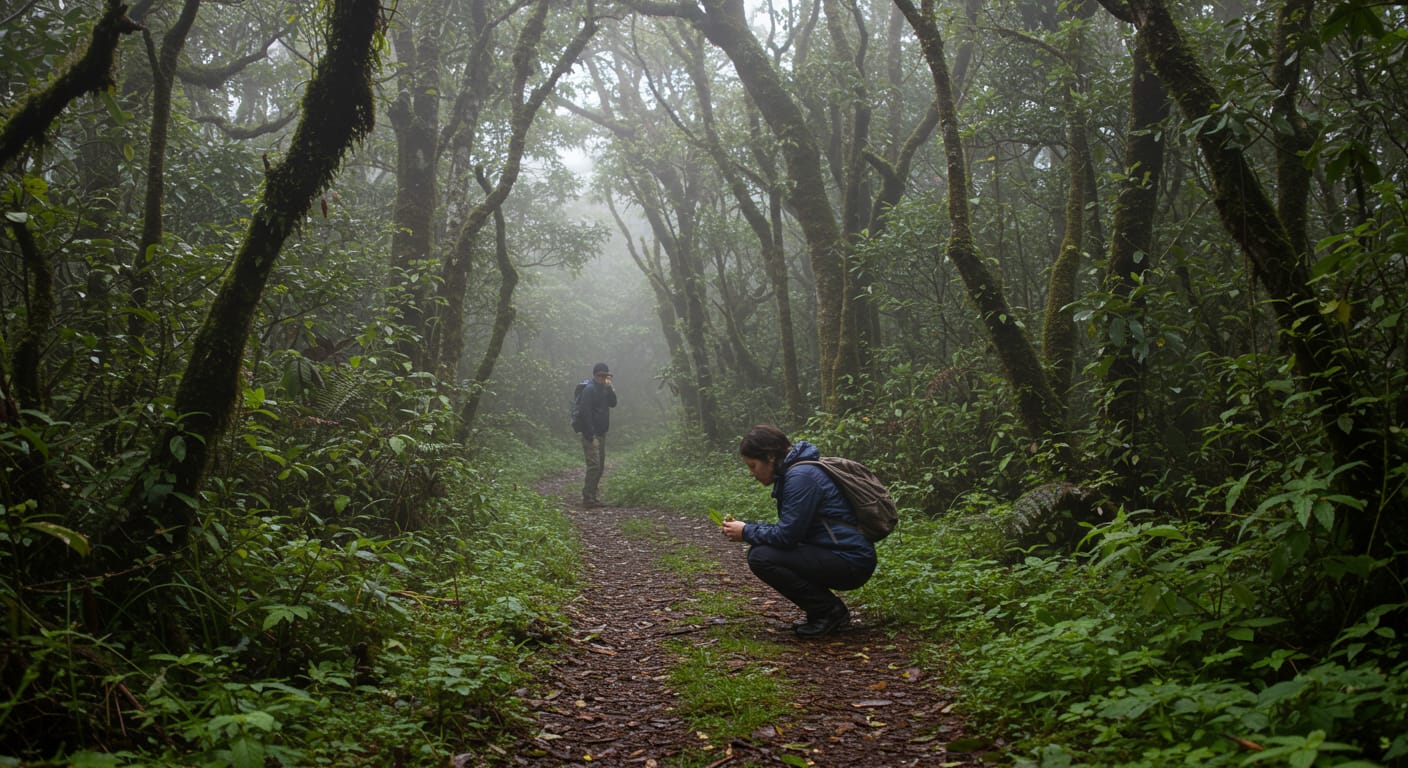
Cloud forests occupy a strange psychological space for those of us who've relocated here. They're perpetually damp, often silent in a way that feels attentive rather than empty, and visually strange enough that you stop assuming you understand what you're looking at. Walking into one, mist clinging to moss-covered branches, it's easy to believe almost anything could live in there, undiscovered.
I won't pretend to describe the specific forest referenced in the reports I saw, since I can't verify which one it was or confirm details about it. But the general feeling holds regardless: these environments reinforce, for many expats, a sense of proximity to something still unknown. That sense is arguably part of why some of us chose to relocate here in the first place — not despite the uncertainty, but because of it.
Grappling With the Unverified: An Honest Aside
I want to be honest about the limits of this piece. I could not confirm the research team behind the reported findings, the journal or outlet where the work was supposedly published, or the survey methods used to arrive at a number like 8,000 potential species. That's a real gap, and I don't want to paper over it with confident-sounding language borrowed from a headline I can't independently trace.
This, too, is part of expat life in a country like Ecuador. Striking news travels fast through local circles — WhatsApp groups, expat forums, a friend forwarding a screenshot — and confirming it isn't always straightforward, especially when the underlying source is a scientific claim reported secondhand. Long-term residents often learn to hold such stories a little loosely: interesting, worth discussing, but not yet settled fact. I'd encourage readers to treat the "8,000 species" and "97 percent endemic" figures the same way I'm treating them here — as reported claims pending confirmation, not established findings.
What This Means for Those Living the Expat Life in Ecuador
Even bracketed by that uncertainty, the story (or rumor, or reported finding — whichever it turns out to be) does something useful. It's a reminder of how much remains unmapped in the places some of us now call home, and how that unmapped quality carries real conservation stakes regardless of whether this particular number holds up. It also nudges at something quieter: a kind of daily gratitude, or at least awareness, about living somewhere that scientists apparently still consider worth this kind of scrutiny.
I don't have a tidy scientific conclusion to offer, because I'm not in a position to draw one. What I have instead is the same thing most expats end up with when news like this circulates: a slightly heightened appreciation for the ridge behind the house, the mist that rolls in most afternoons, and the possibility — unconfirmed, but not unreasonable — that something out there hasn't been named yet.