Guayaquil's Devil-Pact Legend: The Banker and the Copper Tomb
Guayaquil's Devil-Pact Legend: The Banker and the Copper Tomb
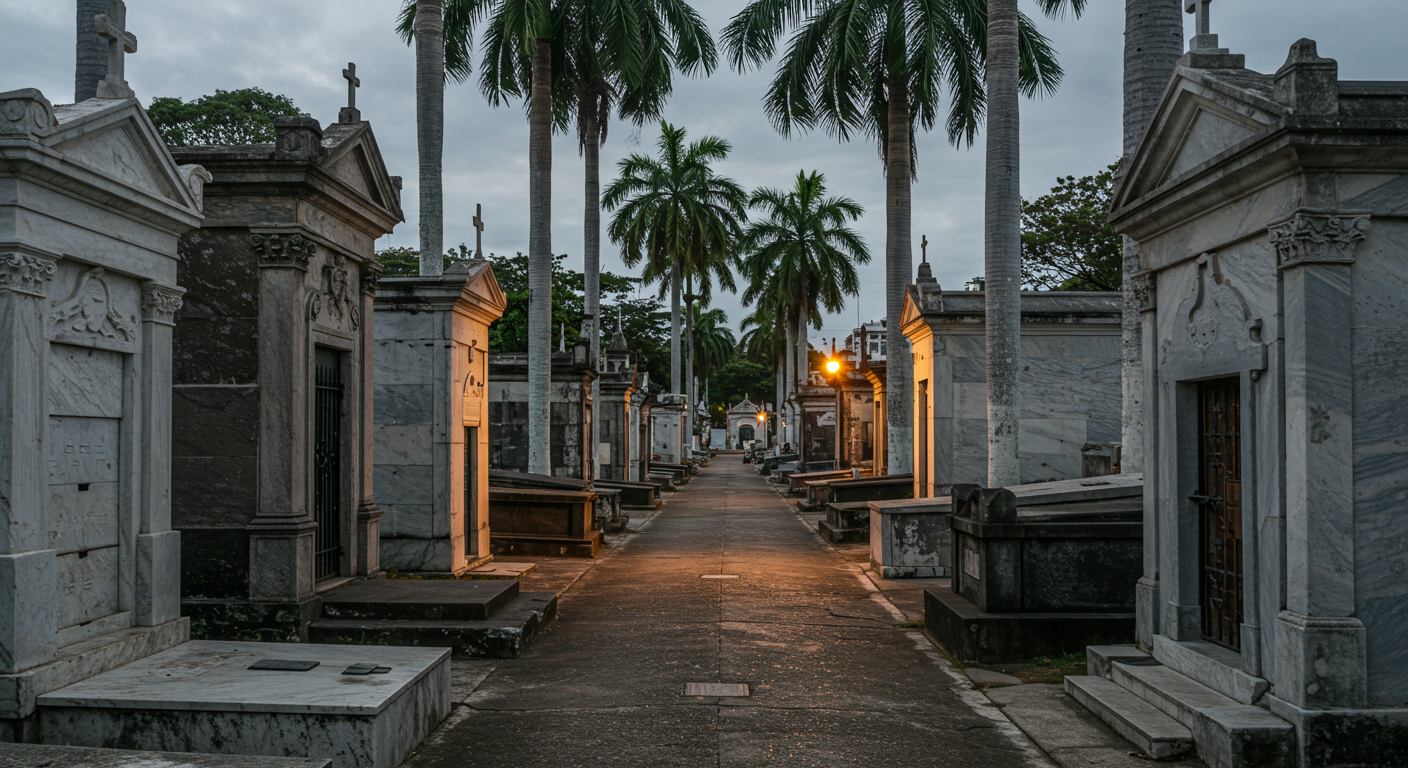
Walk through the gates of Ciudadela Cementerio Patrimonial, Guayaquil's historic General Cemetery, and it's easy to see why locals sometimes call it a city of the dead. Marble mausoleums rise like miniature cathedrals. Weathered statues gaze down from family crypts built by the city's old commercial elite. Many consider it one of Latin America's most striking necropolises, a place where wealth, faith, and mortality were all carved into stone.
Among the grand tombs, though, one is said to stand apart—not for its beauty, but for the story attached to it. According to local legend, it belongs to a wealthy banker who made a deal with the Devil himself.
The Legend of the Banker's Pact
Passed down mostly through oral tradition and local guide narratives, the story goes something like this: a Guayaquil banker, ambitious and enormously successful, struck a bargain with the Devil in exchange for his fortune. As the tale is told, he grew wealthier than seemed reasonably possible for his era, fueling whispers that his success wasn't entirely of this world.
The twist that keeps the legend alive concerns his death. Fearing the Devil would come to collect once he passed, the banker is said to have arranged an unusual burial meant to keep his soul out of reach. It's worth being clear from the outset: no documentary sources, church records, or verified historical accounts confirm this specific account. It survives as folklore, a story told by guides and residents rather than a matter of settled historical record.
Why a Copper Tomb?
Central to the legend is the detail of a copper-lined tomb, or in some tellings, a fully sealed metal casket. The folk logic behind this isn't unique to Guayaquil. Across many cultures, metal—copper in particular—has long been associated with protective or spiritually resistant properties. Sealed thresholds, iron gates, and metal linings appear repeatedly in global folklore as barriers meant to keep supernatural forces at bay.
In this telling, the copper tomb becomes a kind of spiritual vault, a way of sealing the banker's remains so thoroughly that no otherworldly claimant could reach what was owed. Local guides and cemetery tour narratives keep this detail alive, often pointing to a specific tomb as the one in question. These accounts should be understood as living oral tradition rather than confirmed historical fact, since no primary sources establish which tomb, if any, corresponds to the legend.
Separating Legend from History
It's worth pausing on what isn't known. There's no verified name, date, or documented biography tied definitively to this story. No historical registry or archival record has been identified that confirms a banker's burial under these specific circumstances.
This is common in legend formation. Stories of supernatural pacts tend to attach themselves over time to real cemeteries and real historical figures, particularly those associated with sudden or unusual wealth. A grand, unexplained tomb becomes a natural canvas onto which communities project moral tales about ambition, greed, and consequence. Whether or not a specific banker inspired the tale, its value lies less in historical accuracy and more in what it reveals about local imagination and cultural memory.
Why the Story Endures
Devil-pact legends are a recurring motif throughout Latin American folklore, frequently tied to sudden fortune, unexplained success, or figures who rose dramatically above their peers. They often function as cautionary narratives, reflecting communal unease about wealth acquired too quickly or too mysteriously.
Cemeteries like Guayaquil's General Cemetery become natural settings for these stories to take root and persist. Layered with family history, civic memory, and elaborate funerary art, they invite storytelling. Visitors and residents alike pass down the tale, reshaping it slightly with each retelling—precisely how oral tradition survives and adapts over generations.
For expats and travelers drawn to Guayaquil, the legend taps into a broader fascination with the city's blend of colonial-era history, Catholic tradition, and enduring folk superstition. It's one thread in a larger tapestry of stories that make the city's historic core feel layered and alive.
Visiting the Cemetery Today
Ciudadela Cementerio Patrimonial remains a real, publicly visitable site and a popular stop for those interested in Guayaquil's history and legends. Many visitors choose to explore with a local guide, who can point out notable tombs, share oral histories, and offer context on the cemetery's architecture and notable families.
For those curious about the devil-pact legend, asking a local guide directly is often part of the experience itself—an invitation to hear the story as it's told locally, with all its regional variations intact. Approached this way, the tale becomes less about verifying facts and more about appreciating how legend and place intertwine.
Ultimately, whether or not a banker truly sought to outwit the Devil with a copper tomb, the story endures because it captures something essential about Guayaquil itself: a city where history, superstition, and imagination remain closely, and colorfully, entangled.