Galápagos 'Alien' Tortoises: How Wolf Volcano Hybrids Are Bringing a Lost Species Back to Floreana
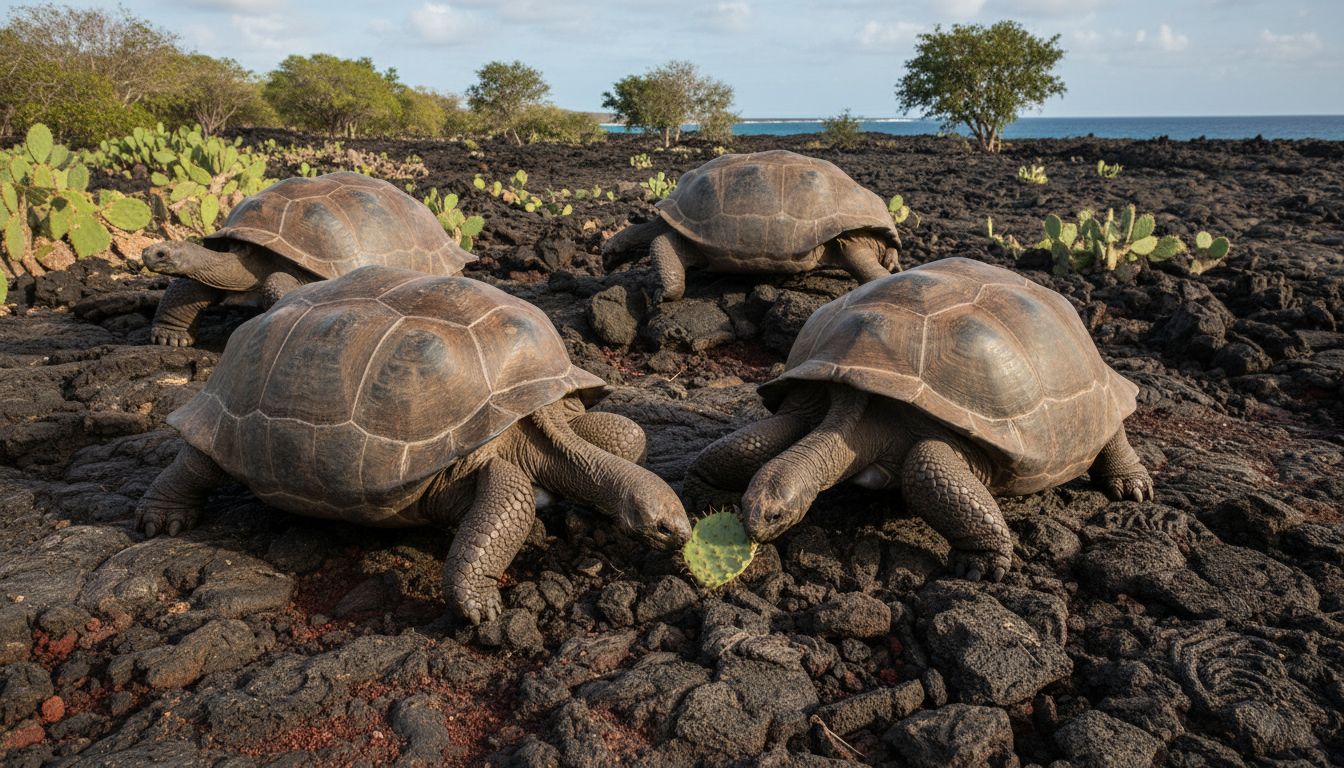
A 175-Year-Old Mystery Comes Full Circle on Floreana
For nearly two centuries, the Floreana giant tortoise existed mostly as a memory. Long presumed extinct on its namesake island in the Galápagos archipelago, the species is believed to have vanished sometime in the mid-1800s, a period when whaling ships regularly passed through the islands and took tortoises aboard as easily stored, long-lasting food. Introduced predators and mounting habitat pressures are also thought to have contributed to the species' disappearance from Floreana, one of the earliest inhabited islands in the Galápagos.
For generations, the Floreana tortoise seemed destined to remain a permanent entry in the region's long list of ecological losses. But many observers now describe a striking twist: tortoises carrying the genetic legacy of this lost species are being reintroduced to Floreana, born not from long-hidden survivors on the island itself, but from unexpected genetic clues found far away, on the slopes of a volcano on another island entirely.
The Wolf Volcano Discovery
The story's turning point traces back to Wolf Volcano on Isabela Island, where researchers identified tortoises carrying genetic ancestry linked to the Floreana species. According to the conservation narrative widely associated with this discovery, these hybrid tortoises likely descend from Floreana tortoises transported by sailors during the 19th century, possibly abandoned or released on Isabela after ships altered course or offloaded live animals no longer needed.
Conservationists have described finding these genetic traces as something like uncovering living clues to a species assumed to be completely lost. The presence of Floreana ancestry in tortoises living hundreds of kilometers from their ancestral home suggested that, while the population on Floreana itself had disappeared, the species' genetic legacy had not entirely vanished from the archipelago.
From Genetic Ancestry to a Breeding Program
Identifying tortoises with meaningful Floreana lineage was only the first step. Researchers and conservation teams screened hybrid individuals on Wolf Volcano, selecting those with the strongest genetic links to the original Floreana population for inclusion in breeding efforts.
Captive breeding facilities in the Galápagos have played a central role in this process, raising offspring intended to carry forward restored genetic traits associated with the Floreana tortoise. The effort is part of a broader, long-running program to restore giant tortoise populations across the islands, an initiative closely associated with the Galápagos Conservancy and the Galápagos National Park Directorate. Both organizations have historically led similar tortoise recovery work on other islands, including Pinta and Española.
Homecoming: Tortoises Return to Floreana
The culmination of this work is the return of young tortoises to Floreana Island itself, following generations in which the species had no presence there at all. For many following the Galápagos' conservation history, this reintroduction represents more than a single species' comeback.
Giant tortoises are frequently described by ecologists as “ecosystem engineers,” playing an outsized role in shaping the landscapes they inhabit. Through grazing and movement, tortoises help disperse seeds across large areas and manage vegetation growth, influencing plant diversity and habitat structure over time. Their long absence from Floreana is thought to have left a lasting ecological gap, one that their return may begin to close.
Beyond the ecological function, many in the conservation community view this homecoming as symbolically significant: a rare case in which a population once thought irretrievably lost is, at least partially, restored to its place of origin.
Why This Story Resonates Beyond Conservation Circles
The Galápagos Islands are often described as a living laboratory of evolution, and stories like the Floreana tortoises' return tend to reinforce that identity. For expats, researchers, and long-term residents who have built lives around the islands' unique ecology, this kind of project is often seen as a meaningful marker of the region's ongoing scientific and environmental relevance.
A recurring theme among those closely connected to island life is a sense of shared investment in conservation outcomes, whether through direct research involvement, tourism-related work, or simple community pride in the islands' reputation. Projects like the Floreana tortoise reintroduction are frequently cited as sources of local pride, and many residents view sustained conservation success as closely tied to the long-term health of tourism and the broader island economy.
What Comes Next
Conservation efforts of this kind typically involve long timelines, and the Floreana tortoise reintroduction appears to be no exception. Ongoing monitoring of the reintroduced population is expected to continue for years, with researchers tracking survival rates, growth, and reproductive success as the tortoises adapt to their ancestral habitat.
Uncertainties remain regarding how large the population will need to grow before it can be considered self-sustaining in the wild, and the full ecological recovery of Floreana's habitat may take considerably longer. Still, many observers see this project as part of a broader and increasingly relevant conversation about de-extinction-adjacent science and species restoration, with implications that extend well beyond the Galápagos. As island ecosystems worldwide grapple with historical species loss, the Floreana tortoise story is often pointed to as an example of what patient, genetics-informed conservation work can potentially achieve.