Fifty Years Ago, Neil Armstrong Went Underground in Ecuador — the Tayos Cave Expedition Returns in November
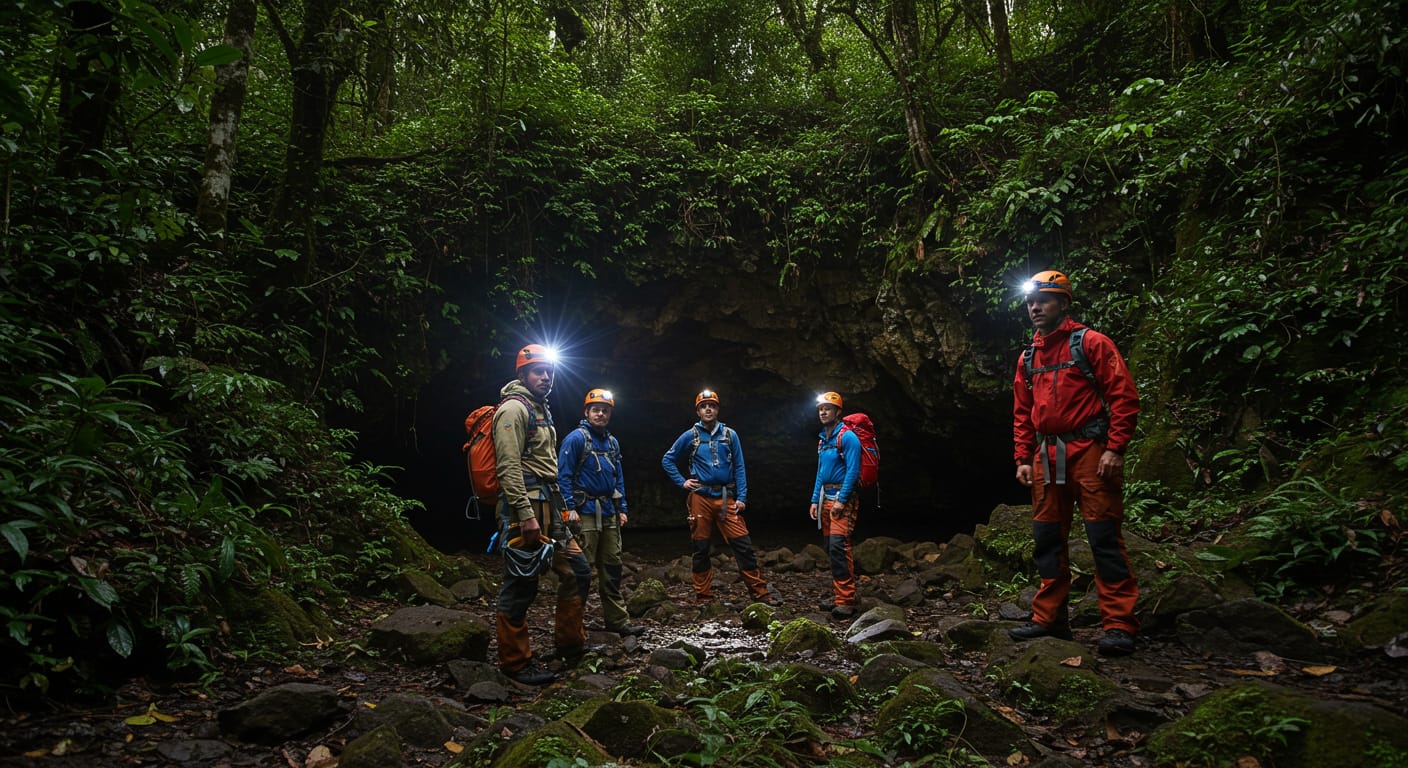
A year after becoming the first person to walk on the Moon, Neil Armstrong descended into a cave in the Ecuadorian Amazon. It's one of those historical footnotes that sounds almost too strange to be true — the man who took humanity's most famous step also crawled through darkness beneath the jungle floor, searching for something entirely different. That image, an astronaut turned spelunker, is the seed of a legend that has drawn adventurers, believers, and skeptics to Ecuador for nearly fifty years.
The Cueva de los Tayos, tucked into Ecuador's Morona-Santiago province, has never quite let go of the public imagination. Now, as its 50th anniversary approaches, word of a planned return expedition this November has stirred fresh curiosity. Details of this anniversary trip remain sparse, and nothing about dates, organizers, or scope has been officially confirmed. Still, the mere suggestion of a return has been enough to reignite an old fascination.
The 1976 Expedition: Fact, Myth, and Everything In Between
The original expedition was organized in large part by British explorer Stanley Hall, whose interest in the Tayos Caves had been building for years. Hall assembled an international team, and its scale and ambition were unusual for the time — a serious, multi-national effort to explore one of the more remote cave systems in South America.
Much of the caves' mystique traces back to Erich von Däniken's book, 'The Gold of the Gods,' which popularized dramatic claims about a hidden metal library deep within the Tayos system — supposedly containing artifacts of an ancient, possibly extraterrestrial, origin. These claims captured public attention worldwide, even as archaeologists and researchers raised serious doubts about their accuracy.
Armstrong's actual role in the 1976 expedition has long been a point of debate. Accounts differ on how deeply involved he was in the exploration itself versus a more ceremonial or supportive capacity. A recurring theme among those who've written about the expedition is that the full story is more complicated — and less sensational — than the myth that grew around it. Many of the claims from that era, particularly those tied to von Däniken's book, remain contested or unverified by later research, and readers should approach them with appropriate skepticism.
Inside the Cueva de los Tayos
The cave system sits in Morona-Santiago province, part of Ecuador's Amazonian region — a landscape defined by dense rainforest, isolated communities, and rugged, largely unmapped terrain. The caves take their name from the tayos, or oilbirds, that roost within them, a nocturnal species known for navigating total darkness using echolocation.
Beyond the legends of hidden treasure, the Cueva de los Tayos holds genuine natural significance. Its ecosystem, geology, and resident wildlife have long interested biologists and speleologists independent of any mythology. Yet it's the layered mix of natural wonder and unresolved mystery that seems to keep pulling people back — a combination that's hard to find anywhere else.
Fifty Years Later: The Return Expedition
Reports of a 2025 or 2026 return expedition to mark the 50th anniversary have begun circulating, but concrete, verifiable information is currently limited. No confirmed sources detail who might be organizing the trip, what its exact dates would be, or what its stated goals are. Separating genuine planning from speculation or nostalgia-driven rumor remains a challenge for anyone following the story closely.
Even so, anniversary expeditions like this tend to generate outsized interest, particularly among explorers and expat communities living in Ecuador. There's something compelling about revisiting a story with such a strange mix of documented history and unresolved myth — especially one that intersects with a figure as globally recognized as Armstrong.
Why This Story Resonates With Expats in Ecuador
For many expats, the Tayos legend fits neatly into a broader fascination with Ecuador as a place where natural wonder and mystery seem to coexist more visibly than elsewhere. The country's dramatic geography — from Andean peaks to Amazonian lowlands — lends itself to stories that blur the line between the documented and the fantastical.
It's worth acknowledging how tales like this can shape, and sometimes distort, outsiders' romanticized view of Ecuador. The country becomes, in these narratives, a backdrop for adventure and hidden secrets rather than a place with its own complex, lived-in history. That's not necessarily a bad thing — curiosity has its place — but it's a useful reminder for anyone retelling these stories to keep documented history and enduring myth clearly distinguished, even when the myth is more fun to tell.