Fanesca: The Once-a-Year Good Friday Soup That Takes a Week to Make and Two Hours to Eat
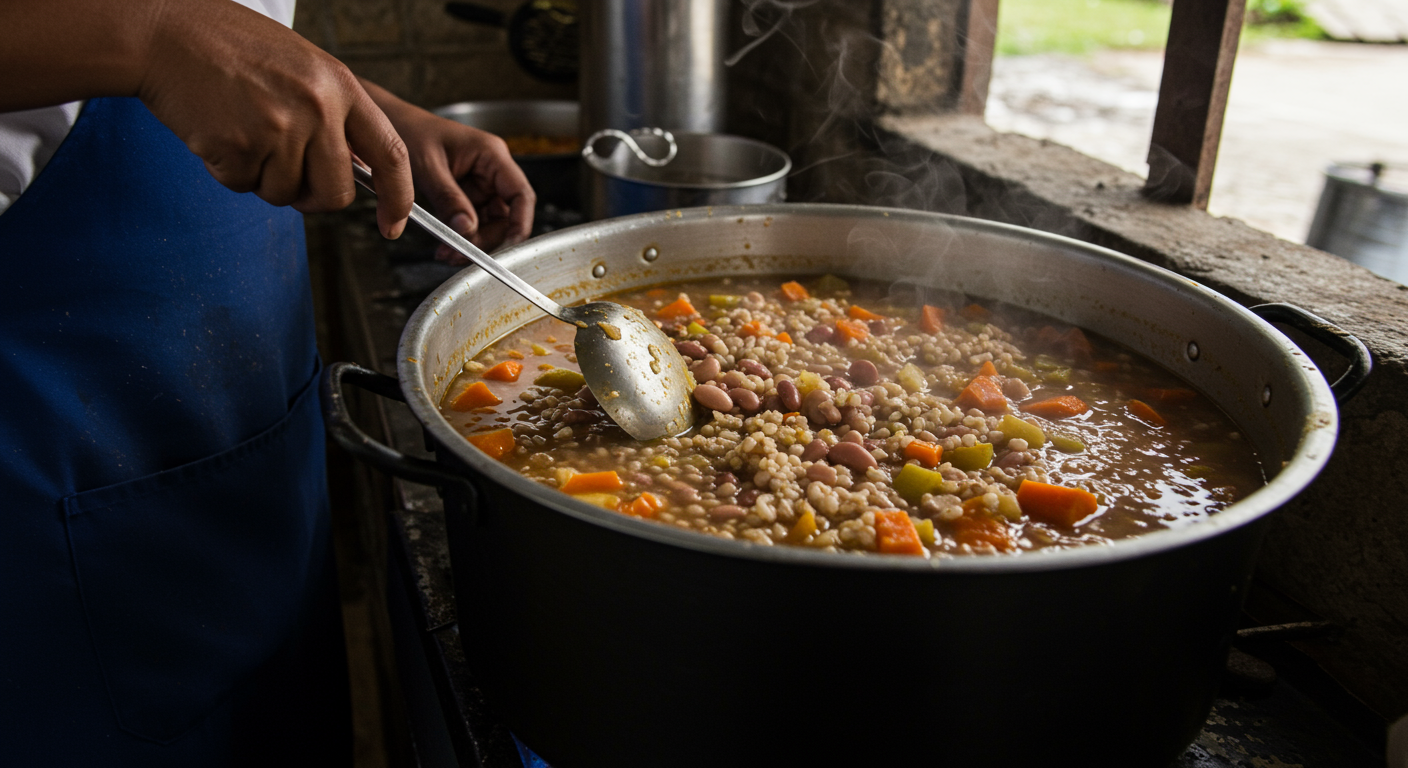
Every March, as Easter approaches, I find myself standing in my kitchen surrounded by bags of dried beans, contemplating what can only be described as voluntary culinary torture. The recipe card is stained with years of use, written in my mother-in-law's careful Spanish script: Fanesca Tradicional. Twenty-three ingredients. Seven days of preparation. And when it's finally served on Good Friday, it will be devoured in roughly two hours.
This is my annual pilgrimage into the heart of Ecuadorian tradition, a soup so elaborate that it's only made once a year, and so meaningful that I can't imagine Easter without it.
The Annual Easter Pilgrimage to My Ecuadorian Kitchen
Living abroad as an expat married into an Ecuadorian family, I've become the unlikely keeper of this sacred recipe. My first encounter with fanesca was fifteen years ago, served in a ceramic bowl in my suegra's kitchen in Quito. The soup was unlike anything I'd ever tasted—creamy, complex, with each spoonful revealing new flavors and textures. Beans, grains, vegetables, and fish all harmonized in a way that seemed impossible.
"It's only made during Holy Week," my husband explained, as if that justified the obvious complexity of what I was eating. "My mother starts preparing on Monday."
Now, living thousands of miles from Ecuador, I've inherited this tradition. Not out of obligation, but because some recipes are too precious to let die in diaspora. When you're the bridge between your children and their cultural heritage, fanesca becomes more than soup—it becomes an act of preservation.
Monday: The Great Ingredient Hunt Begins
The quest begins weeks before Holy Week, scouring specialty Latin American markets for the twelve types of beans and grains that form fanesca's foundation. Habas, chochos, fréjol colorado, lentil, chickpeas, white beans, green peas—each one essential, each one telling part of the story.
In Ecuador, you'd find most of these ingredients fresh. Here, I work with what's available, learning painful lessons about substitutions. That time I used lima beans instead of habas? The texture was all wrong. When I couldn't find chochos and skipped them entirely? The soup lacked its characteristic bite.
The specialized ingredients are the real treasure hunt. Sambo (a type of squash), fresh cheese that melts just right, col (cabbage) that holds its structure, and the fish—traditionally salt cod, though I've made peace with fresh cod when necessary.
By Monday evening, my kitchen counters look like a botanical survey. Bags and containers everywhere, each labeled with soaking times and cooking sequences that I've refined over years of trial and error.
Tuesday Through Thursday: The Soaking, Peeling, and Prep Marathon
Tuesday morning, 6 AM: The habas go into their cold water bath. These broad beans will need forty-eight hours to soften enough for peeling—yes, peeling. Each bean must be individually freed from its tough outer skin, a meditative process that takes hours and leaves your fingertips pruned.
Wednesday brings the cascade of other legumes into their respective soaking schedules. Chickpeas get twenty-four hours. Lentils need just overnight. White beans get the full forty-eight-hour treatment. The kitchen starts to feel like a science experiment, with containers of swelling legumes occupying every surface.
Thursday is peeling day, and this is where fanesca separates the committed from the casual. Hours spent removing skins from habas, chickpeas, and white beans. My children have learned to avoid the kitchen during these marathon peeling sessions, understanding instinctively that this is sacred, slightly manic territory.
The kitchen real estate crisis is real. Colanders in the sink, bowls covering the counters, pots claimed for specific ingredients. My family learns to eat simple meals for the week because their mother has temporarily lost her mind in service of a soup.
Good Friday: The Final Symphony
Good Friday, 6 AM: This is it. The alarm goes off, and the most crucial day begins. The timing from here is everything—a carefully choreographed dance where each ingredient enters at precisely the right moment.
First, the sofrito: onions, garlic, cumin, and achiote oil forming the aromatic foundation. Then the beans enter in order of cooking time—habas first (they're stubborn), followed by the others in carefully timed intervals.
The most terrifying moment comes with the milk base. Slowly, carefully, tempering the hot soup with cold milk to create that characteristic creamy texture without curdling. I've lost entire batches to impatience at this stage, watching a week's work separate into unappetizing curdles.
But when it works—when twenty-plus ingredients meld into something greater than their sum—the kitchen fills with the smell of home, even when home is thousands of miles away.
Two Hours of Glory, Twelve Bowls, and It's Gone
By 2 PM, the fanesca is ready. Family gathers around the table, and I ladle the soup into bowls, garnishing each with hard-boiled egg, fried plantain, and fresh cheese. The first taste is always a moment of held breath—did I get it right this year?
The validation comes in the silence that follows the first spoonful, then the inevitable comparisons to previous years, to grandmother's version, to the bowls we remember from childhood. Sometimes there are suggestions for next year ("Maybe a little more cumin?"), but mostly there's appreciation for the week of labor that produced this moment.
And then, almost before I can register it, it's gone. Twelve people, twelve bowls, roughly two hours from start to finish. A week's worth of preparation consumed faster than it takes to watch a movie.
The bittersweet irony isn't lost on me, but it doesn't diminish the experience. Some of life's most meaningful moments are brief—a wedding ceremony, a graduation, the first taste of fanesca after a year of waiting.
What Fanesca Taught Me About Preserving Culture Abroad
In the quiet of my kitchen after cleanup, putting away the special pots until next year, I reflect on what this annual ritual has taught me about living between cultures.
There's a difference between cooking for convenience and cooking for meaning. Most of the year, I make quick meals, healthy dinners, food that serves the practical purpose of feeding my family. But fanesca isn't practical. It's an investment in something harder to quantify—cultural continuity, family identity, the preservation of traditions that might otherwise fade in the diaspora.
My children, born in this country but raised with stories of Ecuador, understand through fanesca that some things are worth the struggle. They may never make it themselves (though I hope they will), but they'll remember the week when mom disappeared into the kitchen in service of soup, emerging triumphant and slightly unhinged.
The friends who join us for Good Friday dinner—Ecuadorian families scattered across our city, other expats maintaining their own food traditions—create a temporary community bound by shared understanding. We know why the soup matters, why the week of preparation isn't excessive but necessary.
Next March, I'll do it again. I'll curse the peeling, worry about the timing, panic over the milk base, and beam with pride when it all comes together. Because some recipes aren't just instructions for food—they're instructions for remembering who you are, no matter how far from home you find yourself.
And yes, it will still be gone in two hours. That's exactly as it should be.