Ecuador's Second Known Dinosaur: A Titanosaur Reportedly Found in Napo After a Landslide
Ecuador's Second Known Dinosaur: A Titanosaur Reportedly Found in Napo After a Landslide
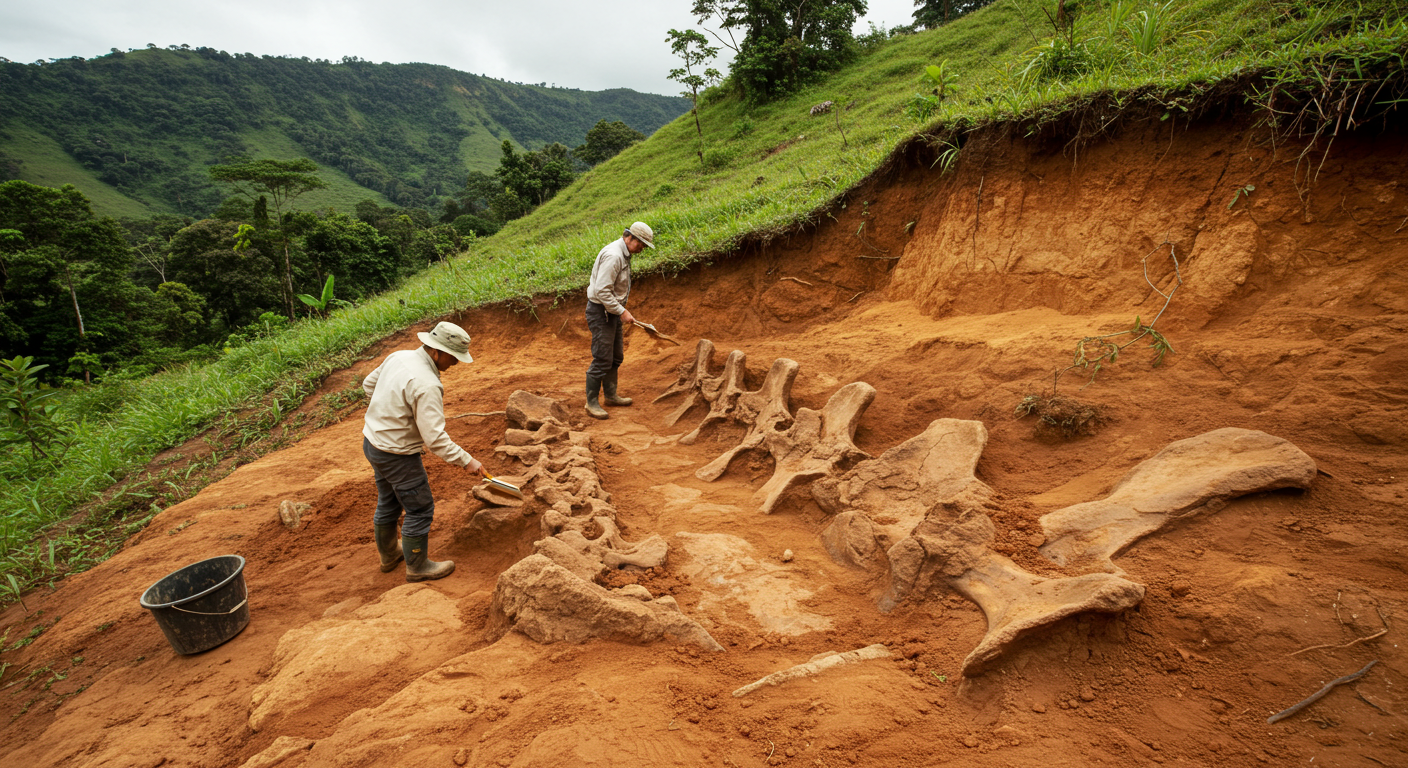
A landslide in Ecuador's Napo province has reportedly exposed fossil remains uncovered by local villagers in the Amazon region. According to circulating reports, the find represents only the second dinosaur species ever identified in Ecuador—a remarkable milestone for a country not typically associated with major dinosaur discoveries. It's worth stating clearly at the outset, though: specific details about the exact location, the date of discovery, and the precise circumstances surrounding the find remain unverified due to a lack of available sourcing at this time.
A Landslide Reveals a Prehistoric Secret in Napo Province
The Ecuadorian Amazon is better known for its extraordinary biodiversity than for paleontological finds, which makes reports of a dinosaur discovery in Napo province particularly notable. As the story goes, a landslide disturbed the earth in a way that exposed fossilized remains, which local villagers then reportedly discovered. This pattern—natural events uncovering fossils that are later noticed by community members rather than by active excavation teams—is common in remote regions where systematic paleontological surveys are rare.
What makes this reported find especially significant is the claim that it represents just the second dinosaur species ever formally identified within Ecuador's borders. Given how infrequently such discoveries surface in the country, this would mark a notable moment for Ecuadorian science. That said, readers should approach the specifics—such as the precise date of the landslide, the exact village or location involved, and the sequence of events leading to the fossil's discovery—with appropriate caution, since these details haven't been independently confirmed through available sourcing.
What We Know (and Don't) About the Titanosaur Find
The fossil in question reportedly belongs to a titanosaur, a group within the broader category of sauropod dinosaurs known for their massive size, long necks, and herbivorous diet. Titanosaurs roamed across what is now South America during the Cretaceous period, and their remains have turned up in various countries across the continent.
Beyond this general classification, many important details remain unconfirmed. No specific species name has been verified, and there's no confirmed information about which research institution, university, or paleontological team may be involved in studying or authenticating the find. Similarly, no publication details—such as a peer-reviewed paper, official government announcement, or museum statement—are currently available to corroborate the claims. Given these gaps, it's essential to treat this as a developing and unconfirmed story rather than an established scientific fact. Readers interested in the topic should look for updates from recognized paleontological or governmental sources before treating specific claims as settled.
Why This Matters for Ecuador's Paleontological Story
Dinosaur discoveries in Ecuador are historically rare compared to those in neighboring South American countries. Argentina and Brazil, for instance, have long been recognized as major sites for dinosaur paleontology, having yielded some of the most significant titanosaur specimens found anywhere in the world. Ecuador's fossil record, by contrast, has remained comparatively underexplored, in part due to its dense rainforest terrain, which can make systematic excavation difficult.
If this reported find is eventually confirmed and formally studied, it could represent a meaningful expansion of scientific interest in Ecuador's prehistoric past. A second identified dinosaur species—however preliminary the current reports may be—could encourage further paleontological survey work in the region. Elsewhere in South America, titanosaur remains have played an important role in reshaping scientific understanding of Cretaceous-era ecosystems, including insights into plant life, climate, and the broader web of species that existed alongside these giant herbivores. Should Ecuador's find eventually contribute similar data, it could add a valuable piece to that broader regional picture.
Community at the Center of Discovery
One recurring theme in South American paleontology is the role local communities play in uncovering significant fossil finds. Villagers, farmers, and rural residents have historically been among the first to notice unusual rock formations or exposed bones, often before any formal scientific team arrives on the scene. The reported involvement of Amazonian villagers in this Napo discovery fits that broader pattern.
Such discoveries can have ripple effects on local communities, ranging from simple curiosity and pride to, in some cases, growing interest in tourism tied to notable finds. It's worth noting, however, that specific reactions from the villagers involved in this particular case—including any direct quotes, interviews, or firsthand accounts—cannot be confirmed without direct sourcing. Any claims about how the local community has responded should be understood as general possibility rather than documented fact at this stage.
What This Could Mean for Expats and Travelers Interested in Ecuador
For expats and travelers already drawn to Ecuador's remarkable natural diversity, stories like this one add another layer of intrigue to the country's identity. Ecuador is already well known among the expat community for its biodiversity, cloud forests, and access to the Amazon basin, and news of a dinosaur discovery—even an unconfirmed one—tends to capture broader interest in the region's natural and scientific heritage.
Across South America, paleotourism and scientific tourism have been growing trends, with countries like Argentina developing dinosaur museums and guided fossil tours as draws for curious travelers. It's reasonable to expect that continued interest in natural history could shape how some travelers view Ecuador's offerings over time. That said, it would be speculative to suggest that this specific discovery will lead to any particular tourism development, infrastructure, or attraction. No such plans have been confirmed, and readers should avoid treating this possibility as anything more than a general observation about broader regional trends.
A Story Still Unfolding
At this stage, many of the key facts surrounding Ecuador's reported second dinosaur discovery remain unconfirmed. The exact naming of the species, the precise dating of the fossil, and the research institutions potentially involved in verifying and studying the find are all still unclear based on currently available information. What can be said is that the broader narrative—a titanosaur fossil reportedly uncovered by villagers after a landslide in Napo province—represents an intriguing and potentially significant moment for Ecuadorian paleontology.
Readers who want to follow this story as it develops are encouraged to look toward official paleontological institutions, government science agencies, and peer-reviewed publications for verified updates. Until such confirmation emerges, this remains an exciting but still-developing chapter in Ecuador's natural history—one worth watching, but not yet one to treat as fully settled fact.