Ecuador's Newest Beetle, Lebia urkumanta, Reveals the Páramo's Hidden Wild Side
Ecuador's Newest Beetle, Lebia urkumanta, Reveals the Páramo's Hidden Wild Side
A Tiny Discovery in Ecuador's High Andes
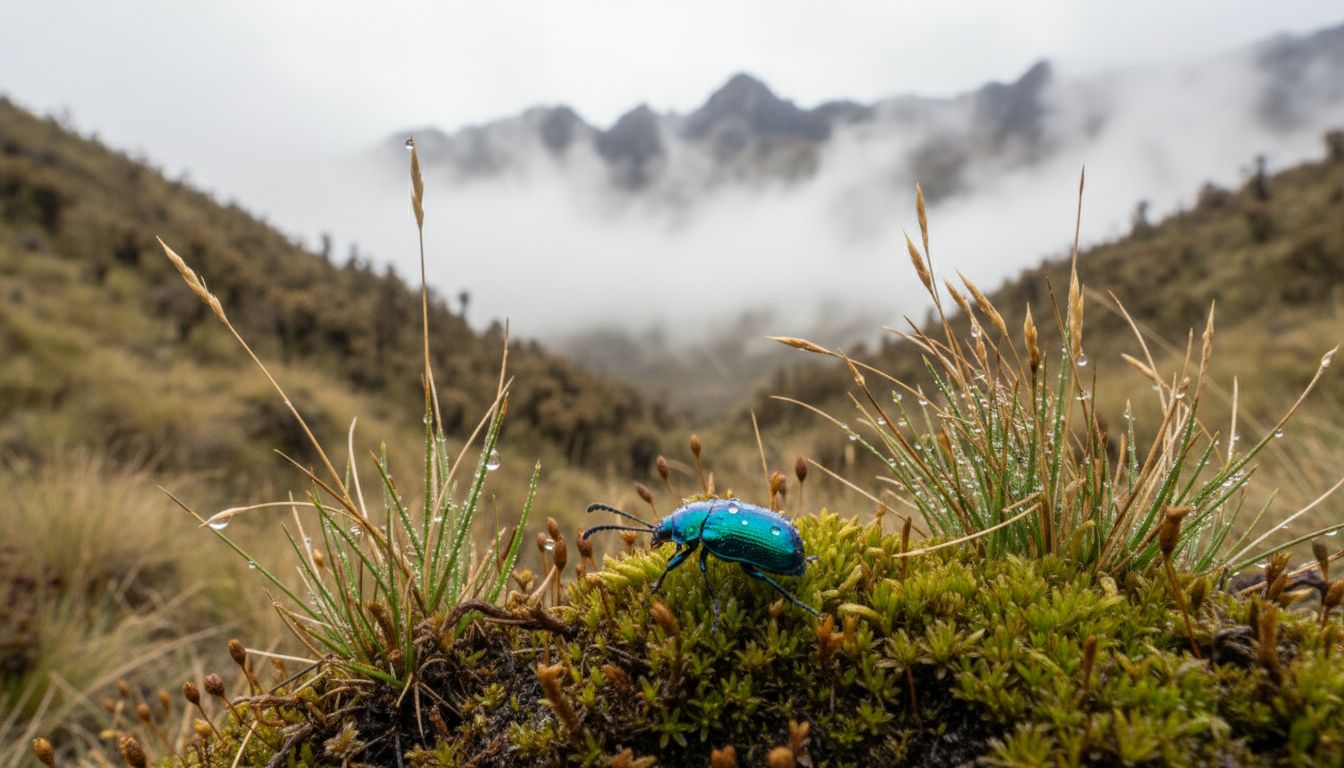
Reports have surfaced of a newly described beetle species, referred to as Lebia urkumanta, said to inhabit Ecuador's páramo above roughly 3,700 meters in elevation. While this is fundamentally a scientific and taxonomic topic, it carries a quieter relevance for the expat community in Ecuador. Many foreigners who choose to settle in or near Andean highland towns do so precisely because of proximity to landscapes like the páramo, and discoveries like this one are a reminder of how much remains unexplored in the ecosystems surrounding daily expat life.
What Makes the Páramo So Extreme
The páramo is a high-altitude Andean grassland ecosystem found across parts of Ecuador, Colombia, Venezuela, and northern Peru. It typically sits above the treeline and below permanent snowlines, and conditions there are notably harsh: intense ultraviolet exposure due to thin atmosphere, strong and often relentless winds, cold nights that can swing sharply from daytime warmth, and reduced oxygen levels at altitude.
For expats and long-term travelers who hike, bike, or simply live within reach of these zones, whether near Quito, Cuenca, or smaller highland communities, encounters with unusual or little-documented wildlife are not uncommon. The páramo's isolation and extreme conditions have long made it a place where species adapt in distinctive ways, and new findings continue to emerge from these landscapes.
The Beetle's Unusual Adaptation: Shrunken Wings
Among the traits attributed to Lebia urkumanta is a reduction in wing size. Many observers note that wing reduction is a recognized evolutionary pattern among insects living at high altitude, often discussed in connection with energy conservation and a lowered risk of being swept away by strong winds. Smaller or less functional wings can, in theory, reduce the energetic cost of flight in an environment where strong gusts might otherwise displace an insect far from suitable habitat.
That said, it's worth being clear about the limits of what can be confirmed here. Specific taxonomic details, precise morphological measurements, and the broader context of how this species fits among related beetles are not something this article can verify, since no original scientific description or peer-reviewed source was available for reference at the time of writing.
Why This Matters for Those Living in Ecuador
Ecuador's reputation as a hotspot for biodiversity is one of the quieter draws for nature-focused expats who settle in or near the Andes. Towns in the highlands, including areas around Cuenca and Quito, sit within range of páramo ecosystems that continue to yield new scientific findings. For residents with an interest in natural history, this proximity can mean a genuine chance to witness or even contribute to citizen observations of such environments, even if direct encounters with a tiny beetle are unlikely for most.
A recurring concern in discussions of science reporting is the risk of overstating unverified details. Readers who want to cite specifics about this beetle, such as its exact elevation range, wing structure, or taxonomic classification, are encouraged to consult official or peer-reviewed scientific sources rather than relying on secondhand summaries.
A Reminder on Sourcing and Verification
It should be noted plainly that no original sources were available to confirm the species name, elevation data, or wing morphology claims described here. Readers interested in the full, verified picture are encouraged to look for the original species description, which would likely appear in an entomological journal such as ZooKeys or Zootaxa, or to watch for coverage from reputable science news outlets covering Ecuadorian biodiversity.
It's also worth acknowledging a mismatch worth flagging for editorial review: this topic is fundamentally a natural science and taxonomic story, yet it has been placed within an Expat-Stories context. While the páramo setting does connect meaningfully to expat life in Ecuador's highlands, future classification of similar biodiversity topics may be better served under a dedicated nature or science category.