Ecuador's Holy Week in One Week: What Cucuruchos, Fanesca, and the Beach Exodus Will Do to a New Expat
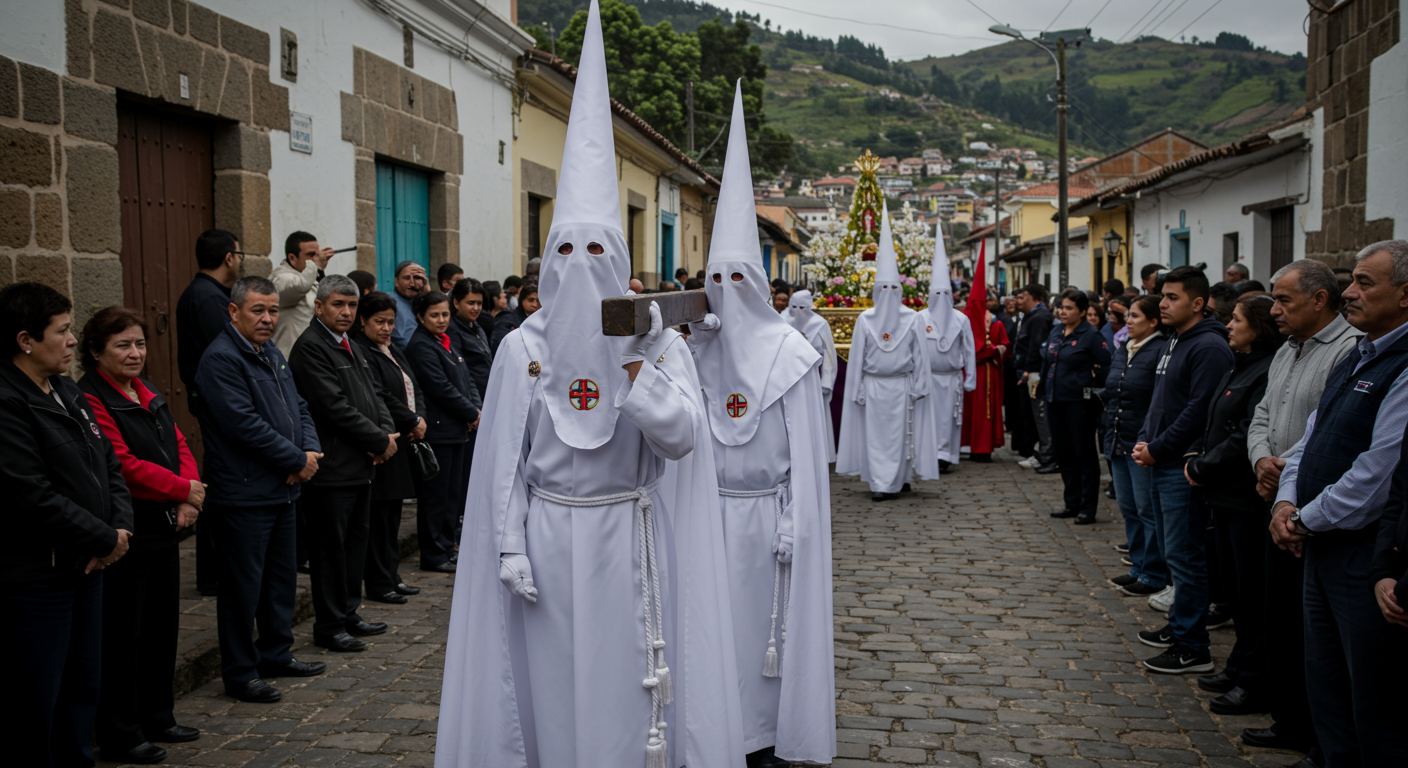
Nothing quite prepares a new expat for their first Holy Week in Ecuador. What unfolds over seven days feels like a crash course in the soul of the country - intense, overwhelming, and utterly transformative. By the time the purple robes disappear and the beaches empty, you'll understand something fundamental about your adopted home that months of ordinary living couldn't teach you.
The First Shock: Purple Robes and Hidden Faces
It starts on a seemingly normal Thursday morning in Quito's historic center. You're grabbing coffee, perhaps heading to the market, when you turn a corner and freeze. Hundreds of figures in deep purple robes move through the cobblestone streets, their faces completely hidden beneath pointed hoods, carrying wooden crosses and religious icons.
Your first instinct might be alarm - the imagery strikes many newcomers as ominous, even frightening. But watch the locals around you. Children wave excitedly. Elderly women cross themselves with reverence. Tourists snap photos while vendors sell bottled water to the penitents beneath their heavy robes.
These are the Cucuruchos, and their processions represent one of Ecuador's most profound religious traditions. For new expats, encountering them becomes a moment of cultural vertigo - you're witnessing something deeply sacred to your neighbors while feeling completely outside its meaning. The visual impact is undeniable, but understanding requires patience that most of us don't have in that first startling moment.
What strikes many expats most is the anonymity. These could be your landlord, your Spanish teacher, the person who serves you lunch every day - transformed into mysterious figures of devotion. It's your first real glimpse into how much of Ecuadorian spiritual life remains hidden beneath the surface of daily interactions.
Fanesca: When Food Becomes Cultural Baptism
Then comes the invitation that every new expat both hopes for and dreads: "Would you like to try Fanesca?" Your Ecuadorian friend, neighbor, or colleague extends this offer with particular gravity, watching your face closely for your reaction.
Fanesca isn't just soup - it's a culinary ritual involving twelve different grains and legumes, cod, and a preparation process that can take days. Families guard their recipes and techniques, and the dish appears only during Holy Week, making it simultaneously exclusive and ubiquitous.
For expats, that first bowl represents a cultural test you didn't know you were taking. The soup is complex - some find it delicious, others struggle with the unusual combination of flavors and textures. But your reaction matters more than you realize. Appreciating Fanesca signals respect for tradition and openness to Ecuadorian culture. Rejecting it, even politely, can create an invisible barrier.
Many expats describe feeling the weight of expectation as they lift that first spoonful. Everyone's watching, not with judgment exactly, but with hope that you'll "get it" - that you'll understand why this dish holds such significance. Your response becomes part of your integration story, remembered and referenced long after Easter passes.
The smart expats learn to ask questions about the ingredients, the preparation, the family traditions surrounding the meal. Even if the taste doesn't immediately appeal, showing genuine interest in the cultural importance opens doors that remain closed to those who simply smile politely and push food around their bowl.
The Great Coastal Migration: Left Behind or Swept Along
By Wednesday of Holy Week, you notice something strange happening in Quito, Cuenca, or wherever you've settled in the highlands. The city is emptying. Not gradually - dramatically. Traffic patterns shift, your regular restaurants close, even government offices shut down early.
This is Ecuador's coastal migration, and it's unlike anything most expats have experienced. Entire families pack cars with enough supplies for a small expedition and head for the beaches. Guayaquil swells to bursting. Coastal hotels that sat half-empty the week before suddenly require reservations made months in advance.
As a new expat, you face an unexpected choice: join the exodus or stay behind. Neither option is simple. Going means navigating transportation chaos, inflated accommodation prices, and crowded beaches while lacking the extended family networks that make the migration work for Ecuadorians. Staying means experiencing your adopted city as a ghost town, with most services suspended and friends unavailable.
Many expats describe feeling like observers of a massive cultural ritual they can't quite access. Ecuadorian families have been making these trips for generations - they know exactly where to go, how to travel, who to stay with. Newcomers feel the isolation of lacking these deep connections, even as they're invited to tag along on trips where they'll inevitably be outsiders.
The migration reveals something profound about Ecuadorian priorities and family structures that regular expat life only hints at. Watching an entire country reorganize itself around collective tradition gives you perspective on how individual your typical expat experience really is.
When Three Traditions Collide in Seven Days
What overwhelms most new expats about Holy Week isn't any single tradition - it's how they all layer together in compressed time. Indigenous elements blend with Catholic rituals while modern Ecuador adds its own secular touches. Markets sell traditional crafts alongside plastic religious icons. Ancient ceremonies happen blocks away from contemporary shopping centers.
For expats still learning to navigate Ecuador's cultural complexity, Holy Week presents an intensive course with no preparation time. You're expected to understand centuries of religious evolution while processing powerful visual imagery and making social decisions about participation - all while lacking the cultural foundation that makes sense of it for locals.
Many describe feeling like they're watching multiple movies simultaneously. The indigenous roots of certain practices, the Spanish colonial Catholic overlay, the modern national identity that embraces both while adding contemporary elements - it's Ecuador's entire cultural DNA compressed into one week.
The intensity can be exhausting. Every interaction carries cultural weight you're still learning to recognize. Every tradition you encounter raises questions about respectful participation versus tourist observation. By Saturday, most new expats report feeling emotionally drained from the constant cultural processing.
But there's also revelation in the overwhelm. Holy Week shows you aspects of Ecuadorian identity that emerge only during these concentrated moments. Your neighbors reveal depths of devotion, family connection, and cultural pride that everyday interactions rarely expose.
After the Dust Settles: Integration or Isolation
Easter Sunday arrives with a strange quietness. The Cucuruchos disappear back into ordinary clothes. Fanesca vanishes from restaurant menus. The coastal migrants begin their journey home. Your adopted city slowly returns to its regular rhythm, leaving you to process what just happened.
How you navigated the week matters for your long-term expat experience in ways that become clear only later. Did you engage with curiosity or retreat into expat communities? Did you ask questions about traditions or observe from a distance? Your choices during those seven intense days often determine how Ecuadorians perceive and include you going forward.
Expats who embraced the chaos - who tried the Fanesca, asked about the Cucuruchos, attempted to understand the coastal migration - often report a shift in how locals interact with them afterward. There's a recognition that you've been "baptized" into Ecuadorian culture, that you've seen the country at its most authentically itself.
Those who retreated or remained purely observational sometimes find themselves permanently categorized as outsiders, welcome but never quite integrated. The opportunity Holy Week presents for cultural immersion doesn't come again until the following year.
The lessons extend beyond Ecuador. Holy Week teaches new expats about the intensity that comes with real cultural integration - how it requires vulnerability, curiosity, and willingness to be overwhelmed. It reveals how much of authentic local life happens in concentrated moments rather than daily routines.
Most importantly, it shows you what you came to Ecuador to find, even if you didn't know you were looking for it: the chance to witness and participate in cultural traditions that run deeper than the surface-level expat experience typically allows. Those seven days become a reference point for everything that follows - a reminder of how much richness awaits when you're brave enough to dive into the deep end of your adopted culture.