Death at the Bullring: The French Surgeon Killed by a Cuenca Mob During the Geodesic Mission
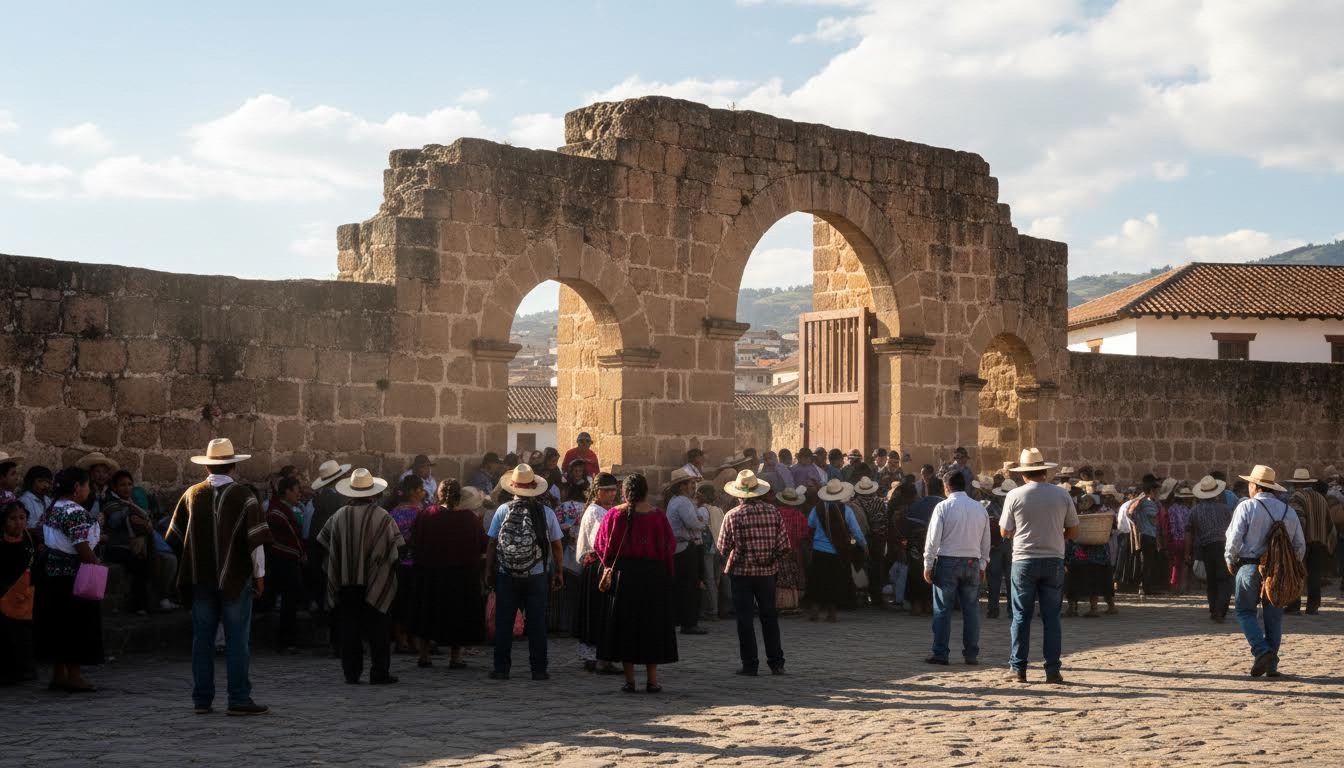
Death at the Bullring: The French Surgeon Killed by a Cuenca Mob During the Geodesic Mission
Among the many foreigners who have passed through Cuenca over the centuries, few met an end as violent or as strange as Jean Seniergues. A French surgeon attached to the famed Geodesic Mission, Seniergues found himself, in 1739, thousands of miles from Paris, in a remote outpost of the Spanish empire, where a local dispute would cost him his life. Historians of this period note that his story sits at the uneasy crossroads of science, colonial society, and personal entanglement, a reminder that even history's great scientific ventures were shaped by very human passions.
A Surgeon Far From Home
Jean Seniergues was not one of the mission's famous astronomers or mathematicians, but a surgeon, tasked with tending to the health of the expedition members during their years of fieldwork in the Andes. By the late 1730s, the Audiencia of Quito, a colonial jurisdiction encompassing much of present-day Ecuador, had become an unlikely hub for European scientific activity. It was a remote and often difficult posting, far from the comforts and protections of home, where foreign scientists depended heavily on local cooperation and goodwill.
The mission itself included some of the era's most celebrated scientific minds, and its work would eventually become legendary in the history of geodesy. Seniergues, as the expedition's medical man, occupied a supporting but essential role, one that placed him in close, sustained contact with the communities of the region, including the city of Cuenca.
The French Geodesic Mission in the Andes
The expedition, which unfolded roughly between 1735 and 1744, had a precise scientific aim: to measure a degree of meridian arc near the equator, helping to settle a fierce debate over the exact shape of the Earth. Leading figures such as Charles Marie de La Condamine, Pierre Bouguer, and Louis Godin brought considerable scientific reputations to the venture, and their eventual findings would help confirm Newton's theories about the Earth's shape.
What is often lost in accounts focused purely on the science is just how grueling the undertaking was. Years of isolation, difficult terrain, and dependence on local guides, laborers, and officials placed enormous strain on the expedition members. Historians studying the mission's history note that this prolonged, high-stress environment likely contributed to friction between the visiting Europeans and the communities hosting them.
Life and Tension in Colonial Cuenca
Cuenca in the late 1730s was a colonial city with its own established social order, and the arrival of foreign scientists, however scientifically distinguished, did not always sit comfortably within it. A recurring theme in accounts of this period is a sense of friction between visiting Europeans and local residents, rooted in cultural misunderstanding, perceived arrogance, and class divisions that ran deep in colonial society.
Into this charged atmosphere came a personal complication that would prove fateful: Seniergues became romantically involved with a local woman, Manuela Quesada, who was reportedly already engaged to another man. Such entanglements, layered on top of existing social tensions, created a volatile situation, as many chroniclers of this history have observed. What began as a private matter of the heart soon took on a public, and ultimately deadly, dimension.
Violence at the Bullring
The flashpoint came during a public bullfight in Cuenca, a popular social gathering that drew large crowds from across the city. It was in this charged, crowded setting that tensions surrounding Seniergues and his romantic rival appear to have boiled over. Accounts suggest that a confrontation erupted, drawing in bystanders and quickly escalating beyond a dispute between individuals into a broader mob action against the French surgeon.
It is worth acknowledging, as many historians of this episode do, that the exact sequence of events, who struck first, how the crowd was drawn in, and the precise roles played by various participants, remains difficult to reconstruct with full confidence. The passage of nearly three centuries, combined with limited surviving documentation, means that some details of that chaotic day are better understood as a general outline than a precise minute-by-minute account.
Death and Aftermath
Seniergues did not die instantly. Wounded in the attack, he lingered for several days before succumbing to his injuries, a slow decline that his fellow expedition members reportedly watched with horror and grief. For the other Europeans on the mission, his death was a stark and sobering reminder of just how precarious their position could be, even amid the loftiest scientific ambitions.
Colonial authorities were drawn into the aftermath, though the historical record on formal consequences for those involved in the attack is thin and, in places, contested. Some historians note that justice, in the sense of clear accountability for the mob violence, appears to have been limited or incomplete, a pattern not unfamiliar in colonial-era incidents involving foreign visitors and local populations.
Legacy of a Scientific Mission's Darkest Episode
Within the broader, celebrated history of the Geodesic Mission, Seniergues' death is often remembered as a jarring, tragic footnote, a moment when the human cost of exploration broke through the narrative of scientific triumph. It serves as a reminder that the Europeans who ventured into distant colonial territories in pursuit of knowledge faced real personal risk, shaped not only by the physical hardships of travel but by the social and cultural currents of the places they visited.
For modern readers, the story retains a compelling human-interest resonance precisely because it resists easy categorization. It is at once a tale of scientific ambition, colonial society, romantic rivalry, and sudden violence, a reminder that even the grandest expeditions in history were, in the end, made up of individual people navigating very human circumstances, sometimes with fatal results.