Cuenca's Niño Viajero: The 200-Year-Old Christ Child Who Outranks Most Generals
Cuenca's Niño Viajero: The 200-Year-Old Christ Child Who Outranks Most Generals
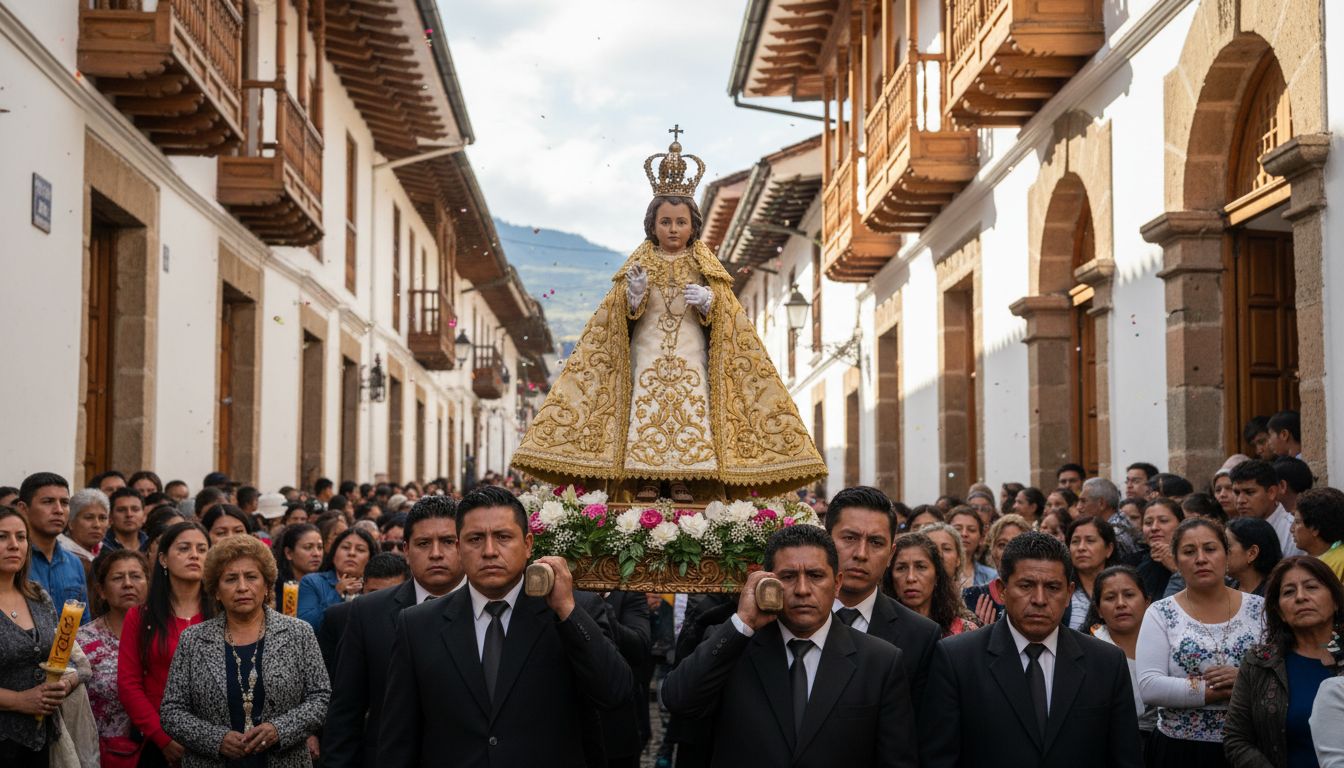
My first Christmas Eve in Cuenca did not feel like any Christmas Eve I had known before. I had read about the Pase del Niño Viajero in guidebooks and expat forums, but nothing quite prepared me for standing on a cobblestone street in the historic center, surrounded by thousands of Cuencanos, as horses, dancers, decorated trucks, and marching bands moved past colonial facades under a bright December sky. At the heart of it all, carried with a reverence I rarely see directed at anything, was a small wooden figure of the Christ Child known locally as the Niño Viajero — the Traveling Child.
Cuenca wears its devotion openly. The whitewashed walls, blue-domed cathedrals, and flower-filled plazas already feel like a stage set for something ceremonial, and on this day the entire city seems to lean into that identity. Shopkeepers close early. Families travel in from outlying parishes. Even newcomers with no connection to Catholicism find themselves swept into the procession's current, if only to see the Niño pass by.
Who Is the Niño Viajero?
The statue itself is modest in size but immense in significance. Local tradition holds that the carved figure is more than two centuries old, fashioned in a style typical of colonial-era devotional art found throughout the Andes. Many residents say the Niño earned its "traveling" name from a storied journey to Rome generations ago, where it is said to have received a blessing that elevated its status in the eyes of the faithful.
As with much oral history passed down through generations, the finer details — who carved it, exactly when it was commissioned, the precise circumstances of its travels — are treated by Cuencanos themselves as cherished legend rather than documented fact. Ask five people for the full story and you may hear five versions, each told with the same conviction. That ambiguity does not diminish the tradition; if anything, it seems to deepen it, the way a well-worn family story grows richer with each retelling.
The General Who Wears a Tiny Uniform
Perhaps the detail that most delights newcomers is the Niño's reported honorary rank within Ecuador's security forces, commonly described as that of a general. During the procession, the statue is dressed not only in the fine devotional garments one might expect of a Christ Child figure, but in a miniature military-style uniform, complete with the kind of ceremonial trappings one associates with high-ranking officers.
It is, admittedly, a startling image the first time you see it: a centuries-old wooden figure of the infant Jesus, adorned in small epaulettes and braid, paraded past crowds who treat the honor as entirely natural. The specifics of this honorary commission — when it was granted, by which institution, under what formal authority — are rarely spelled out in any document available to outsiders, and seem to exist primarily as civic lore passed down through community memory rather than official record. Whatever its precise origins, the gesture captures something distinctly Cuencano: an easy blending of solemn faith and local pageantry, delivered without a trace of irony.
Faith, History, and Civic Identity Intertwined
The Pase del Niño Viajero is, at its core, a religious observance, rooted in Catholic devotion to the Christ Child. But in Cuenca it has grown into something broader — a civic ritual that binds neighborhoods, schools, and families into a shared performance of identity. Participants spend months preparing costumes and floats depicting biblical scenes, regional folklore, and agricultural abundance, turning the procession into a living tapestry of the region's colonial and Indigenous influences.
Grandparents walk beside grandchildren, pointing out the same floats and figures they remember from their own childhoods. Vendors sell the same roasted treats and sweet drinks that have accompanied the procession for decades. For many Cuencanos, the Niño Viajero is less a historical curiosity than a living relative, folded into the rhythms of family and faith year after year.
Why Expats Fall in Love With Traditions Like This
It is easy to understand why a tradition like this captivates foreigners who choose to build a life in Ecuador. There is something disarming about a culture willing to hold its sacred figures with both deep reverence and genuine affection — serious enough to grant a statue a military rank, playful enough to dress it in a tiny uniform and parade it through the streets to music and applause.
Standing in that crowd, I found myself moved less by any single fact about the Niño's age or title than by the atmosphere of unguarded communal joy surrounding it. Living abroad often means learning to set aside the instinct to verify, categorize, and explain, and instead simply participate — to let a two-hundred-year-old wooden child in a general's uniform remind you that some traditions are less about historical precision than about the stories a community chooses to keep alive together. For many of us who have made Cuenca home, that willingness to be surprised, again and again, by local custom is exactly what keeps the city feeling new.