Cuenca’s Candlelit Ghost Lore May Be Spreading Beyond Conceptas
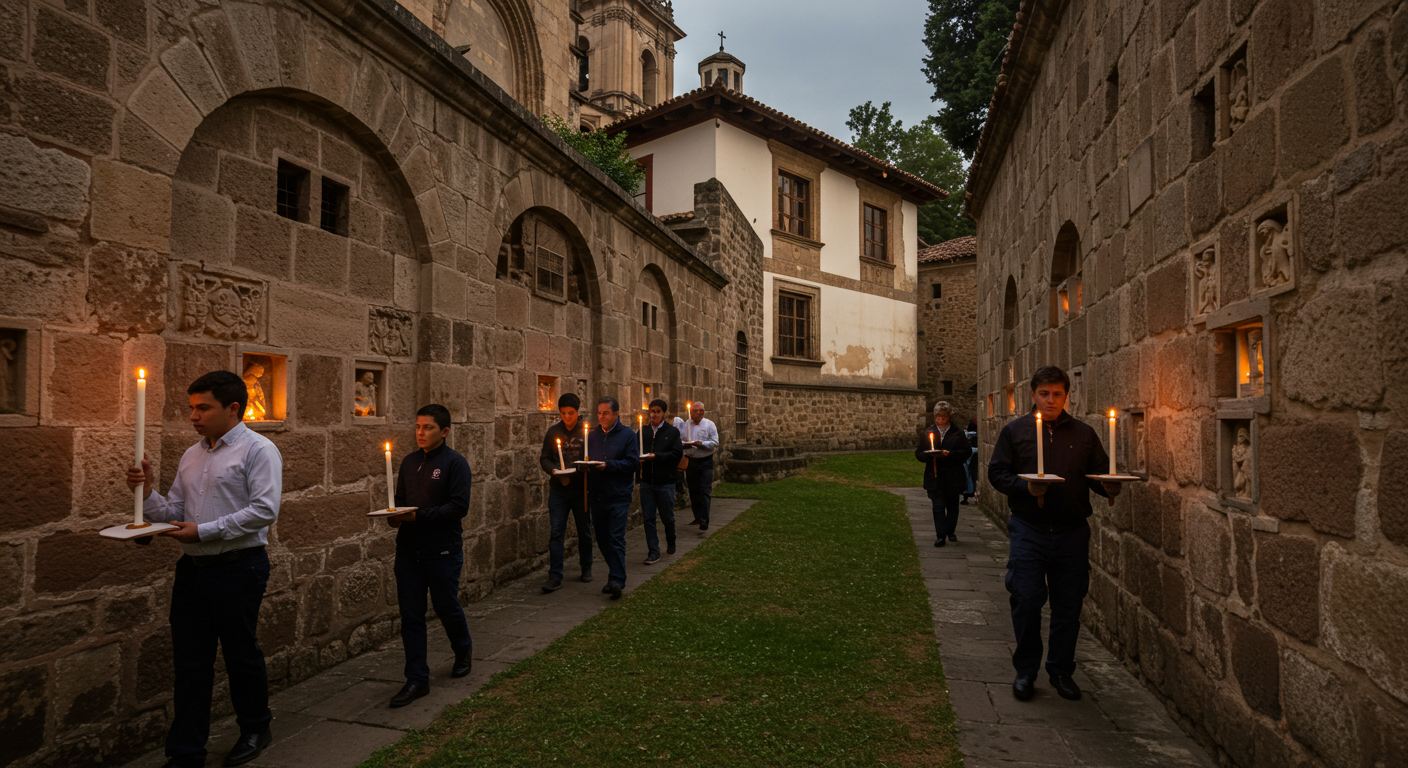
Cuenca has never needed much help when it comes to atmosphere. Old stone streets, religious architecture, quiet plazas, and the changing evening light already do much of the work. That helps explain why talk of candlelit ghost routes keeps drawing interest: they offer not just a tour, but a different way of seeing the city after dark.
Lately, the version making the rounds is that these nighttime routes may extend beyond the Conceptas Convent, reaching into cathedral crypts and even the Mansión de las Cruces. At this stage, that broader map is best treated as intriguing local buzz rather than a confirmed program. Even so, the story says something about how Cuenca’s legends travel, grow, and attach themselves to places that already feel charged with memory.
From convent shadows to a broader nocturnal map
For many people, the Conceptas Convent is the natural starting point for any conversation about Cuenca’s darker lore. Convents, cloisters, and religious museums carry a built-in sense of silence and history, making them ideal settings for stories that blur the line between documented past and whispered legend.
What makes this newer version of the ghost-route story so compelling is the suggestion of expansion. Instead of centering on one atmospheric site, the narrative widens into a city-spanning after-dark journey. In that telling, familiar landmarks stop being static heritage backdrops and become connected stops in a more theatrical urban experience.
Whether or not such an expanded route exists in a formal sense, the appeal is easy to understand. A single haunted site invites curiosity. A sequence of sites turns the city itself into the stage.
The intrigue around cathedral crypts
Few spaces carry more imaginative power than crypts. Even in cities with no ghost-tour culture at all, the word evokes ritual, burial, secrecy, and the unseen layers beneath public life. In a historic city like Cuenca, that symbolism becomes even stronger. What lies beneath a cathedral, or what people imagine lies there, naturally attracts storytelling.
That said, any mention of cathedral crypts as part of an active ghost route should be approached cautiously unless official programming or access details are confirmed through the appropriate channels. For now, the crypt angle works best as part of the city’s lore-rich atmosphere rather than as a verified visitor offering.
That uncertainty is also what makes people lean in. Are these regular tours, a special event, a seasonal performance, or simply one more story that has attached itself to the city’s sacred spaces? Those are exactly the questions expats and visitors are likely to ask when rumor, heritage, and tourism begin to overlap.
The Mansión de las Cruces as a gothic focal point
Then there is the Mansión de las Cruces, a name that seems almost made for gothic storytelling. Even without confirmed details about access, programming, or any official role in a tour, the mansion adds a dramatic note to the conversation. A place like that can quickly become the emotional center of a ghost narrative, whether through architecture, reputation, local anecdotes, or simply the power of suggestion.
Historic mansions often occupy a special place in the urban imagination. They hint at private histories rather than public ritual. They suggest old families, vanished eras, locked rooms, inherited objects, and stories that may never be fully told. When one such property enters local ghost lore, it can change the tone of the entire route, shifting it from convent mystery to something more aristocratic and cinematic.
That does not mean any haunting or formal inclusion should be assumed. But as a storytelling focal point, the mansion works because it gives the broader rumor a face, a façade, and a mood.
What expats and visitors are really drawn to
Much of the appeal here has less to do with proving paranormal claims and more to do with the experience itself. Walking by candlelight through old streets changes how a city feels. Sounds sharpen. Familiar buildings become uncanny. A doorway passed a hundred times in daylight can suddenly seem symbolic, theatrical, or mysterious.
For expats especially, these experiences often offer something more meaningful than standard sightseeing. They create a sense of entry into the emotional life of a place. Not necessarily its literal truth, but the stories people tell about it, the moods they preserve, and the way memory gets performed in public space.
That is why ghost walks can be surprisingly effective cultural experiences. They sit at the intersection of history, performance, tourism, and local identity. Even when specific legends are embellished, the atmosphere they create can still reveal something real about how a city imagines itself.
How to talk about lore responsibly
There is a useful distinction to keep in mind with stories like this: legend is not the same as documented history, and tourism storytelling is not the same as official access. All three can coexist, but they should not be confused.
For readers hoping to attend a ghost walk or explore these sites, the smart approach is simple: confirm schedules, permissions, and entry details through official tourism, church, museum, or cultural channels before making plans. That matters especially when sacred spaces, historic properties, or restricted areas are involved.
It is also worth resisting the urge to overstate what has not been verified. The most interesting version of this story may not be that a dramatic new route has already been formally established. It may be that Cuenca’s after-dark folklore is expanding in the public imagination, drawing new sites into its orbit whether or not a fixed itinerary yet exists.
A compelling Cuenca story even before full verification
In that sense, this is already a strong Cuenca story. Not because every detail has been nailed down, but because it shows how ghost storytelling evolves in a historic city. One landmark gives rise to another. A convent leads to crypts. A whispered route gains a mansion. The map grows richer as people repeat it.
For now, the idea that Cuenca’s candlelit ghost routes wind beyond the Conceptas Convent and into cathedral crypts or the Mansión de las Cruces remains best framed as intriguing rather than confirmed. But that does not diminish its pull. If anything, the uncertainty is part of the attraction.
In Cuenca, as in many old cities, the power of these routes may lie less in a fully verified itinerary than in suggestion, setting, and the pleasure of walking through history as if it might still be listening.