Bears, a Cave and Cedar Planks: The Legend Behind El Quinche's November 21 Pilgrimage Near Quito
Bears, a Cave and Cedar Planks: The Legend Behind El Quinche's November 21 Pilgrimage Near Quito
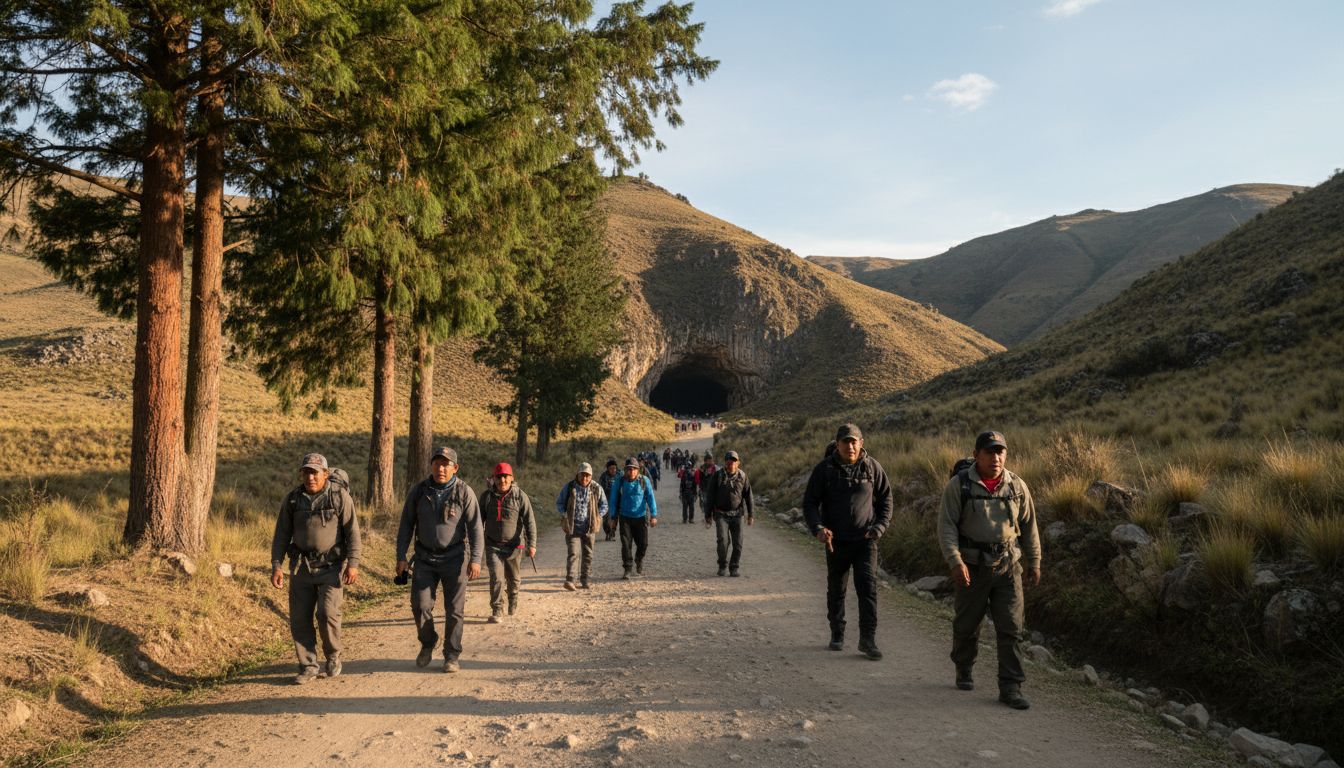
In the cold hours before dawn, a steady stream of lights moves along the roads northeast of Quito. Thousands of pilgrims, families, students, grandparents, and increasingly expats curious about the tradition, walk through the night toward the small town of El Quinche. Some set out from the capital on foot, a journey of several hours, arriving footsore and often emotional as the shrine comes into view. Many who have made the walk describe an atmosphere that feels less like a procession and more like a shared endurance ritual: vendors selling hot canelazo and empanadas, impromptu rest stops, murmured prayers, and the occasional burst of music from a passing group.
At the center of it all is the Virgen de El Quinche, a small carved image of the Virgin Mary venerated as the patroness of the region. Her shrine, the Basílica de El Quinche, becomes the focal point every November 21, when the pilgrimage reaches its peak and the town fills with visitors for the feast day.
The Legend of the Bears, the Cave and the Cedar Planks
The story behind the image has been passed down more through oral tradition and parish history than through documented historical record. According to local lore, the Virgin's image was carved from cedar wood, a material prized in colonial-era craftsmanship for its durability and ready availability in the region's forests. A recurring thread in the storytelling involves indigenous communities in the area who, in the early colonial period, faced real danger from bears said to roam the forested hillsides.
A cave figures prominently in many retellings. Some versions describe it as a place of refuge where local communities sought protection from the bears; others frame it as a site of early worship, later associated with the Virgin's intervention or protection. The details vary depending on who is telling the story, and that variation is itself part of the tradition. It's worth noting clearly that the exact origins of this legend are not verified by documented historical sources. What circulates today is best understood as a blend of oral tradition, church history, and generations of retelling rather than a settled historical account.
What does seem consistent across versions is the symbolic role the legend plays: it ties the Virgin's protective identity to a period of genuine hardship and vulnerability for the region's early inhabitants, framing her veneration as a response to real fears and real dangers, however the specific details have been shaped over time.
From Folklore to Feast Day
However the legend originated, November 21 became fixed on the religious calendar as the day of celebration, aligning with the broader Catholic feast of the Presentation of the Virgin Mary. Over generations, this date evolved into the anchor point for the pilgrimage as it's known today.
The celebrations themselves reflect a blend of formal Catholic liturgy, Masses, processions, blessings, and the kind of community festivity more associated with indigenous and mestizo cultural tradition: music, food stalls, dancing, and an atmosphere that feels as much like a community gathering as a religious observance. The shrine doesn't empty out once November 21 passes, either. El Quinche remains a pilgrimage destination throughout the year, drawing visitors from across Ecuador who come to pay respects, make requests, or fulfill personal vows, locally called "mandas," tied to the Virgin.
Why It Resonates With Expats Near Quito
For foreigners living in or visiting the Quito area, the pilgrimage offers something increasingly rare: a chance to witness a living tradition rather than a staged cultural performance. Many expats describe being drawn in not by the religious dimension specifically, but by the sheer scale of communal participation, the sense that an entire region is moving together toward something meaningful.
Joining the walk, even partially, is possible and reasonably common among curious residents. Observing respectfully matters here: this is a devotional act for the vast majority of participants, not a tourist spectacle. Visitors unfamiliar with the custom should keep a few practical and cultural points in mind: dress modestly, especially near the basílica itself; prepare for cold overnight temperatures given the elevation; avoid treating the procession as a photo opportunity at the expense of pilgrims' experience; and approach the event with the same quiet respect one would bring to any significant religious observance.
A Living Tradition
What's notable about the legend of the bears, the cave, and the cedar planks is not whether every detail can be historically confirmed, it likely never will be in full, but how persistently it has been carried forward anyway. Oral tradition and church history have done the work that formal documentation hasn't, and the story continues to shape how the Virgen de El Quinche is understood by the communities who venerate her.
The pilgrimage, then, is less a reenactment of a verified historical event and more a living expression of faith, myth, and regional identity woven together. For expats near Quito, witnessing it, even just once, offers a rare window into how legend and community can sustain a tradition across centuries, regardless of how much of the original story can be pinned down with certainty. El Quinche remains, in that sense, one of the more quietly powerful cultural touchstones within reach of the capital.