Arriving in Latacunga for Mama Negra: An Expat's First Encounter with Faith, Fire, and Fiesta
Arriving in Latacunga for Mama Negra: An Expat's First Encounter with Faith, Fire, and Fiesta
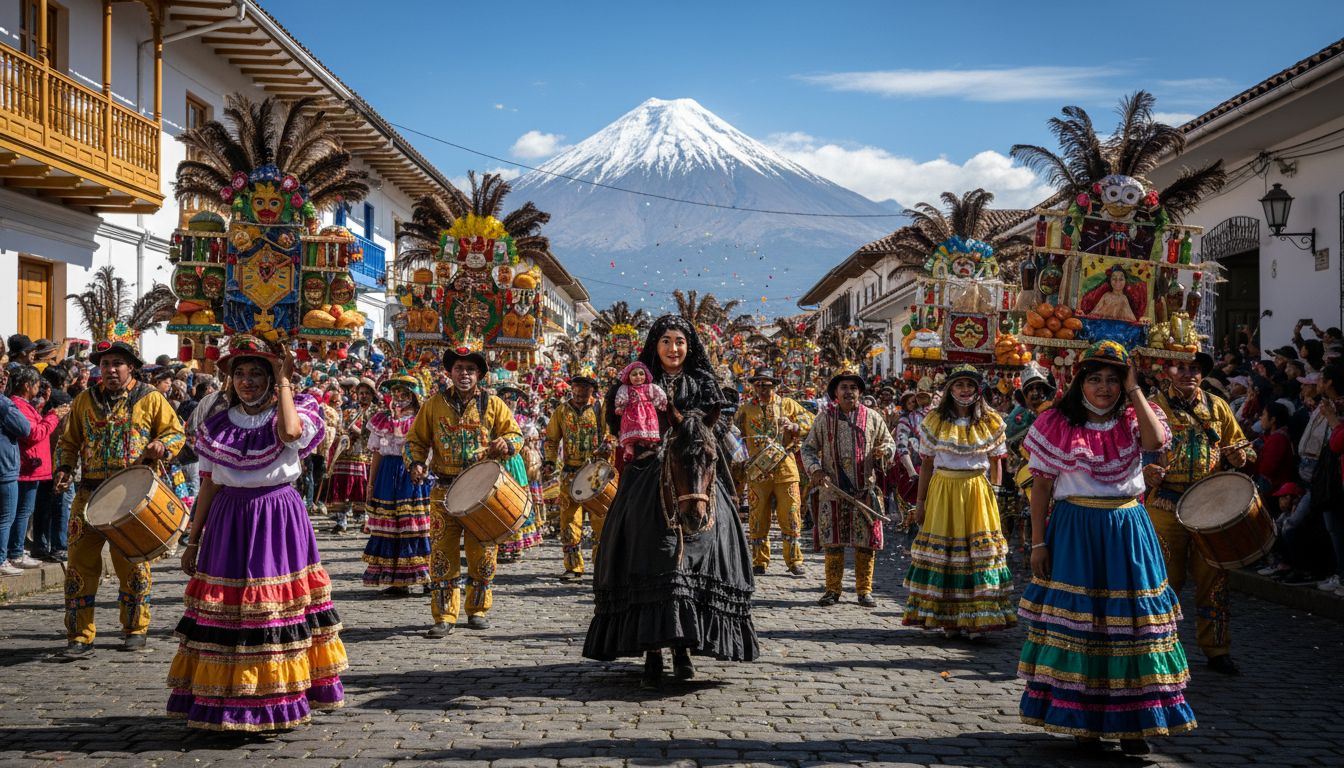
I arrived in Latacunga expecting a quiet Andean town, the kind of place travelers pass through on their way to Cotopaxi National Park without giving the town itself a second glance. Instead, I found streets humming with preparation. Vendors were stringing lights, families were airing out elaborate costumes, and there was a palpable sense that something significant was about to unfold. Locals mentioned Mama Negra almost immediately, and I quickly learned that many outsiders only know the festival's more famous November iteration, a civic celebration with its own colorful history. The one happening in front of me, spanning September 23 to 28, was different: older, more solemn, and rooted firmly in religious devotion.
As a newcomer, I found myself in the familiar position of the curious outsider, trying to absorb customs I didn't grow up with. I asked questions, watched carefully, and tried not to make assumptions. What became clear early on was that this September festival wasn't simply a spectacle for visitors. It was, at its heart, an act of communal faith.
The Legend Behind the Procession: The Virgin and Cotopaxi
The story I heard repeated, in different words but with the same conviction, centered on the Virgen de las Mercedes. According to local tradition, during a Cotopaxi eruption in 1877, the Virgin intervened to halt or lessen the destruction that might have devastated Latacunga. Many residents describe this as the moment the town's protective bond with the Virgin was sealed, and it's this narrative that anchors the religious identity of the September Mama Negra celebration.
Living in the shadow of an active volcano gives this legend a weight that's hard to appreciate from the outside. Cotopaxi is visible from many parts of town on clear days, a quiet but constant reminder of both danger and endurance. A member of the family I was staying with told me the story one evening, gesturing toward the mountain as though it were still listening. It struck me how naturally faith and geography intertwined here, how a volcanic event from more than a century ago still shapes present-day devotion.
Inside the Festival: Dates, Rituals, and Symbolic Figures
Over the six days from September 23 to 28, the town settles into a rhythm of processions, masses, and public expressions of gratitude toward the Virgin. Streets fill with participants in elaborate costumes, and the central figure, the Mama Negra character, moves through the crowd accompanied by other symbolic figures whose roles are rooted in local history and devotion.
The atmosphere is a layered mix of celebration and reverence. Devotional acts and religious services run alongside music, dancing, and processions that wind through the town's core. As an observer, I noticed how sensory the experience was: bursts of color from costumes, the smell of incense drifting through narrow streets, rhythmic music rising and falling, and chants that seemed to bind the crowd together in shared purpose. It felt less like a performance staged for visitors and more like a ritual the town was living through together.
Reflections as an Outsider: Faith, Community, and Belonging
Standing at the edge of the crowd, I felt the emotional pull of witnessing something so deeply rooted, even though I hadn't grown up with any of its symbols or stories. There was a kind of humility in that position, a reminder that understanding a place fully takes more than observation. Many visitors, myself included, come away from festivals like this with a stronger sense of how communal faith and resilience are woven into Ecuadorian identity, particularly in towns that have learned to live alongside volatile natural forces.
What stayed with me most was not any single ritual, but the underlying sense of continuity: a community choosing, generation after generation, to remember, give thanks, and carry a story forward. Living near a volcano requires a kind of ongoing negotiation with uncertainty, and the Mama Negra tradition offers one lens into how a community processes that reality through devotion, memory, and celebration. For an expat still learning the contours of local life, it was a lesson in cultural humility, and in the quiet importance of showing up, watching closely, and listening to the stories a place chooses to tell about itself.