Arriving in Cotacachi for the Fiesta de la Jora: An Expat's First Encounter with the Harvest Festival
Arriving in Cotacachi for the Fiesta de la Jora: An Expat's First Encounter with the Harvest Festival
The first sign that something was changing in Cotacachi came before I understood what it meant. Strings of decorations appeared along the main streets near the plaza, vendors began setting up stalls selling food and crafts, and there was a palpable shift in the town's rhythm. Neighbors mentioned, almost in passing, that the Fiesta de la Jora was approaching. As a relatively new expat resident, I had heard the name before but had no real sense of what it involved.
The festival generally unfolds sometime in September, though the exact scope and daily programming can vary from year to year. What struck me most in those early days was not any single event but the gradual sense of anticipation building across town, a kind of collective energy that seemed to pull everyone, longtime residents and newcomers alike, toward something significant.
What Is Chicha de Jora, and Why It Matters Here
At the heart of the celebration is chicha de jora, a fermented beverage made from jora corn, corn that has been sprouted before being dried and used in the fermentation process. Many longtime residents describe it as the symbolic centerpiece of the festival, and it seemed to appear everywhere once the celebrations began: offered at gatherings, sold at stalls, and discussed with evident pride by those who make it.
The drink is often connected, in general terms, to Indigenous and mestizo harvest traditions found throughout the Ecuadorian highlands, where corn has long held deep cultural and agricultural significance. I want to be careful here not to overstate specifics I cannot fully verify, but the sense I gathered from conversations around town was that chicha de jora represents a continuity with agricultural cycles and communal celebration that predates any single festival name.
My own first taste of chicha de jora was memorable mostly for how unprepared I was for its distinct, tangy, slightly sour flavor. It was nothing like anything in my prior experience, and that unfamiliarity felt, in a small way, like an invitation into something the community holds with genuine meaning.
Music, Dance, and the Rhythm of the Celebration
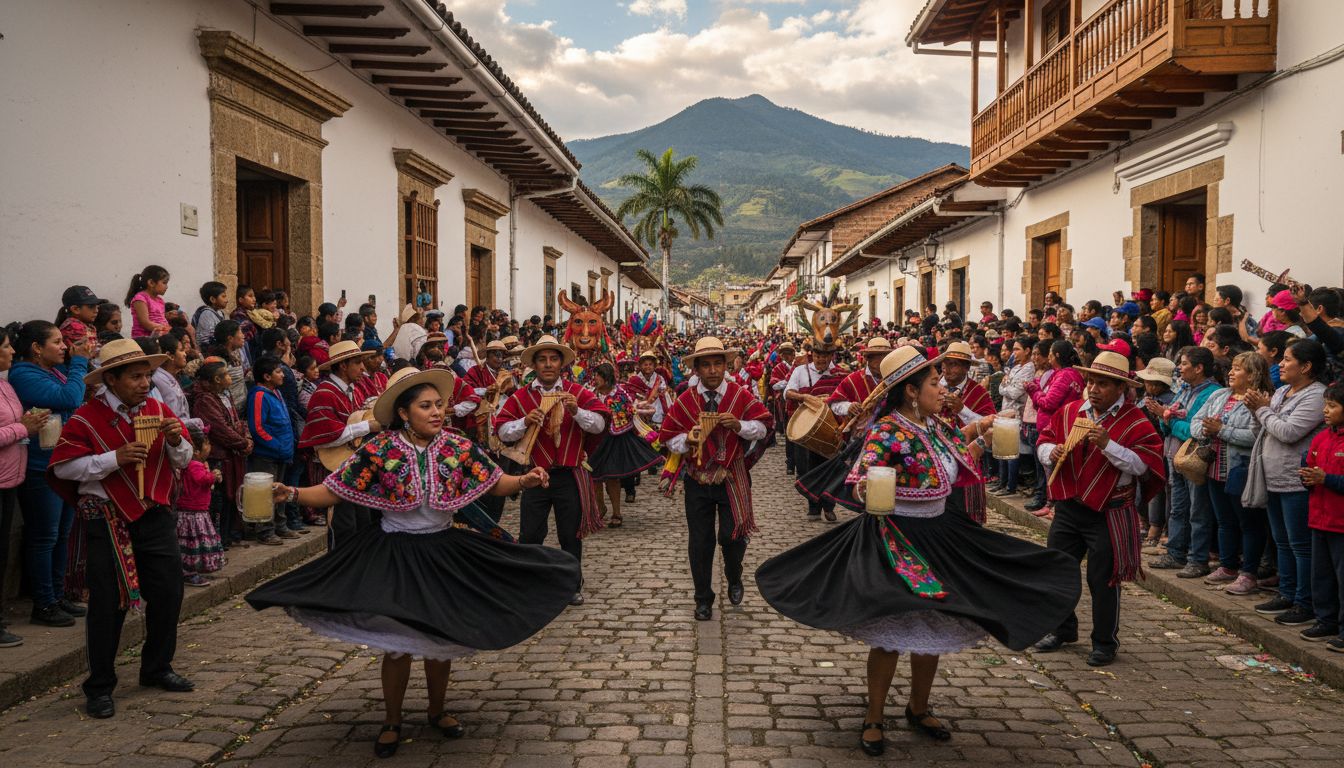
Live music seemed to be a constant presence throughout the festival period, with traditional instrumentation and rhythms drawing people into the streets and plazas. Dance groups performed in coordinated movements that clearly reflected practice and tradition, though I was in no position to identify the specific meaning behind each performance.
What stood out most was how participatory the atmosphere felt. This was not a spectator event in the way I might have expected. People of all ages moved between watching and joining in, and there was a sense that the celebration belonged to everyone present rather than being staged for an audience.
As an outsider, I found myself uncertain at first about whether to join the dancing or simply observe respectfully from the edges. A few local acquaintances encouraged me to participate, and doing so, even imperfectly, felt like a small but meaningful way of engaging with the community rather than remaining at a distance.
Navigating the Festival as a Foreign Resident
Practically speaking, the festival period brought larger crowds than I was used to in Cotacachi, along with shifting schedules that were not always easy to track in advance. I found it helpful to ask neighbors and local shopkeepers about timing rather than relying on any single fixed source, since events and programming seemed to adjust based on local decisions.
There were small moments of cultural learning throughout: conversations with vendors about how chicha de jora is prepared, observations about which dances seemed to carry particular importance, and simple exchanges that helped me feel slightly more connected to the town beyond my usual daily routine.
For other expats or visitors hoping to experience the festival, I would encourage checking with local sources closer to the date, since exact schedules, specific days of programming, and the overall scope of events can shift from year to year. What I experienced was one version of the celebration, shaped by the particular year and circumstances I encountered.
Why Fiesta de la Jora Resonates Beyond the Festival Days
Beyond the music, dance, and chicha de jora itself, the festival seemed to speak to broader themes of harvest, community, and cultural continuity that many observers note are woven throughout life in the Andean highlands. It offered a window into rhythms of celebration and agricultural connection that extend well beyond any single set of festival dates.
For me, as an expat still learning the contours of life in Cotacachi, the experience underscored how much remains to be understood through observation, humility, and willingness to participate rather than merely watch. The festival did not hand me easy answers about local tradition, but it did deepen my appreciation for the layered history and communal spirit present in this part of Ecuador.
My closing reflection is a simple one: cultural celebrations like the Fiesta de la Jora are best approached with curiosity and respect rather than assumption. As a newcomer, my role is not to claim expertise but to listen, participate where welcomed, and remain grateful for the chance to witness traditions that carry meaning far beyond what any single visitor could fully grasp.