An Ecuadorian Explorer Says He Met Three Faceless Beings Deep Inside the Cueva de los Tayos
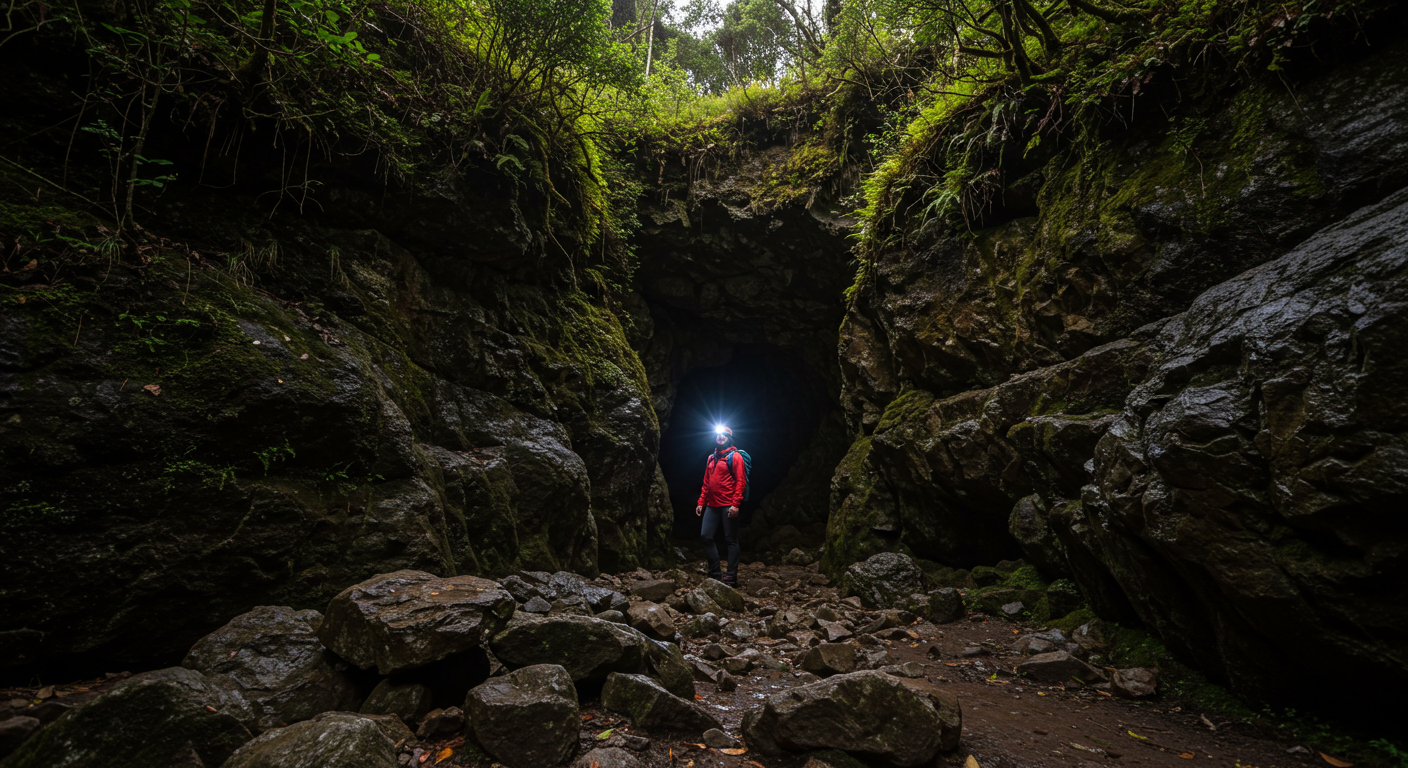
An Ecuadorian Explorer Says He Met Three Faceless Beings Deep Inside the Cueva de los Tayos
A Legend That Refuses to Die
Deep in Ecuador's Morona-Santiago Province, in the dense folds of the Amazonian foothills, lies the Cueva de los Tayos — a real, physically documented cave system that has captured imaginations for over half a century. Named for the oilbirds, or tayos, that nest in its shadowy recesses, the cave has long drawn a curious mix of speleologists, treasure hunters, mystics, and storytellers, each seeking something different in its depths.
Now a new account has reignited interest in this storied place. An Ecuadorian explorer says that during a descent into the cave's lower chambers, he encountered three beings without faces — a claim that, whether taken as literal testimony or symbolic folklore, has once again placed the Cueva de los Tayos at the center of conversation among locals and expats alike.
The Explorer's Account
The story, as it has circulated, is presented as a personal testimonial rather than a verified event. According to the explorer's retelling, the descent began like many others: a narrow passage giving way to deeper darkness, the temperature dropping, and the ordinary sounds of the surface world fading into an absolute, pressing silence.
He describes losing his sense of direction as the tunnel narrowed, the beam of his light struggling against walls that seemed to swallow it whole. It was in this disorienting stretch, he says, that he became aware of three figures standing motionless in a chamber ahead.
The beings, according to his account, were humanoid in shape but bore no discernible facial features — no eyes, no mouth, no expression to read. He describes them as still, silent, and seemingly unbothered by his presence. His reaction, by his own telling, was a mixture of paralyzing fear and a strange, inexplicable reverence, as though he had stumbled into something not meant to be witnessed.
He offers no explanation for what happened next, only that he retreated the way he came, and that the memory has stayed with him since.
A Cave Steeped in Mystery
Stories like this do not emerge from nowhere. The Cueva de los Tayos carries a reputation that predates any single testimonial, rooted in decades of legend and speculation.
The cave rose to international attention following a 1969 expedition led by Hungarian-Argentine explorer Juan Moricz, who claimed to have found evidence of a hidden metal library and traces of a lost civilization within its tunnels. These claims were later popularized on a much larger scale by Swiss author Erich von Däniken in his 1973 book, The Gold of the Gods, which suggested the cave held artifacts left behind by ancient astronauts.
It is important to note that these historical claims have never been confirmed by mainstream archaeology. They remain part of a broader folklore surrounding the cave rather than established fact. Subsequent expeditions, including scientific surveys, have not produced the metal library or definitive evidence of an advanced lost civilization. Still, the legend persists, and the cave continues to draw those hoping to uncover something extraordinary in its depths.
Between Belief and Skepticism
As with the cave's earlier legends, there is no corroborating evidence for the claim of faceless beings. No photographs, no witnesses beyond the explorer himself, and no physical trace of the encounter have been presented.
Rational explanations abound for experiences like this. Extended time in total darkness and disorientation can produce hallucinations or altered perception. Oxygen levels in deep cave systems can fluctuate, potentially affecting cognition and inducing sensory distortions. Cultural exposure to the cave's already rich mythology may also shape how an unsettling moment in the dark is later interpreted and recalled.
At the same time, those inclined toward belief in the unexplained see the cave differently — as a place where ordinary rules may not fully apply, and where personal encounters like this one serve as further evidence that the Cueva de los Tayos guards secrets beyond conventional understanding. This piece does not attempt to resolve that tension. The encounter is presented as testimony, not verified fact, and readers are left to weigh it as they see fit.
Why the Story Resonates
Tales like this endure in Ecuador — and among the expat communities who make their lives here — because they tap into something larger than the cave itself. The Cueva de los Tayos sits at the intersection of real geography and imagined possibility, a place where documented history and speculative legend have long coexisted.
For explorers and storytellers alike, the cave represents the pull of the unknown: the idea that even in a well-mapped world, there remain pockets of genuine mystery. Personal testimonies, whether fully believed or gently doubted, add new chapters to that mythology.
In the end, stories like this one are less about proving what lies in the darkness and more about why humans keep returning to it — drawn, again and again, to the places where certainty runs out and imagination takes hold.