An Adventure That Almost Went Too Far
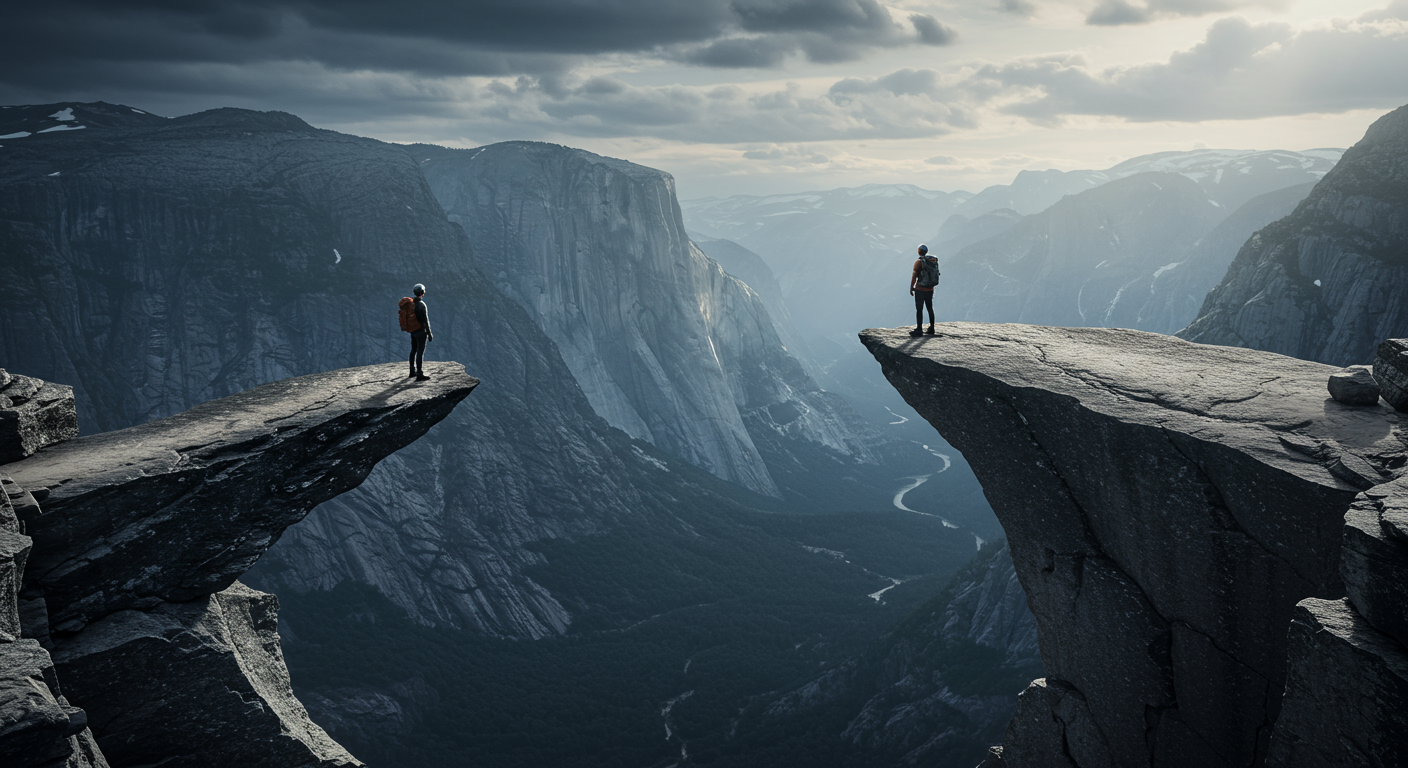
Living as an expat in Ecuador, I thought I'd developed a good sense for adventure. I'd hiked sections of the Andes, explored colonial streets in the rain, and navigated local markets where my Spanish was more gesture than grammar. But there's a razor-thin line between embracing the unknown and walking blindly into danger—a line I crossed one misty morning in the cloud forest outside Mindo.
The Setup: When Wanderlust Meets Poor Judgment
It started innocently enough. After eight months in Quito, the weekend routine of structured tours and guidebook recommendations was starting to feel stale. When my neighbor Carlos mentioned an "off-the-beaten-path" waterfall that required "just a little hiking," I jumped at the chance. No tours, no crowds—pure adventure.
The plan seemed foolproof: drive to a remote trailhead two hours from the city, hike to this hidden waterfall, and return by evening. I packed light—water, snacks, my phone for photos—and told myself this was exactly the kind of authentic experience I'd moved to Ecuador to find. The fact that Carlos had only been there once, years ago, somehow didn't seem important.
Looking back, the red flags were blazing. The "trailhead" was just a spot where Carlos vaguely remembered parking. The trail itself was barely visible—more suggestion than path, carved by occasional foot traffic and wandering animals. But I was drunk on the excitement of discovery, of finally doing something that wouldn't end up in someone's "Top 10 Ecuador Adventures" blog post.
Point of No Return: When Everything Started Unraveling
Three hours into what should have been a two-hour hike, reality hit: we were completely lost. The cloud forest had earned its name—thick mist rolled in like a living thing, reducing visibility to maybe twenty feet in any direction. Every tree looked identical, every small clearing could have been one we'd passed an hour earlier.
Carlos, who had been confidently leading the way, started stopping more frequently to study landmarks that simply weren't there. My phone showed only a lonely blue dot floating in a digital sea of green, with no trails marked anywhere. The battery was draining fast, probably from desperately searching for signal in this cellular dead zone.
The moment I knew we were in serious trouble came when we reached what should have been our destination: not the "magnificent cascade" Carlos remembered, but a pathetic trickle of water sliding down some moss-covered rocks. Either this wasn't the right place, or the dry season had reduced our waterfall to something barely worth a photo. More terrifying was the realization that if we'd been wrong about our destination, we were probably catastrophically wrong about our route back.
In Too Deep: When Panic Sets In
By 4 PM, with maybe three hours of daylight remaining, panic crept up my throat like bile. We'd been walking in what we desperately hoped was the direction of our car for two hours without seeing anything remotely familiar. My water was nearly gone, and the temperature was dropping as afternoon shadows lengthened.
Carlos suggested splitting up to cover more ground—a suggestion I shot down immediately, remembering every survival story where that decision ended in tragedy. Instead, we tried following the pathetic stream we'd found, reasoning that water flows downhill toward larger rivers or roads. But in the cloud forest, streams seem to mock logic, disappearing underground and reappearing in directions that make no sense.
The worst moment came when we heard voices echoing through the mist. Excited, we crashed through the underbrush toward salvation, only to realize after twenty exhausting minutes that we were hearing our own voices bouncing off canyon walls. We'd been walking in circles, and now we were even deeper in the wilderness than when we'd started.
Salvation: A Lesson in Humility
Our rescue came in the most humble form imaginable: Don Miguel, a local farmer checking on his cattle. We spotted him through the mist around 6 PM, just as I was seriously calculating whether we'd survive a night in the forest. My Spanish—usually adequate for coffee orders and basic directions—suddenly seemed laughably inadequate for explaining our predicament.
Fortunately, Don Miguel had clearly encountered lost gringos before. With remarkable patience and what I suspect was barely suppressed amusement, he listened to our fumbling explanation and nodded with the weary understanding of someone who'd seen this exact scenario countless times.
The waterfall we'd been seeking was apparently two valleys over from where we'd ended up. The "trail" we'd followed was nothing more than an old cattle path leading nowhere any sane tourist would want to go. Don Miguel walked us back to civilization—a forty-five-minute journey that revealed just how spectacularly lost we'd become. As we reached our car, still miraculously where we'd left it, I pressed some crumpled bills into his weathered hand. The money felt inadequate for someone who'd potentially saved our lives.
Hard Truths: Adventure vs. Stupidity
The silent drive back to Quito gave me hours to confront some uncomfortable truths. In my eagerness to escape the expat bubble and find "authentic" experiences, I'd confused recklessness with adventure. Real adventure requires preparation, respect for local conditions, and brutal honesty about your own limitations.
Eight months of expat life hadn't made me an expert on Ecuador's geography or hidden dangers. My comfort navigating Quito's streets and managing day hikes had created a false confidence that nearly got us killed. I'd fallen into the classic expat trap of assuming that living somewhere makes you qualified to explore its wildest corners.
Most humbling was realizing the value of genuine local knowledge—not Carlos's rose-tinted memories, but the deep, practical expertise of people like Don Miguel who know every ridge and stream intimately. That day fundamentally changed how I approach adventure. I still seek experiences off the beaten path, but now I invest in proper preparation: detailed topographic maps, emergency supplies, and most importantly, experienced local guides who can keep wanderlust from becoming a survival situation.
The irony isn't lost on me: my attempt to avoid touristy experiences led to the most clichéd expat mistake imaginable—underestimating the wilderness while overestimating my own preparedness. But sometimes life's most valuable lessons come wrapped in embarrassment, delivered by a patient farmer who's rescued overconfident foreigners more times than he can count.