A Wrong Turn That Led to the Best View
There's something humbling about being completely lost in a new city. Familiar landmarks disappear, street signs become indecipherable puzzles, and that confident stride you had leaving your accommodation transforms into hesitant steps and constant phone-checking.
I was three weeks into my new life abroad, still navigating the maze of unfamiliar streets with the determination of someone who refuses to admit they need help. My destination was simple enough—a recommended café that promised the best local coffee and a chance to practice my rusty language skills with friendly locals. Armed with a screenshot of the map and what I thought was a foolproof sense of direction, I set off with confidence.
The Mistake That Changed Everything
Twenty minutes into what should have been a ten-minute walk, I realized I was nowhere near where I intended to be. The bustling commercial street I was supposed to find had been replaced by a quiet residential area with narrow cobblestone paths winding uphill. My phone showed I had somehow taken a completely wrong turn several blocks back, heading in the opposite direction from my intended destination.
The rational thing would have been to retrace my steps, return to familiar territory and start over. But something about the peaceful atmosphere of this unexpected neighborhood made me pause. The morning sun was casting long shadows between old buildings, and the path ahead curved invitingly around a bend I couldn't see past. Instead of turning back, I made a spontaneous decision that would change my entire day: I kept walking.
Following the Unexpected Path
What started as stubbornness slowly transformed into genuine curiosity. This route was nothing like the main tourist areas I'd been exploring since arriving. Here, laundry hung from wrought-iron balconies, elderly residents sat on doorsteps sharing quiet conversations, and small gardens overflowed with plants I couldn't identify but found beautiful nonetheless.
The path continued to climb, and with each step, the sounds of the city below grew fainter. I passed a small shrine tucked into a wall, its flowers fresh and colors vibrant against weathered stone. An old man tending his rooftop garden waved as I walked by, and I found myself waving back with genuine enthusiasm rather than tourist politeness.
The higher I climbed, the more I sensed I was approaching something special. Buildings became sparser, giving way to small terraces and viewpoints where previous walkers had clearly paused to rest. The anticipation was building, though I had no idea what I was anticipating.
The Discovery
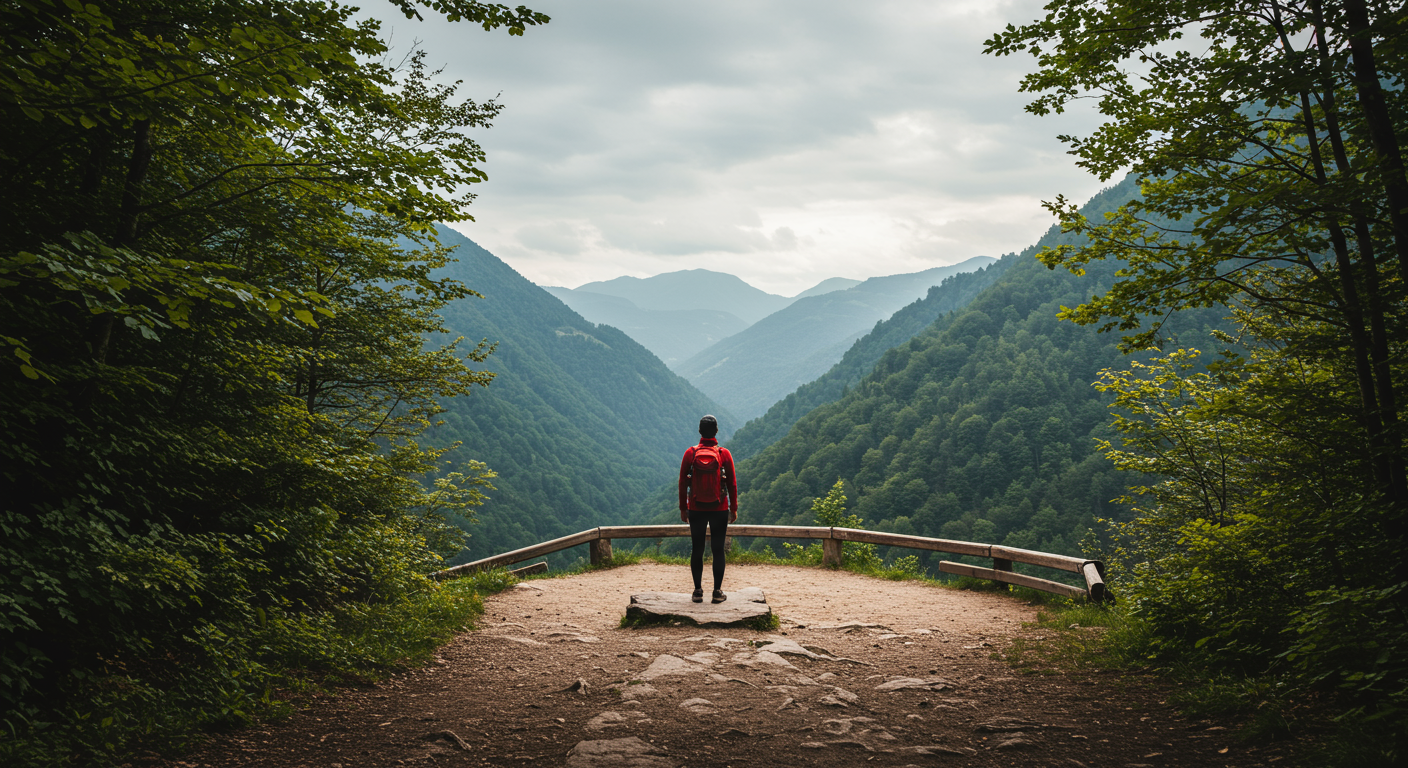
When I finally reached the top of the winding path, I understood why the journey had felt so purposeful. Before me stretched a panoramic view that no guidebook photo could have prepared me for. The entire city lay spread below like a living map, with the river cutting a silver line through neighborhoods I was just beginning to recognize. In the distance, mountains rose in layers of blue and green, their peaks catching the morning light.
But it wasn't just the scope of the view that took my breath away—it was the intimate details that made it feel personal. I could see the café I had originally set out to find, a tiny dot among the buildings that now seemed so close yet irrelevant. The park where I'd been practicing morning runs was there too, and the market where I'd been slowly learning to bargain for fresh produce. From this vantage point, my new city revealed itself as a cohesive whole rather than a collection of confusing fragments.
I stood there for what must have been twenty minutes, watching the city wake up below me. Buses moved like toys along the streets, people appeared and disappeared into buildings, and the sun slowly burned off the morning haze to reveal details I hadn't noticed before.
More Than Just a View
As I was taking in the scenery, I heard footsteps on the path behind me. An elderly woman appeared, carrying a small bag and walking with the easy pace of someone who makes this climb regularly. She smiled and gestured toward the view, saying something in the local language that I couldn't quite understand but whose meaning was clear: isn't it beautiful?
In broken phrases and enthusiastic gestures, we managed a conversation about the view, the city, and how I'd ended up here by accident. She laughed when I explained my wrong turn, then pointed to various landmarks below, telling me their names and sharing what I gathered were personal stories connected to each place. Though we shared perhaps fifty words of common vocabulary, those ten minutes of conversation taught me more about my new home than weeks of guidebook reading.
Before she continued on her way, she pointed to a small path I hadn't noticed, indicating it would take me down to the main square—a much more direct route than the way I'd come up. But she also gestured back toward the viewpoint and said something that sounded like "come back." The meaning was clear: this place would be here whenever I needed it.
Lessons from Getting Lost
That wrong turn became a regular right turn in the weeks that followed. I found myself returning to that viewpoint whenever I felt overwhelmed by the challenges of adapting to a new culture, whenever I needed perspective on a difficult day, or simply when I wanted to remember why I'd chosen this adventure in the first place.
The experience fundamentally changed how I approach not just travel, but life in unfamiliar situations. I learned to see wrong turns not as mistakes but as invitations to discover something unexpected. Some of my best experiences since then—the hidden restaurant with no sign, the local festival I stumbled into, the friendship that started with asking directions—have come from moments when I chose curiosity over efficiency.
There's something profound about realizing that the best discoveries often happen when we're not actively seeking them. That morning, I was looking for coffee and conversation. Instead, I found a sanctuary, a new perspective on my adopted city, and a reminder that getting lost sometimes means finding exactly where you need to be.
The café I originally set out for? I eventually found it, of course. The coffee was good, but it wasn't life-changing. The view from that accidental detour, however, continues to be the backdrop against which I measure all my other discoveries in this city. Sometimes the best destinations are the ones we never planned to reach.