A Town That Appears on No Tourist Map
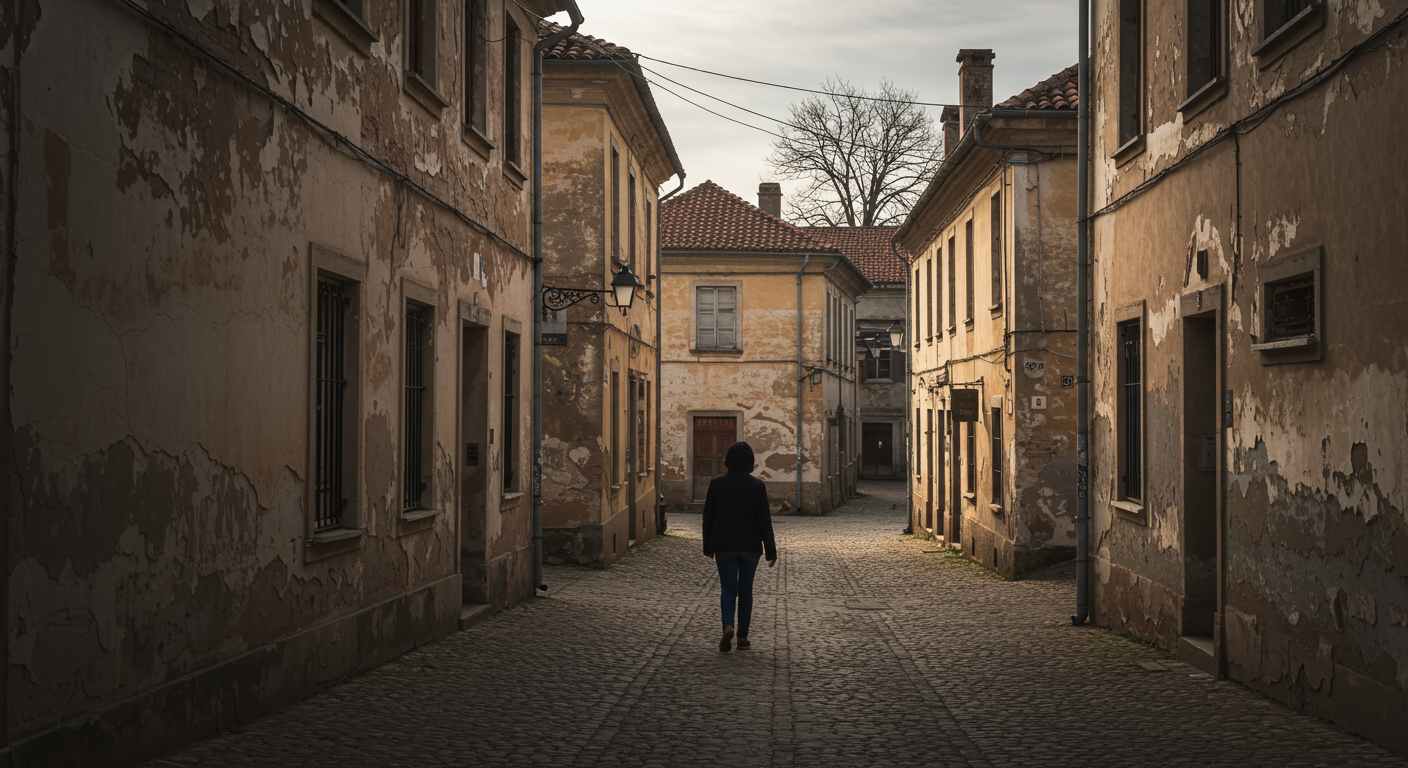
I arrived without any sense that I was arriving somewhere important. There was no lookout point, no plaza framed for photographs, no obvious sentence to say about the place after the first ten minutes. The streets were quiet in an unperformed way. A dog slept in a doorway as if it had measured the afternoon correctly. A few faded signs hung above small businesses with the weary confidence of places that expected regulars, not attention. Nothing asked to be admired. That was what drew me in.
Some towns seem to exist just outside the usual field of vision. They are not hidden, exactly. They are simply left out of the way people talk about where to go, where to move, where to begin a better version of life. They do not appear in glossy itineraries or in the tidy fantasies that travel writing sometimes prefers. You pass through them on the way to somewhere else, or hear their names only in practical conversations, as if they belong more to errands than to longing.
It is easy to confuse invisibility with emptiness. They are not the same thing. A place can be overlooked and still be full of structure, habit, and meaning. It can be absent from recommendation lists and still be deeply inhabited by the people who know how its mornings work, where the shade reaches first, which shop closes early, and which corner holds the last warmth of the day. What makes a town feel invisible is not a lack of life. It is the absence of narration. Nobody has prepared a story about it for you before you get there.
Arriving Somewhere That Feels Unlisted
The first thing I noticed was the tempo. Not slowness in the romantic sense, but a rhythm uninterested in display. Metal shutters lifted. Brooms pushed dust from one threshold to another. Someone leaned from a second-floor window to shake out a cloth. A bus stopped, sighed, and moved on. The town felt less like a destination than like an ongoing sentence I had entered in the middle.
That feeling can be unsettling if you are used to places that introduce themselves quickly. I had no landmarks to orient my emotions around, no instant proof that I had chosen well. Instead I had texture: the chalky light on walls late in the afternoon, the silence between passing vehicles, the particular sound of cups being stacked somewhere inside a cafe. I was drawn not by what the town promised, but by what it withheld.
What Makes a Place Feel Invisible
Unknown places still carry a certain glamour. Overlooked places usually do not. That is the difference. The unknown can be imagined as waiting to be discovered. The overlooked is already there, already complete, and somehow still passed over. For an expat, that distinction matters. It changes the emotional contract. You are not entering a place that wants to impress you. You are entering a place that may never think of you at all.
There was relief in that, and discomfort too. A town that does not perform itself for visitors leaves you alone with your own attention. Without spectacle, you start noticing what you usually edit out: the repetition of errands, the patience of older people sitting outside, the ways neighbors acknowledge one another without pausing long enough to call it conversation. Invisibility, I learned, can be social as much as geographic. Some places are omitted not because they lack character, but because their character does not translate neatly into marketing.
Learning the Town by Repetition
I began to know the town in the least dramatic ways. The bakery window changed by small degrees. The same bus stop gathered the same cluster of people each morning, though their combinations shifted like weather. In the evening, one stretch of wall held sunlight longer than the rest of the street, and people drifted toward it almost unconsciously. A routine emerged before affection did.
That may be the most honest way to come to a place: not through revelation, but through return. The second coffee at the same counter. The third walk down the same block. The gradual recognition that you no longer have to look up to know where you are. Familiarity replaced spectacle. I stopped asking what there was to see and started noticing what repeated itself faithfully enough to become a kind of welcome.
Belonging did not arrive as a grand feeling. It came in fragments. The pause before speaking became shorter. My body adjusted to the timing of things. I knew when a shop might still be open and when I had already missed my chance. I learned where to stand to let someone pass on a narrow sidewalk without creating awkwardness. These are small lessons, but they are the grammar of partial belonging.
The People Who Give the Town Its Shape
The town was defined less by notable individuals than by recurring figures. The woman who carried her shopping with a deliberate steadiness that suggested she had made this same trip for years. The man who seemed to know every doorway worth pausing in. The workers opening up in the morning, moving with the efficiency of repetition rather than urgency. The children crossing a square as if it were an extension of home.
No single interaction was extraordinary. That was the point. Character emerged through gestures, routines, and forms of recognition too subtle to describe as friendship. A nod. A small joke. The soft correction when I stood in the wrong place or misunderstood the order of things. Community was not announced. It was felt in patterns. People seemed to know one another not through dramatic intimacy, but through accumulated sightings, shared timing, and the steady fact of having been present in one another's peripheral vision for years.
As an outsider, I was first aware of how visible I was. Then, over time, I became aware of being less so. That shift did not mean I had disappeared into the town. It meant I had stopped interrupting its surface quite so much. There is a quiet dignity in being incorporated at that level, not as a story, but as a recurring fact.
Why Places Like This Matter to an Expat
Many expats begin with the search for beauty, novelty, or reinvention. But after the first excitement fades, another need often rises: the need for grounding. A town that appears on no tourist map can offer that, though not always comfortably. It gives you fewer ready-made meanings to lean on. There are no curated highlights to distract you from yourself. If you are lonely, you feel it more clearly. If you are impatient, the town does not rush to reassure you. If you are attentive, however, it begins to answer in small ways.
There is relief in living somewhere that does not constantly frame itself as an experience. You are allowed to have ordinary days. You are allowed to be unremarkable. Yet there is also a challenge in that freedom. Without the excitement of elsewhere to sustain you, you must decide whether daily life is enough. Whether repetition can become affection. Whether being lightly known is a form of home, even when it never turns cinematic.
For me, places like this matter because they resist fantasy. They do not promise transformation on arrival. They ask for patience instead. They remind an expat that a life abroad is not made only of discoveries, but of habits. Not of dramatic adaptation, but of learning how to stand inside someone else's ordinary world without demanding that it become extraordinary for your sake.
What the Town Gives Back Slowly
In time, the town gave back a feeling I had not expected: quiet attachment. Not devotion, not certainty, but something steadier. I began to miss streets while still walking on them. I noticed when a shutter stayed closed longer than usual. I felt the evening settle not as scenery, but as part of a shared rhythm I had been allowed to enter.
Some places resist instant meaning. They do not reveal themselves in the first conversation or the first weekend or the first confident description sent to a friend. They ask to be watched longer than most of us are used to watching. They reward attention that is neither hungry nor possessive. In return, they offer intimacy without spectacle.
That may be why a town that appears on no tourist map can stay with you more deeply than places designed to be remembered. It asks almost nothing except presence. Then, slowly, it teaches you how much presence can contain.