A Ticketed 'Ruta de Fantasmas' Now Walks Cuenca's Haunted Center: The Figures Behind Barojo's Ghost Tour
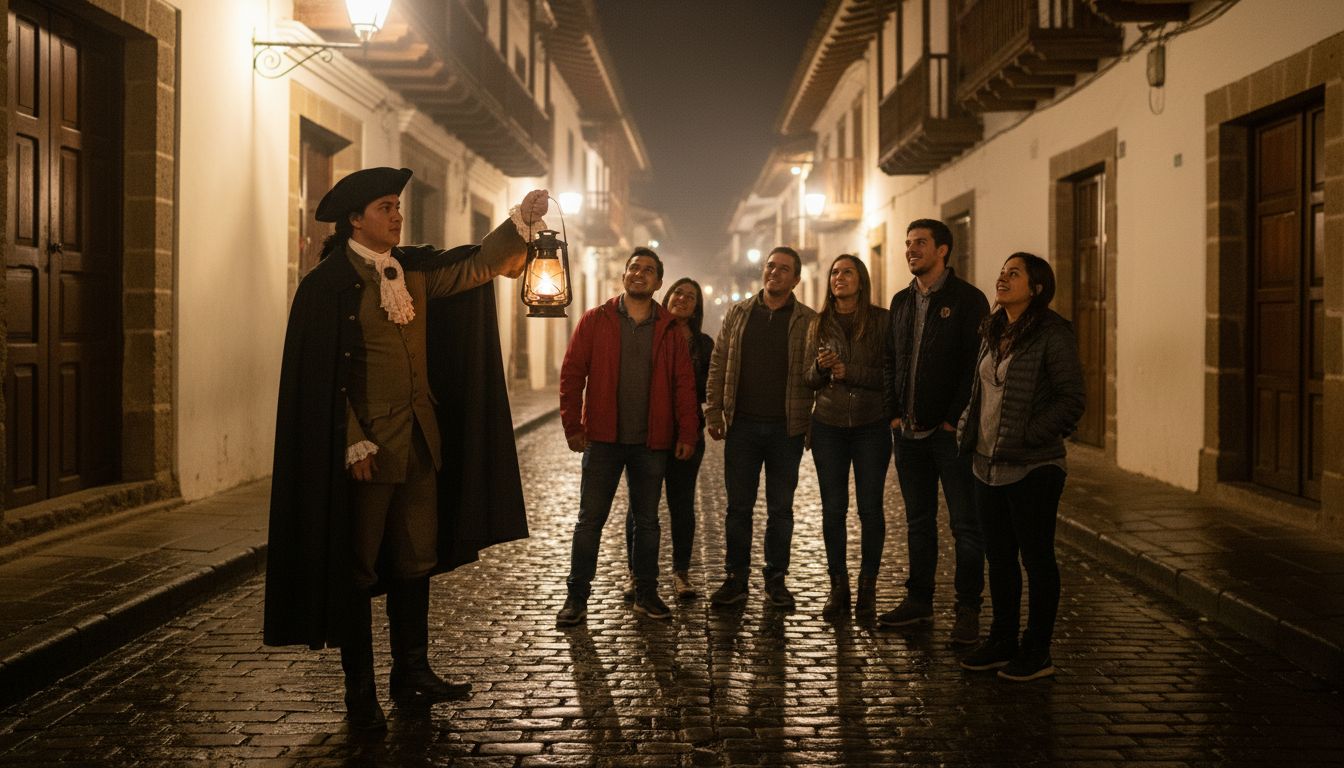
The cobblestones were still damp from an afternoon shower when I joined a small cluster of strangers outside a colonial doorway in Cuenca's historic center. The Andean evening had turned cool fast, the way it does here once the sun drops behind the hills, and the facades around us—whitewashed, shuttered, centuries old—seemed to lean in a little closer under the streetlamps. This was the meeting point for the 'Ruta de Fantasmas,' a ticketed walking tour that has recently begun operating through the city's oldest and, by reputation, most haunted streets.
I should say upfront that what follows is an expat's account of one night's experience, not a documented history. Details about the tour's founders, its official backstory, or the verified biography of the figure at its center aren't part of the public record I could find. What I can offer are impressions gathered on the ground, filtered through the eyes of someone still learning the rhythms of this city.
Who Is Barojo? Piecing Together the Figure Behind the Tour
The guide who led our group introduced himself only as Barojo, cloaked in a dark coat and speaking in the theatrical cadence of someone who has told these stories many times before. Who Barojo actually is, in the sense of a documented identity or professional background, remains unclear to me. Various tour-goers around me murmured different versions of his origin, half of which sounded like local color added for effect rather than established fact.
Ghost tours the world over tend to rely on this kind of ambiguity, as many observers of the genre have noted. The persona becomes part of the performance, and the line between guide and character blurs deliberately. Whether Barojo is a stage name, a longtime local historian, or simply a skilled storyteller playing a role, I can't say with confidence. What was clear is that the theatrical framing shaped how the group received everything that followed—every claim felt like folklore, delivered with a wink even when the tone turned somber.
Inside the Experience: Stops, Stories, and Showmanship
The route wound through narrow streets I'd walked in daylight dozens of times without a second thought, but at night, guided by lantern light and Barojo's measured pauses, they took on a different character. We paused outside several colonial buildings while stories were recounted—tales of restless spirits, tragic love affairs, and unexplained sounds. I want to be clear that these were presented, and I received them, as folklore and performance rather than confirmed historical events.
The atmosphere did most of the work. Low lighting, the echo of footsteps on stone, and Barojo's deliberate shifts between whisper and declaration kept the small crowd attentive. I noticed nervous laughter at some stops and genuine goosebumps at others. A recurring question I overheard from fellow attendees was simply whether the stories were "real"—one the tour seemed content to leave unanswered, letting ambiguity itself become part of the entertainment.
Logistics From an Expat's Perspective
I purchased my ticket a few hours in advance through a contact provided by word of mouth rather than an official website I could independently verify. The price I paid and the meeting point I was given may not reflect current arrangements, so I'd encourage anyone interested to confirm details directly and recently rather than relying on secondhand accounts like mine. The walk itself lasted a little over an hour, moving at an unhurried pace through a handful of stops in the center.
For newly arrived expats, especially those still building Spanish fluency, I'll note that Barojo's delivery leaned heavily on dramatic Spanish narration, with only occasional asides in English. Attendees more comfortable in Spanish seemed to get the fuller experience. Anyone considering the tour might want to ask in advance whether English-language accommodations are available, since I found none advertised.
Why This Tour Resonates With Cuenca's Expat Community
Ghost tours occupy an interesting niche for expats settling into a new city. They offer a low-stakes, entertaining entry point into local lore, history, and language, wrapped in the kind of shared experience that makes a foreign place start to feel familiar. Walking those streets with a group of strangers, half-listening for real history and half-enjoying the performance, felt like a small ritual of belonging.
A recurring theme among expats I've spoken with here is the search for these kinds of anchor experiences—something communal, culturally specific, and slightly outside the ordinary tourist checklist. The 'Ruta de Fantasmas,' whatever the verified truth behind Barojo and his stories, offered exactly that: an evening where myth, showmanship, and genuine curiosity blurred together, leaving me more curious about this city's shadows than I was before I arrived.