A Place So Beautiful It Felt Unreal
Some moments in life feel too perfect to be real, as if you've stepped into a painting or a dream. For many expats, there comes a defining moment when they encounter a place so breathtakingly beautiful that it challenges their very perception of reality. This is the story of such a place—one that stopped time, transformed daily life, and ultimately redefined what it means to call somewhere home.
First Glimpse: When Reality Defies Expectation
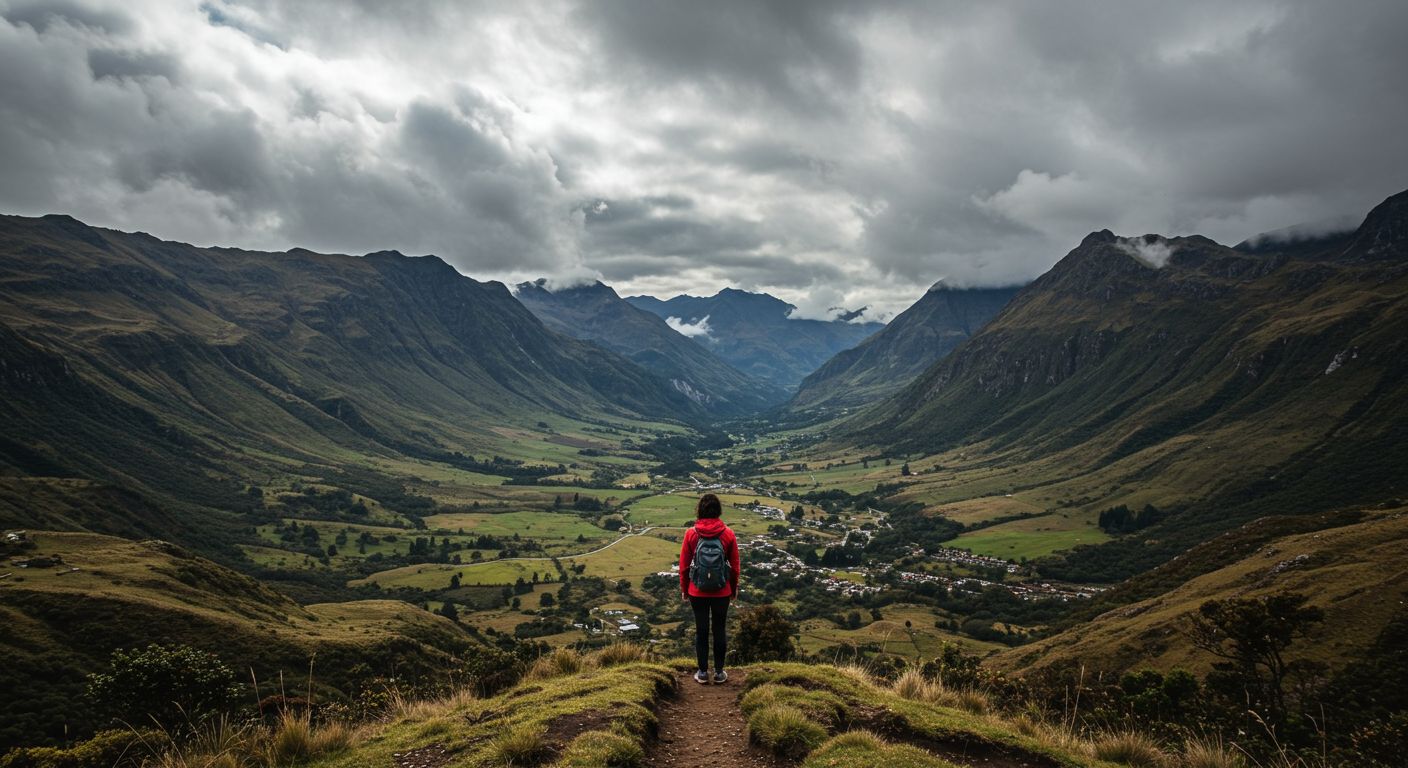
The taxi rounded the final curve of the mountain road, and suddenly the world opened up before me. What I saw didn't compute immediately—my tired brain, foggy from hours of travel, struggled to process the vista that stretched endlessly ahead. Rolling hills carpeted in emerald green descended toward a lake so perfectly blue it seemed artificial, while ancient stone villages clung to cliffsides like something from a fairy tale.
I actually rubbed my eyes, convinced that exhaustion was playing tricks on me. The golden light of late afternoon painted everything with an almost supernatural glow, and for a moment, I wondered if I had somehow stumbled into an enhanced reality, a place where nature had turned up the saturation to impossible levels.
My heart raced—not from the altitude, but from the overwhelming beauty that seemed to pulse through the landscape. It was the kind of beauty that makes you catch your breath, that forces you to stop whatever you're doing and simply witness something greater than yourself.
The Place That Stopped Time
As days turned into weeks, I began to understand what made this corner of the world so extraordinary. It wasn't just one element, but the perfect symphony of features that nature had orchestrated over millennia. The way morning mist rose from the valley like ghostly fingers, revealing terraced hillsides that had been carved by generations of careful hands. The manner in which ancient oak trees framed distant mountain peaks, creating natural windows to infinity.
The light here behaved differently than anywhere I'd ever lived. It seemed to have weight and texture, shifting throughout the day in ways that constantly transformed the landscape. Dawn brought a soft rose-gold luminescence that made the stone houses glow like lanterns. Midday sun created sharp contrasts that revealed every detail of the rugged terrain. And sunset—sunset was pure theater, with the sky cycling through colors I didn't know had names.
What struck me most was the scale of it all. The beauty wasn't contained in postcard-perfect vignettes but stretched in every direction, layer upon layer of visual poetry that seemed to extend beyond the horizon. Standing on my terrace each morning, I felt like I was looking out over the edge of the world.
Living Among the Extraordinary
Gradually, this stunning environment began to reshape even the most mundane aspects of daily life. My morning coffee routine transformed into a meditation as I watched the valley wake up beneath shifting clouds. The simple act of hanging laundry became an opportunity to pause and marvel at the play of light on distant peaks. Even grocery shopping took on new meaning when the journey included winding roads that offered fresh perspectives on familiar vistas.
The locals, I noticed, had a different relationship with this beauty. They appreciated it, certainly, but with the comfortable familiarity of those who had never known anything else. Children played in olive groves without seeming to notice they were surrounded by postcard perfection. Farmers worked their fields with the focused attention of people who saw the land as partner rather than scenery.
Yet even they would sometimes pause—catching a particularly spectacular sunset or pointing out how the light hit the church bell tower just so. Their quiet pride in their homeland was evident, though they seemed almost embarrassed by visitors' effusive praise, as if beauty this profound should be taken for granted.
The challenge became maintaining that sense of wonder without letting routine dull its impact. Some mornings I would wake up and almost forget to look—until something, a bird's call or a shift in the light, would remind me to step outside and remember why I had chosen to make my life in this extraordinary place.
Capturing the Uncapturable
Inevitably, I tried to share this experience with friends and family back home. I filled memory cards with thousands of photos, each one falling short of capturing what my eyes could see. The camera seemed to flatten the dimensionality, to reduce the symphony of colors to mere approximations. What appeared majestic in person looked ordinary on screen.
Video calls with family became exercises in frustration as I pointed my phone toward the view, trying to convey the grandeur that surrounded me. "It's beautiful," they would say politely, but I could see in their faces that they weren't seeing what I was seeing. The screen couldn't capture the way the air itself seemed to shimmer, or the profound silence that made every distant sound—church bells, bleating goats, children's laughter—feel like part of an ancient composition.
Writing proved equally inadequate. How do you describe the indescribable? How do you put into words the feeling of being completely dwarfed by natural magnificence, yet somehow more connected to the world than ever before? Language felt clumsy, insufficient for the task of translating direct experience into something others could understand.
Eventually, I stopped trying so hard to document and began simply living within the beauty. Some experiences, I realized, are meant to be absorbed rather than shared, to change us from the inside rather than to be broadcast to the world.
When Beauty Becomes Home
Months passed, and something subtle began to shift. The daily gasp of wonder gradually transformed into a deeper, quieter appreciation. I no longer rushed to the window each morning with the urgency of someone afraid the view might disappear. Instead, I moved through my days with the confidence that this beauty would be there, constant and reliable, woven into the fabric of ordinary life.
This transition from amazement to integration marked a profound change in my relationship with place. The landscape was no longer something I observed from the outside but something I belonged to, something that had shaped my daily rhythms and my way of seeing. I found myself noticing subtler beauties—the way shadows moved across stone walls, the particular green of new olive leaves, the sound rain made on terra cotta roofs.
Living surrounded by such beauty had recalibrated my aesthetic sense entirely. Returning to visit cities I had once found impressive, I was struck by how harsh and artificial they seemed. My eye had been trained by daily exposure to natural perfection, and everything else paled in comparison.
More than changing how I saw the world around me, this place had changed how I saw myself within it. I had learned to slow down, to notice, to appreciate the profound gift of waking up each day in a place that still, even after all this time, occasionally took my breath away. The beauty had become not just my surroundings but part of my identity—I was someone who had chosen to make a life in paradise, who had been shaped by daily exposure to the extraordinary.
Years later, when people ask me about my decision to become an expat, I struggle to explain it in practical terms. The real answer is simple: I found a place so beautiful it felt unreal, and I couldn't imagine living anywhere else. Some places choose us as much as we choose them, and when that happens, home becomes not just where you live, but where your soul feels most itself.