A Market Where Time Seems to Stand Still
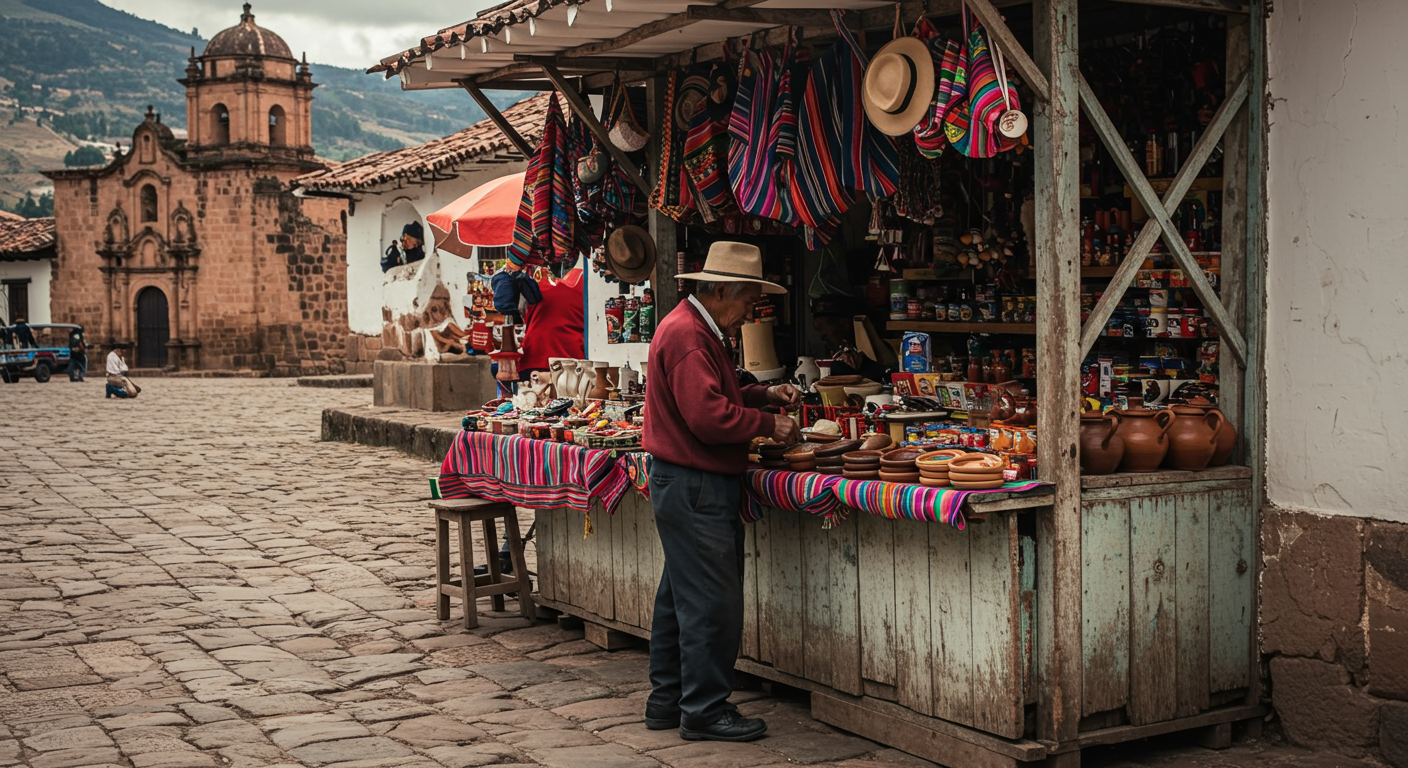
Heavy wooden doors creak on their hinges as I push through from the bustling street into what feels like a portal to another era. The cacophony of car horns and modern traffic fades instantly, replaced by gentle murmurs of voices haggling in Spanish and the rhythmic chopping of vegetables on worn wooden boards. Sunlight filters through weathered tin roofing, casting dancing shadows across cobblestone pathways polished smooth by countless footsteps over the decades.
This is more than just a market—it's a living piece of history where time moves at its own unhurried pace.
Stepping Through Time's Threshold
The contrast hits you immediately. Outside, sleek glass storefronts and concrete sidewalks speak to Cuenca's modern aspirations. Inside, hand-hewn wooden stalls arranged in the same configuration they've held for generations create intimate corridors where commerce unfolds as it has for decades. The architecture itself tells the story—thick adobe walls, exposed wooden beams darkened by years of smoke from cooking fires, and tile floors worn into gentle undulations by time's passage.
The air carries scents that department stores can never replicate: fresh herbs bundled with twine, wood smoke from cooking fires, the earthy aroma of root vegetables still bearing traces of mountain soil. These sensory markers immediately signal that you've entered a space where different rules apply, where the frantic pace of modern life gives way to something more deliberate and enduring.
The Guardians of Tradition
Behind weathered wooden counters sit the market's true treasures—vendors whose families have occupied the same stalls for generations. Doña María, her silver hair neatly braided, arranges pyramids of potatoes with the same precision her mother taught her forty years ago. She knows every regular customer by name, their preferences, their family situations, their financial struggles.
"Mi hijo," she calls to a middle-aged man who's been shopping here since childhood, automatically reaching for the specific variety of onions his wife prefers. These relationships transcend simple commerce—they're threads in a social fabric that has held this community together through decades of change.
The unwritten protocols governing market life remain sacred. Vendors arrive before dawn to claim their traditional spots. Prices fluctuate based on relationships as much as supply and demand. Credit flows freely among trusted customers, recorded in mental ledgers that span generations. New vendors must earn their place not just through rental payments, but through acceptance into a community with its own customs and hierarchies.
Goods from Another Era
The market's inventory reads like an ethnographer's dream. Hand-woven baskets crafted from local reeds sit alongside clay pots shaped using techniques unchanged since colonial times. Herbs are bundled according to traditional medicinal knowledge passed down through indigenous communities. Corn is still sorted by hand, with varieties preserved that supermarkets abandoned decades ago in favor of hybrid uniformity.
Food preparation happens in full view—chickens roasted over wood fires, soups simmered in massive pots seasoned by instinct rather than recipes, fresh juice pressed from fruits that arrive hours after being picked from nearby farms. The connection between producer and consumer remains direct and personal in ways that modern supply chains have deliberately obscured.
Haggling here is performance art, a social ritual where the final price matters less than the dance of negotiation itself. Regular customers and vendors engage in familiar choreography—initial protests about prices, theatrical sighs, gradual concessions, and final agreements sealed with smiles and small talk about family news. Tourists who try to rush this process miss entirely the point of the exercise.
Where Old Meets New
Yet this isn't a museum frozen in amber. The market has found subtle ways to accommodate modern realities while preserving its essential character. A few vendors now accept card payments, though cash remains king. Cell phones allow farmers to coordinate deliveries more efficiently, though the fundamental rhythms of seasonal availability remain unchanged.
The real challenge lies in attracting younger generations—both as vendors and customers—who have grown up with supermarkets and shopping malls. Some traditional stalls now carry packaged goods alongside their handmade offerings. A few have added modern refrigeration units, carefully positioned to avoid disrupting the visual harmony of weathered wood and aged metal.
The market's survival depends on walking this careful line between preservation and adaptation, maintaining authenticity while remaining economically viable in a world increasingly dominated by convenience and speed.
A Living Museum
What makes this market special isn't just its age, but its continued vitality. While other traditional markets have been demolished for parking lots or transformed into sanitized tourist attractions, this one thrives as genuine working cultural heritage. Local families still do their daily shopping here, vendors still earn their livelihoods from centuries-old trades, and the seasonal rhythms of agricultural life still dictate the ebb and flow of commerce.
Community leaders have quietly resisted pressures to "modernize" the space, understanding that its value lies precisely in its resistance to contemporary commercial trends. Regular customers serve as unofficial guardians, supporting vendors not just through purchases but through the social connections that keep this ecosystem functioning.
For expats seeking to understand their adopted home more deeply, markets like this offer invaluable insights into cultural values that predate globalization. Here, relationships matter more than efficiency, tradition carries more weight than innovation, and time moves at human rather than digital speed.
In a world increasingly homogenized by chain stores and standardized experiences, these markets preserve something irreplaceable—a direct connection to place, season, and community that reminds us what commerce looked like when it was still fundamentally about people serving people's actual needs.