A Market Where Time Seems to Stand Still
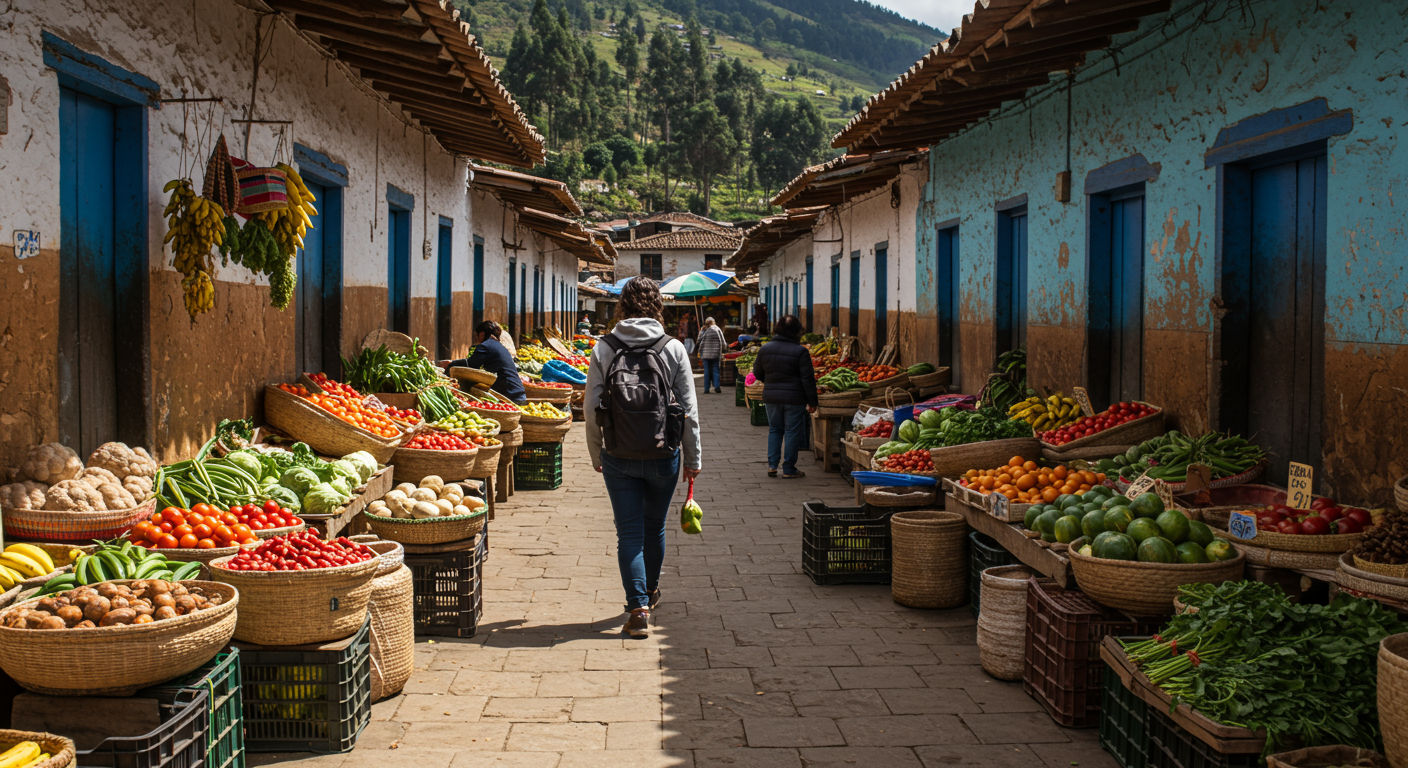
There are places that do not seem frozen in time so much as uninterested in chasing it. A market like this does not announce itself with grandeur. You enter almost by accident, turning off a busier street and stepping out of the noise of errands, notifications, and schedules into a rhythm that feels older, steadier, and somehow less negotiable.
For an expat, that shift can feel especially sharp. Outside, the day is measured in tasks: messages to answer, appointments to keep, language to navigate, prices to compare, routes to remember. Inside the market, those pressures do not disappear, but they loosen. The pace belongs to something else. Not history exactly, and not nostalgia alone, but a way of moving through the day that feels less hurried and more fully inhabited.
This is not a story about documented origins or exact dates. It is about atmosphere, about the lived impression of a place where repetition has smoothed the edges of time until the ordinary begins to feel enduring.
What the Senses Notice First
The first thing you notice is often the sound. Not loudness, but layers. A vendor calling out a price. Metal utensils tapping against a pot. The shuffle of shoes across worn flooring. A burst of conversation, then laughter, then the smaller sounds beneath it all: paper folding, coins changing hands, a broom tracing dust into a neat line. Nothing is staged, yet everything seems to belong to the same composition.
Then come the smells, arriving in currents rather than categories. Fresh produce with its damp, green brightness. Cooked food turning the air warm and savory. Spices that seem to cling to wood and cloth. A trace of dust. A trace of fabric. Perhaps the faint, dry scent of old shelves or sun-warmed counters. It is the kind of mix that would feel chaotic anywhere else, but here it settles into something strangely coherent.
Visually, the details are modest and unforgettable. Counters softened by years of use. Faded signs still doing their job. Stacks of goods arranged with the confidence of habit rather than display. Light filtering through high openings or patched roofing, catching floating particles in a way that makes the air itself seem visible. You begin to understand that continuity is not always polished. Sometimes it looks worn, practical, and fully alive.
The Ritual of Ordinary Commerce
What gives the market its timeless quality is not simply age. It is gesture. Hands weighing produce. Paper twisted closed around a purchase. Bottles lined up, then straightened. A cloth passed over a counter. A ladle dipping into something hot. A pause while one customer finishes speaking before the next begins. These actions repeat so often they feel less like tasks than rituals.
In many modern settings, buying and selling aim for speed above all else. Here, an exchange can still hold recognition. A greeting is not always a formality. A question about someone’s family, a brief comment on the weather, or a moment spent waiting without visible impatience changes the tone of the transaction. The point is not just efficiency. It is contact.
That is part of the dignity of the place. No one behaves as if the routine is beneath notice. Sweeping, stacking, pouring, counting, wrapping, waiting: all of it carries the quiet seriousness of work done properly. Repetition does not make the scene lifeless. It gives it shape. To a newcomer, it can feel as if very little has changed here for years, even if the truth is undoubtedly more complicated. What remains is the cadence.
Why It Feels Timeless
Timelessness, in a place like this, has less to do with preserving the past than with resisting a certain kind of speed. The market does not feel outside the present because it is untouched by change. It feels outside the present because so much of modern life has trained us to expect frictionless movement, compressed decisions, and constant acceleration. Here, there is still room for pauses.
That contrast matters. App-driven convenience teaches us to value what arrives fastest, what requires the fewest words, and what can be completed without interruption. A traditional market offers something else: not slowness for its own sake, but an acceptance that daily life is made of encounters, textures, and delays that are not necessarily problems to solve. In that environment, a human pace stops feeling inefficient and starts feeling sane.
Perhaps that is why such places can feel more grounding than overtly picturesque ones. Their power comes from continuity of behavior. The same kinds of greetings. The same arrangement of goods. The same opening motions at the start of the day and closing motions at the end. Even a visitor who has never been there before can sense the stability of repeated habits. It creates the unusual feeling of being briefly removed from the rush of the present while also being returned to something more basic and real within it.
What an Expat Finds There
For someone living in a new country, that feeling can be unexpectedly comforting. Expat life often comes with a subtle fatigue: the effort of translation, the need to decode unfamiliar systems, the awareness of being slightly out of place in spaces other people move through without thinking. A market can soften that. It asks for attention, but not perfect fluency. You can understand a great deal through observation alone.
There is comfort in repeated visits. The first time, you notice details. The second time, you begin to anticipate them. Eventually you recognize where the oranges are stacked, which stall smells of soup by late morning, and which vendor nods before speaking. Little by little, strangeness gives way to familiarity. You may still be foreign, but you are no longer entirely unknown to the place.
That matters more than it might seem. Homesickness is not always about missing landmarks or major traditions. Sometimes it is about missing ordinary rhythms: buying food from someone who remembers you, hearing routine sounds from one week to the next, feeling that life is held together by recurring small exchanges. A market can offer that kind of belonging before many other places do.
It becomes a way into the local world that does not depend on mastering everything at once. You return, you watch, you buy the same thing twice, then three times. A face begins to register yours. A greeting becomes easier. Over time, the market stops being a scene you visit and starts becoming one of the places that helps organize your life.
Leaving, but Not Quite Returning to the Same Day
When you leave, the outside world is still there, waiting in its usual form: traffic, errands, screens, the forward push of the afternoon. But something in your pace has changed. The market does that. It sends you back into the day carrying a different sense of proportion.
Its gift is not simply nostalgia, though nostalgia may be part of it. It is the reminder that not everything valuable announces itself through novelty or speed. Some things endure because they are repeated well. Some places stay with you because they ask you to notice what modern life teaches you to overlook.
And often what lingers is not dramatic. A final greeting from behind a counter. The sound of a shutter being pulled halfway down. The smell of spice or fruit following you into the street. For a few steps, perhaps longer, you carry the feeling that time did not stop in that market after all. It merely moved at a pace generous enough for a person to feel it passing.