A Lost Backpack and the People Who Helped
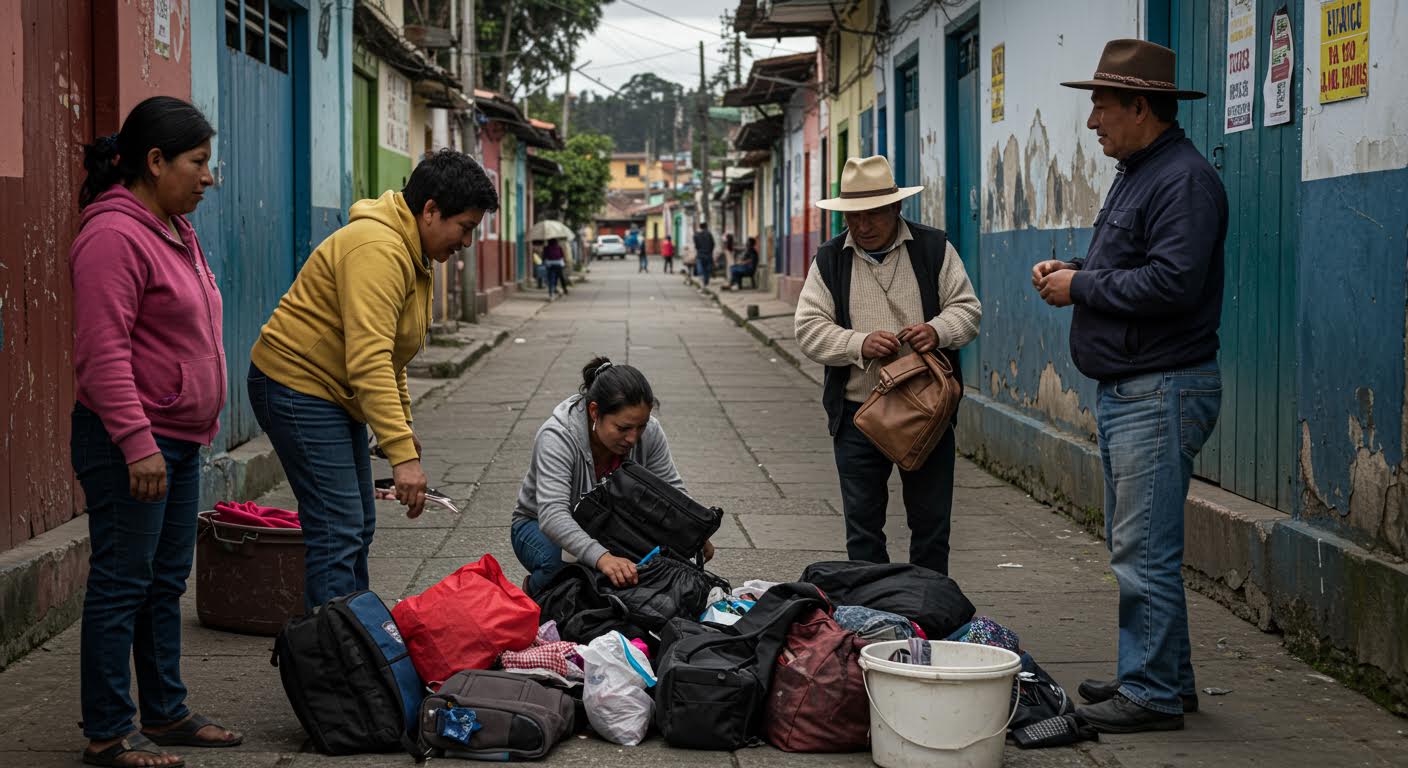
Every seasoned traveler has that moment when everything goes spectacularly wrong. For me, it happened on what should have been a routine departure from Cuenca, turning an ordinary morning into an extraordinary lesson about human kindness.
The Morning Everything Went Wrong
The alarm buzzed at 6 AM, and I went through my usual departure routine with practiced efficiency. Passport? Check. Phone charger? Check. Coffee for the road? Double check. I wheeled my suitcase to the lobby, confirmed my taxi was waiting, and felt that familiar mix of excitement and melancholy that comes with leaving a place you've grown to love.
It wasn't until I reached the airport that the cold realization hit me like a physical blow – my backpack was missing.
Not just any backpack, but the one containing my laptop, camera, all my charging cables, important documents, and a small leather journal filled with two months of travel memories. My stomach dropped as I mentally retraced my steps, trying to remember the last time I'd seen it. The taxi driver was already pulling away, and my flight was in three hours.
Panic is a funny thing – it starts as a whisper of unease and quickly becomes a roar that drowns out rational thought. Standing there in the departure area, I felt utterly alone and foolish. How could I have been so careless?
Strangers Become Angels
What happened next restored my faith in humanity in ways I never expected.
The first angel appeared in the form of Maria, the night receptionist at my hotel who had stayed past her shift. When I called in desperation, she didn't just check the lost and found – she personally searched my room, the lobby, even the breakfast area. "Don't worry," she said in her patient English mixed with Spanish, "we will find it. I will call you every hour with updates."
At the airport, a couple from Germany overheard my frantic phone calls. Without being asked, they offered to let me use their portable WiFi hotspot so I could access my cloud storage and retrieve important documents. Klaus, the husband, even offered to delay their own departure to help me contact local taxi companies.
But perhaps most touching was Carlos, an elderly Ecuadorian man waiting for his own flight, who spoke no English but somehow understood my distress. Through gestures and broken Spanish, he communicated that he was calling his nephew – a taxi driver – to help search the route between my hotel and the airport.
Language barriers seemed to dissolve in the face of shared human concern. People who had never met me, who owed me nothing, were investing their time and energy into helping a distressed stranger.
Small Acts, Big Impact
As the morning unfolded, I witnessed something beautiful: a spontaneous network of kindness that operated without expectation of reward.
The German couple shared their breakfast pastries when they noticed I hadn't eaten. A young backpacker offered me his phone charger when mine ran low. An airport security guard, technically off-duty, spent twenty minutes calling hotels along my route in rapid-fire Spanish.
Each gesture was small on its own, but together they created a safety net I didn't know existed. These weren't grand, heroic acts – they were quiet demonstrations of the principle that we're all in this together, especially when we're far from home.
What struck me most was how naturally this kindness flowed. No one seemed to consider it exceptional; it was simply what people do when someone needs help. Cultural differences that might seem significant in other contexts – language, nationality, age – became irrelevant in the face of common human decency.
The Recovery and Revelation
The breakthrough came from an unexpected source: a housekeeping supervisor named Rosa who wasn't even working in my section of the hotel.
Maria called at 10:30 AM with news that made me nearly weep with relief. Rosa had found my backpack wedged behind a decorative plant in the lobby – apparently, I had set it down while checking out and simply forgotten it in my early-morning haze. But Rosa had done more than just find it; she had already arranged for her son to drive it to the airport, refusing any offer of payment.
When the backpack arrived – completely intact, every cable and document accounted for – I felt a gratitude that went far beyond the recovery of my belongings. It was gratitude for being reminded that the world is full of good people doing good things, often without recognition or reward.
I made my flight with twenty minutes to spare, but I almost didn't want to leave. The experience had connected me to this place and these people in a way that months of sightseeing hadn't achieved.
Lessons in Human Connection
That morning taught me several things about travel, vulnerability, and human nature that no guidebook could have conveyed.
First, being vulnerable isn't always a weakness – sometimes it's an invitation for others to show their strength. My distress had created opportunities for kindness that might not have existed otherwise. In trying to maintain perfect independence as a traveler, I had been missing chances for authentic human connection.
I also learned that accepting help gracefully is its own skill. My first instinct was to minimize my problem, to insist I could handle it alone. But allowing others to help created something beautiful – not just a solution to my problem, but a web of connection between strangers who might otherwise have remained invisible to each other.
The experience revealed something universal about human nature that transcends cultural boundaries. Compassion doesn't require a common language, shared nationality, or similar backgrounds. It only requires recognition of our shared humanity and the understanding that we all sometimes need help.
Perhaps most importantly, the morning showed me the ripple effects of kindness. Each person who helped me was inspired, at least in part, by seeing others help. The German couple's generosity encouraged the young backpacker's offer. The security guard's efforts motivated other airport staff to join in. Kindness, it turns out, is contagious in the best possible way.
Since that day, I've made it a point to help other travelers in distress whenever I encounter them. I've shared phone chargers, given directions, and once spent an entire afternoon helping a confused tourist navigate visa requirements. It's not altruism – it's gratitude in action, a way of paying forward the kindness that turned my worst travel day into one of my most memorable.
That lost backpack taught me that sometimes the best travel experiences come not from the places we see or the food we eat, but from the people who remind us that no matter how far we roam, we're never truly alone.