A Kindness That Restored My Faith in People
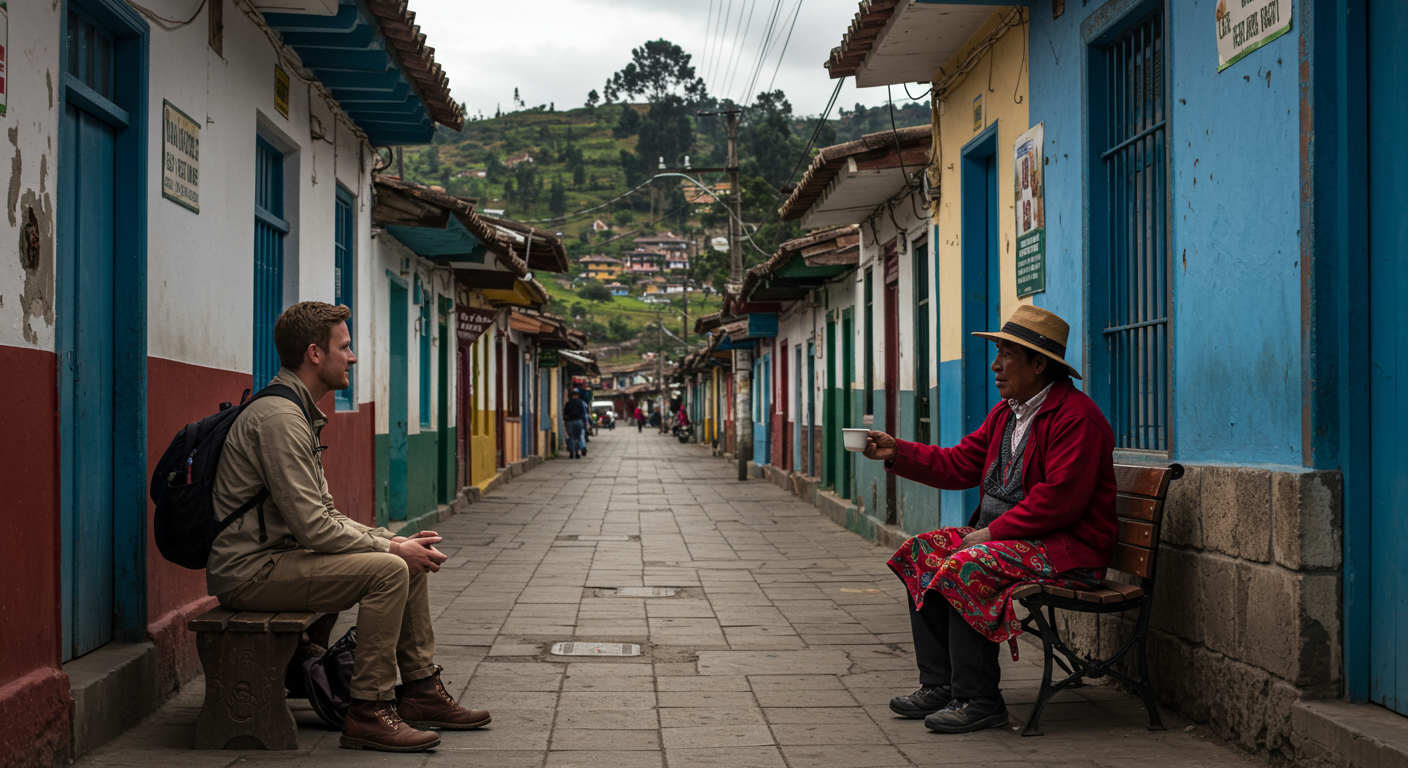
By the time that day arrived, I was already running on empty. I was still relatively new to Cuenca, and although I had learned how to order coffee, ask for change, and find my way around the neighborhood near my apartment, the city still felt bigger than my confidence. Every errand seemed to require twice the energy it should have. A simple question could turn into an awkward exchange. A short bus ride could leave me replaying what I should have said for the next hour.
It was not that anyone had been cruel to me. It was more that I had reached that particular kind of loneliness that comes from being surrounded by people and still feeling invisible. I missed the ease of my old life. I missed understanding everything around me. I missed not having to rehearse basic interactions in my head before stepping up to a counter.
That morning had already been difficult. I had been trying to sort out a paperwork issue that involved multiple stops, unclear instructions, and the sinking realization that I had probably brought the wrong documents. By early afternoon, I was hungry, tired, and trying hard not to let my frustration spill over into tears. I remember thinking, with more bitterness than I like to admit, that I did not have much faith left in anyone that day, including myself.
The Moment Everything Nearly Fell Apart
The breaking point came at a busy intersection after I got off the wrong bus. I knew almost immediately that I was not where I meant to be. The streets looked unfamiliar, and the late afternoon traffic had turned everything noisy and sharp. Engines rattled. A bus hissed at the curb. Someone nearby was grilling meat, and the smell of smoke and spice hung in the cool air. People moved around me with purpose while I stood still on the sidewalk, clutching a folder of papers and a bag that suddenly felt much too heavy.
I checked my phone and saw that the battery was nearly dead. The map would not load properly. I tried to match the street signs to the directions I had written down earlier, but the names blurred together. I could feel panic rising in that embarrassing, physical way: tight chest, hot face, shallow breathing. It was not just about being lost. It was the feeling that I had become too tired to cope gracefully, too worn down to solve one more problem in a place where even small mistakes felt expensive.
I stepped into a small pharmacy because it was the nearest doorway I could find, mostly to collect myself. I remember the fluorescent lights, the faint smell of soap and rubbing alcohol, and the hum of conversation behind the counter. I stood there pretending to look at a shelf of shampoos while I tried not to cry in public.
A Stranger Chose Kindness
A woman who worked there noticed me almost immediately. She was maybe in her fifties, wearing a white coat over everyday clothes, with reading glasses low on her nose. She did not rush toward me or make a scene. She simply looked at me with the kind of attention that says, clearly, I can see that something is wrong.
She asked me something in Spanish that I only partly understood, and I answered in a clumsy mix of Spanish and apology. I told her I was lost, my phone was dying, and I was trying to get to an office I had apparently already missed by several blocks and at least one wrong turn. I expected the usual exchange of confusion, repeated directions, and my own growing embarrassment.
Instead, she came around the counter, took my paper with the address on it, and studied it for a few seconds. Then she called to a younger man in the store, who seemed to be another employee. Between the two of them, they figured out where I needed to go. The younger man pulled out his phone and showed me the route. The woman listened as I tried to explain that I was worried I would get lost again. She nodded as if that made perfect sense.
Then she did something I still think about. She walked me outside, stood with me on the sidewalk, and waited for the correct bus. When it arrived, she spoke directly to the driver, handed him the address, and asked him to tell me where to get off. Before I stepped on, she touched my arm lightly and said, slowly enough for me to understand, that it was going to be fine.
It was such a practical kindness. Not dramatic. Not grand. She did not rescue me in some cinematic way. She just closed the gap between overwhelm and safety. In that moment, what she gave me was not only help. She gave me back a sense of dignity. I was no longer the flustered foreigner failing in public. I was simply a person who needed help, and another person had decided to offer it.
What I Felt in the Aftermath
The shift in me was immediate. I sat on the bus holding my folder in my lap, breathing more deeply than I had all day. My eyes filled anyway, but this time from relief. I was still tired. The paperwork was still inconvenient. My Spanish had not magically improved. But the tight knot of loneliness had loosened.
What affected me so deeply was how ordinary her kindness was. She did not know me. She had nothing to gain. She probably forgot the interaction by the end of her shift. But for me, it came at exactly the moment when I most needed proof that not every difficult day has to harden you. When you are living abroad and trying to build a life from scratch, small mercies do not feel small. They feel enormous. They remind you that even when you are far from home, you are still part of a human world where people can choose to care.
I think I had been carrying more shame than I realized. Shame about not speaking well enough, not adapting quickly enough, not being as resilient as I thought I should be. Her kindness interrupted that spiral. It made room for something gentler: gratitude, yes, but also self-forgiveness.
How That Day Changed the Way I See People
I did not walk away from that experience suddenly trusting everyone or believing the world is always soft. Life abroad still has rough edges. Bureaucracy is still bureaucracy. Misunderstandings still happen. Some days still leave me feeling tired and small.
But that afternoon changed something in the way I move through those moments. It softened a cynicism I had been quietly feeding. I had started to assume that vulnerability was something to hide, that asking for help was mostly an invitation for frustration or indifference. After that day, I became a little less guarded. I started believing that being lost did not make me foolish, and needing help did not make me a burden.
More than anything, the experience gave me a deeper sense of belonging. Not because I suddenly felt local, but because I understood that belonging can begin in very small exchanges. A person notices. A person pauses. A person helps. Sometimes that is enough to make a city feel less like a maze and more like a place where your life is actually happening.
The Kindness I Try to Pass On Now
I think about that woman whenever I see someone with the same look I must have had that day: the frozen expression, the uncertain glance at a sign, the effort to stay composed while clearly overwhelmed. Now, when I can help, I try to. Sometimes it is as simple as translating a question, pointing out the right bus, or telling someone where to stand in line. Sometimes it is just staying with a person for an extra minute so they do not feel foolish and alone.
I am not trying to repay a debt so much as continue a feeling. I remember what it was like to stand on that sidewalk, exhausted and close to tears, and then feel the world become manageable again because one person decided not to look away.
That is what stayed with me. Not the paperwork. Not the wrong bus. Not even the panic. What stayed with me was the steady, unremarkable kindness of a stranger who reminded me, at exactly the right time, that people can still surprise you for the better.