A Kindness That Restored My Faith in People
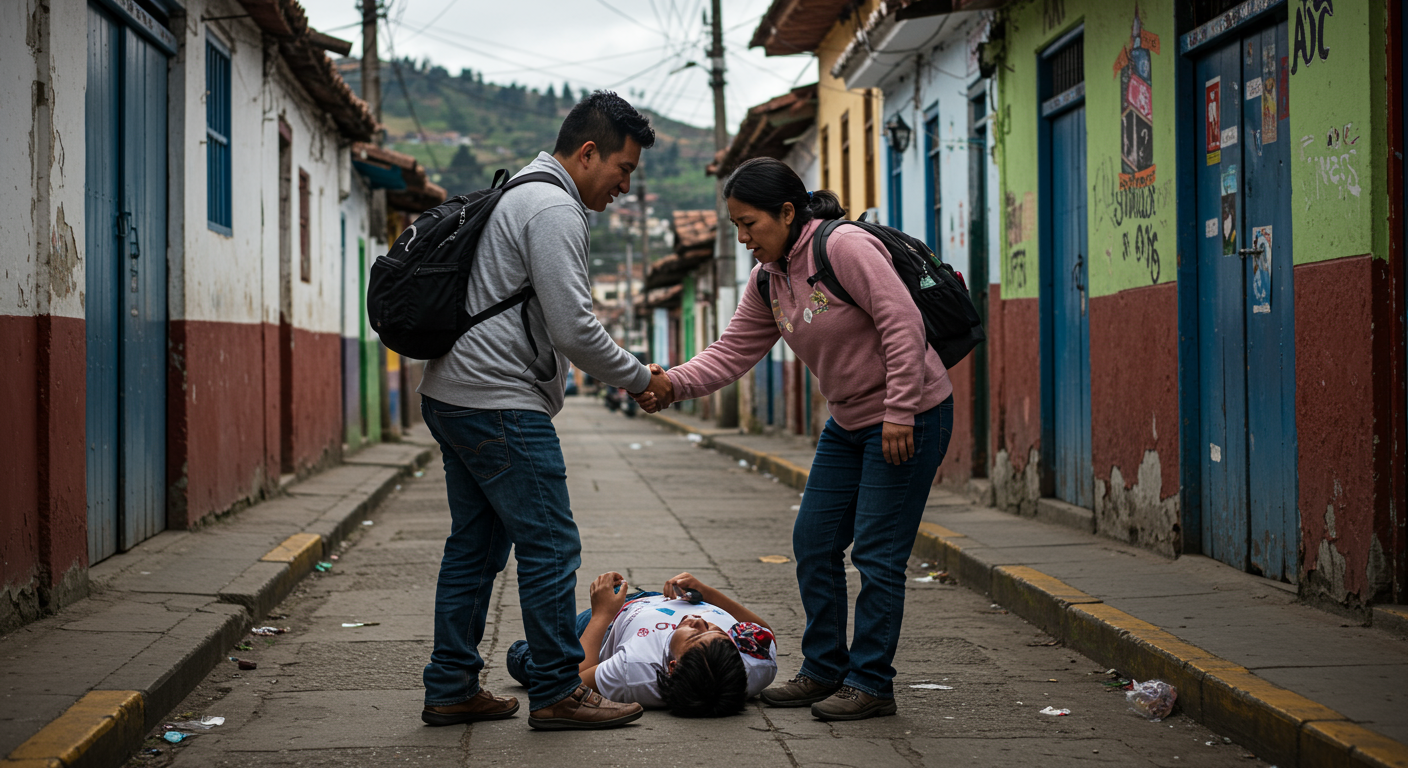
There comes a moment in every expat's journey when the weight of being a perpetual outsider becomes almost unbearable. For me, that moment arrived on a gray Tuesday morning in downtown Cuenca, three months after I'd moved to Ecuador with such high hopes and determination.
The Lowest Point
I was sitting on a bench in Parque Calderón, staring at a stack of rejection letters from apartment landlords who'd seemed enthusiastic until they realized my Spanish was still elementary at best. My temporary accommodation was expiring in two days, my savings were dwindling faster than expected, and I'd just spent the morning in a bureaucratic maze trying to sort out residency paperwork that seemed to require documents I didn't even know existed.
The challenges had been mounting for weeks. Simple tasks that took minutes back home now consumed entire days. Buying groceries became an exercise in pointing and hoping. Opening a bank account required three separate visits and a translator. Each small victory was overshadowed by two new obstacles, and I was beginning to question every decision that had brought me to this beautiful but bewildering country.
As I sat there watching families and couples stroll through the park, speaking in rapid Spanish that still sounded like music I couldn't quite decode, I felt more alone than I ever had in my life. This wasn't the adventure I'd imagined—it was isolation wrapped in frustration, seasoned with a growing sense that I'd made a terrible mistake.
An Unexpected Encounter
That's when María appeared, though I wouldn't learn her name until later. She was probably in her sixties, with silver-streaked hair pulled back in a practical bun and the kind of weathered hands that spoke of a lifetime of hard work. She'd been watching me from across the plaza, and something about my obvious distress had drawn her over.
"¿Está bien?" she asked, her voice gentle but concerned. Even in my limited Spanish, I understood she was asking if I was okay.
I tried to explain in my broken Spanish mixed with apologetic English that I was fine, just tired. But María had the keen eye of someone who'd raised children and wasn't buying my weak reassurances. She sat down beside me on the bench without invitation, the way grandmothers everywhere seem entitled to do.
The Act of Kindness
What happened next still brings tears to my eyes. Despite our language barrier, María somehow extracted my story from me—the apartment hunt, the paperwork troubles, my dwindling confidence. She listened with the kind of patience I'd forgotten existed, nodding and making soft sympathetic sounds when my Spanish failed me entirely and I resorted to gestures.
Then she did something extraordinary. She pulled out her cell phone and started making calls. For the next hour, she worked her way through what must have been half of Cuenca, speaking rapid Spanish on my behalf. She called her nephew who worked at the immigration office. She contacted a friend whose sister rented apartments to foreigners. She even arranged for her neighbor's daughter, who spoke fluent English, to meet us the next day to help with my paperwork.
But the gesture that broke me completely was the simplest one. As the afternoon grew cool, she pressed a thermos of hot coffee into my hands and unwrapped a sandwich she'd brought from home, insisting I eat. "Para mi hijo," she said, patting my shoulder. For my son.
Beyond the Gesture
María didn't just help me that day and disappear into the crowd. She became my unofficial Cuenca guardian angel. The next morning, she appeared at my temporary lodging with her neighbor's daughter, Ana, who spent the entire day helping me navigate the immigration office. By evening, I had all my residency paperwork properly filed.
The apartment María's friend had suggested turned out to be perfect—affordable, furnished, and owned by a patient woman who was willing to work with a Spanish-challenged gringo. But more than solving my practical problems, María had shown me something I'd been too overwhelmed to see: Cuenca wasn't a city full of strangers indifferent to my struggles. It was a community where people looked out for each other, even adopting confused foreigners who clearly needed guidance.
What made María's kindness so profound wasn't just its generosity, but its intuitive understanding of what I needed most. She recognized that my problems weren't just logistical—they were existential. I didn't just need help finding an apartment; I needed to feel like someone cared whether I succeeded or failed in this new country.
The Ripple Effect
María's kindness became the turning point in my relationship with Ecuador. Suddenly, instead of seeing every interaction as a potential source of frustration, I began to notice the small kindnesses everywhere. The pharmacy clerk who patiently repeated words until I understood. The bus driver who made sure I knew which stop was mine. The market vendor who taught me the names of fruits in Spanish.
More importantly, María's example taught me how to be a better expat and a better human being. I started volunteering at a local English conversation group, helping Ecuadorians practice their English the way Ana had helped me with my Spanish. When I met newer expats who wore that same lost expression I'd had in the park, I found myself channeling María's approach—sitting down, listening, and connecting them with people who could help.
Her kindness created ripples that extended far beyond that Tuesday afternoon. Every time I help another confused foreigner navigate Cuenca's bureaucracy, every time I share a contact or translate a document, I'm continuing the chain of kindness that María started. She didn't just restore my faith in people—she showed me how to be worthy of that faith.
Lessons for Fellow Expats
María taught me that human kindness truly is a universal language. Despite our different backgrounds, ages, and native tongues, she recognized distress and responded with compassion. This experience reminded me that while cultural differences are real and sometimes challenging, our fundamental human nature—the desire to help someone who's struggling—transcends all barriers.
For fellow expats facing their own dark Tuesday moments, remember that those overwhelming early months don't define your entire journey abroad. Sometimes the very thing that makes expat life difficult—our obvious outsider status—is also what opens doors to unexpected kindness. People notice when we're struggling, and more often than not, they want to help.
Don't be afraid to accept that help when it's offered. Pride can be a luxury you can't afford when you're drowning in bureaucracy and loneliness. Let people be kind to you, and then find ways to pass that kindness forward. The expat community is stronger when we support each other, but it's strongest when we build bridges with our local neighbors too.
Most importantly, remember that your struggles are temporary, but the connections you make—the Marías who appear when you need them most—can last a lifetime. Sometimes the best thing about living abroad isn't the adventure or the lower cost of living or the perfect weather. Sometimes it's discovering that kindness really is the same in any language, and that home can be anywhere someone cares enough to help you find your way.