A Christ Child in a Bale of Wool: Pujilí's Niño de Isinche and His December 23 Procession
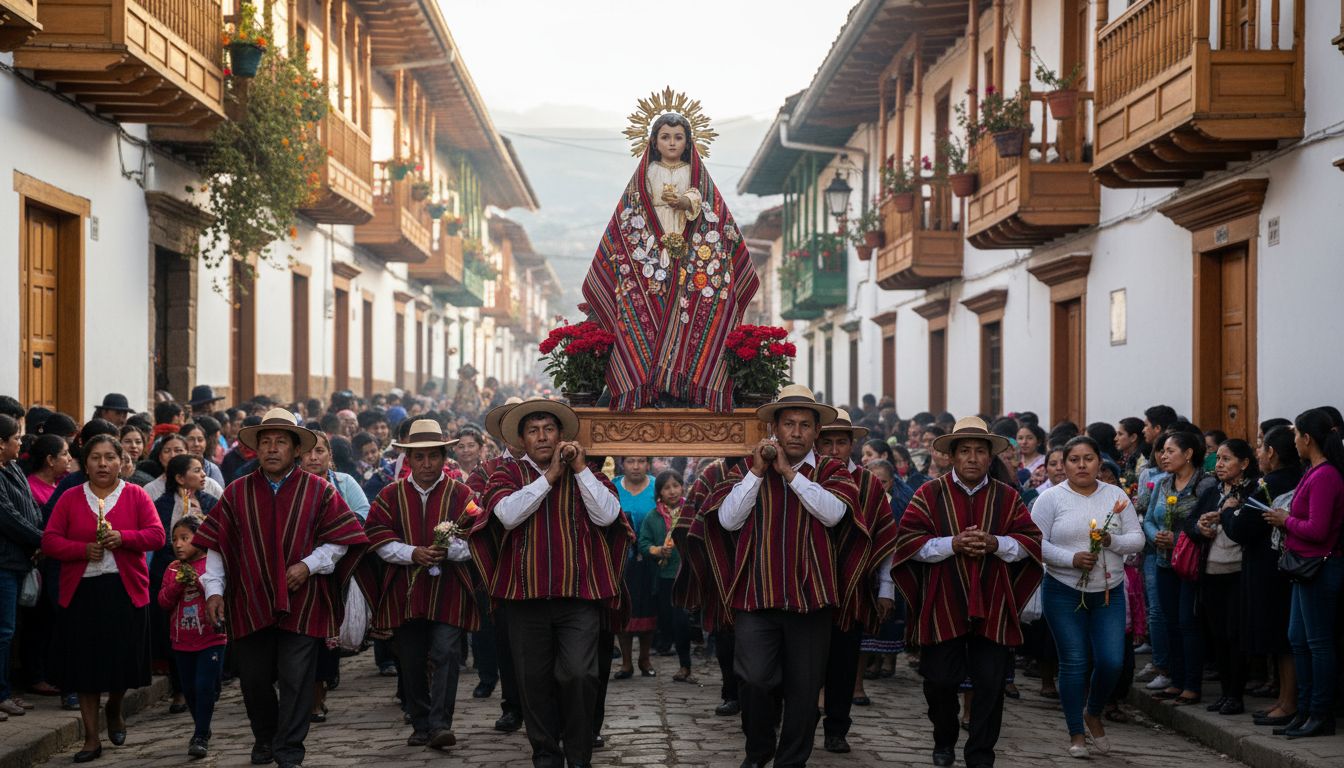
In the days leading up to Christmas, the highland town of Pujilí in Ecuador's Cotopaxi Province takes on a particular kind of energy. The air is thin and cool, market stalls fill with fruit and flowers, and conversations turn, again and again, to a single name: the Niño de Isinche. For anyone new to this part of the Andes, a first encounter with this tradition can feel like stumbling into something both intimate and enormous — a celebration that belongs entirely to the community, yet welcomes the curious outsider standing at the edge of the crowd.
As an expat drawn into the rhythm of small-town Ecuadorian life, witnessing the lead-up to this December 23rd procession offers a window into a devotion that long predates any single resident's arrival, and will long outlast it.
Who Is the Niño de Isinche?
The Niño de Isinche takes his name from Isinche, a hacienda area near Pujilí long associated with the region's agricultural and textile heritage. Many locals describe him as a revered image of the Christ Child with deep roots in the community's identity, though the precise details of his origin story are difficult to independently verify. What's often repeated — and should be understood as local lore rather than confirmed historical record — is a connection between the figure and the region's historic wool and textile economy, an industry that shaped life in and around Pujilí for generations.
Readers interested in the exact history should treat these accounts as a starting point for further inquiry rather than settled fact. Oral tradition and regional memory carry real weight here, even where written documentation is thin.
The December 23 Procession
Each year, just two days before Christmas Eve, Pujilí holds its procession honoring the Niño de Isinche. The timing situates it within a much larger phenomenon across Ecuador's central highlands: the Pase del Niño, or "Passing of the Child," a Christmas season tradition observed in various forms throughout the region.
Based on the general pattern of these celebrations elsewhere in the highlands, a procession of this kind would typically involve costumed participants, musical groups, dancers, and elaborately decorated floats moving through town. It's worth noting that these details represent what's common across similar Pase del Niño events generally, rather than a confirmed, blow-by-blow account of Pujilí's specific observance. Visitors hoping to witness the procession firsthand would do well to confirm current-year details locally, since timing and format can shift.
Faith, Wool, and Andean Syncretism
What makes celebrations like this one so layered is the way Catholic Christmas devotion sits alongside older, pre-Columbian agricultural and seasonal symbolism. Many observers note that the wool and textile motif — a recurring thread in conversations about the Niño de Isinche — seems to tie together local economy, cultural identity, and religious imagery in a way that feels distinctly Andean rather than imported wholesale from European tradition.
Sustaining celebrations of this scale, year after year, often relies on a community sponsorship system known as the prioste tradition, common across Ecuador's highland festivals. Under this system, individuals or families take on the honor — and considerable expense — of funding and organizing a given year's festivities, a commitment that reflects deep personal devotion as much as communal obligation.
Experiencing the Tradition as an Outsider
For an expat or traveler, standing at the margins of a celebration this old and this local raises an obvious question: what does it mean to witness something that was never created with an outside audience in mind? There's a particular kind of privilege in being allowed to observe color, sound, and devotion unfolding in real time — the crush of a crowd, the specific cadence of unfamiliar music, the visible emotion on the faces of longtime participants.
At the same time, a recurring theme among those who write about experiences like this is the importance of humility. Outside understanding has real limits here. Respectful observation — watching, listening, and asking questions rather than assuming — tends to serve both the visitor and the community far better than confident pronouncements about what everything "means."
Why the Niño de Isinche Still Matters
Traditions like the Niño de Isinche procession speak to something larger happening across Ecuador's highlands: a quiet, ongoing effort to preserve cultural practices that blend indigenous and Catholic heritage in ways found nowhere else. For travelers seeking Christmas traditions beyond the familiar commercial version, Pujilí offers something markedly different — assuming it's approached with curiosity and care rather than treated as a spectacle.
Given how little has been formally documented about the specifics of this celebration, anyone genuinely interested is encouraged to seek it out firsthand, ask questions of those who've celebrated it for generations, and treat secondhand accounts — including this one — as an invitation to learn more rather than a final word.