A Cat That Became a Guardian: An Expat's Unexpected Protector
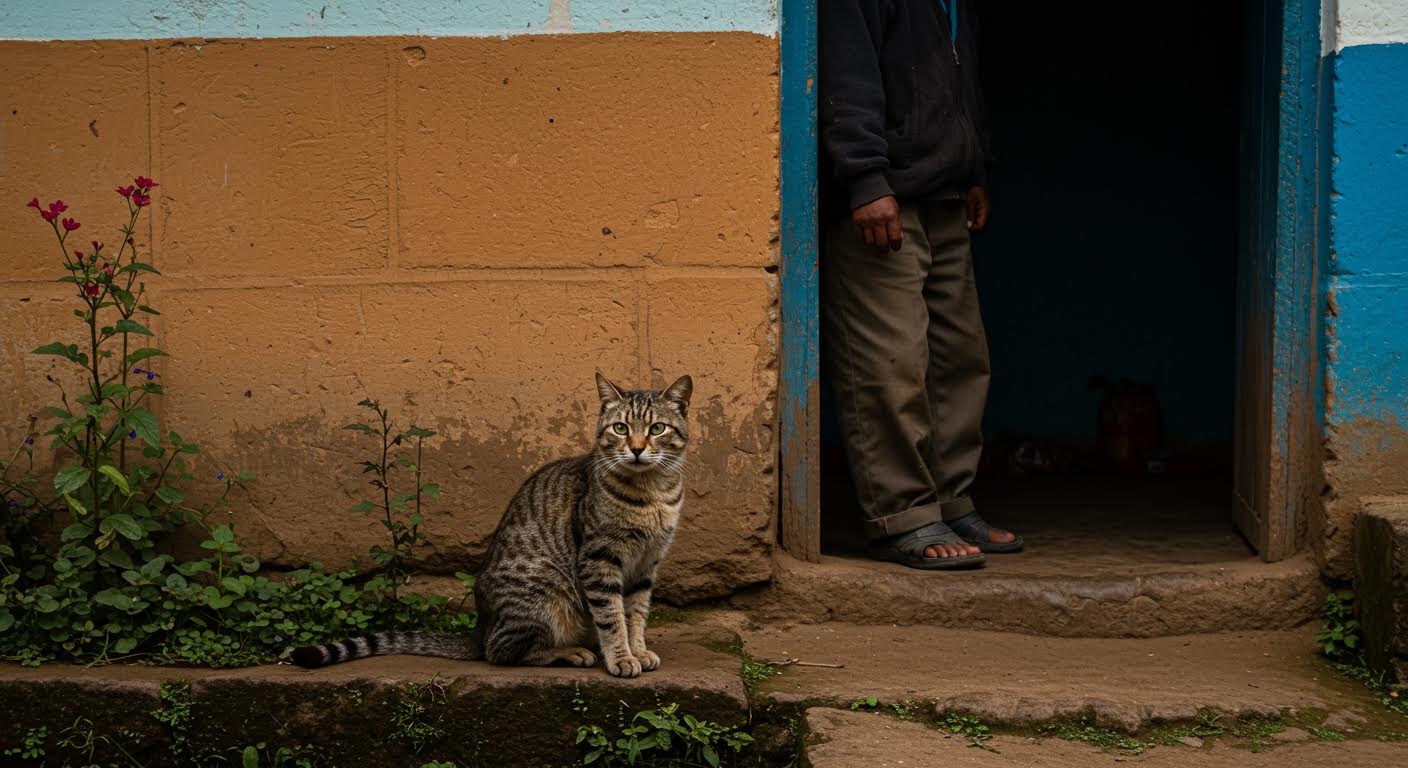
Moving to a foreign country brings countless challenges—language barriers, cultural differences, and crushing isolation. But sometimes, unexpected companions emerge to help us navigate these turbulent waters. For Sarah Mitchell, a 32-year-old teacher from Manchester who relocated to a tiny Andalusian village, that companion came in the form of a battle-scarred orange tabby who would prove to be far more than just a pet.
An Unexpected Companion in a Foreign Land
Sarah's arrival in Vélez de Benaudalla—a village of barely 3,000 residents nestled in Granada's countryside—brought all the typical expat struggles. The language barrier felt insurmountable, the bureaucracy bewildering, and the social isolation crushing. Her charming rental apartment, with its terracotta tiles and whitewashed walls, felt more like a prison during those first lonely weeks.
During one of her evening walks, trying to familiarize herself with the narrow cobblestone streets, she first encountered the cat. Missing part of his left ear and sporting a distinctive scar across his nose, the orange tabby sat regally outside the local panadería, observing the world with intelligent green eyes.
"He wasn't exactly friendly at first," Sarah recalls. "He'd watch me walk by every day but kept his distance. I started bringing him dinner scraps, not really thinking much of it. I assumed he belonged to someone in the neighborhood."
Casual feeding sessions gradually evolved into something deeper. The cat—whom she eventually named Capitán for his commanding presence—began following her on evening walks, always maintaining respectful distance but clearly serving as her unofficial escort.
The Guardian Emerges
Capitán's protective nature first emerged during Sarah's third month in the village. Returning home late after a frustrating day with residency paperwork, she found herself followed by two intoxicated men making crude comments in rapid Spanish she was grateful not to fully understand.
"Suddenly, Capitán appeared out of nowhere," Sarah remembers. "He positioned himself directly between me and these men, arched his back, and let out the most ferocious yowling I've ever heard from a cat. The men actually backed off, laughing nervously, and went the other way. It was like having a furry bodyguard."
This incident transformed their relationship. Capitán began spending more time around Sarah's apartment, often sleeping on her small balcony and accompanying her on errands. His protective instincts extended beyond physical threats to emotional support during her most challenging moments of cultural adjustment.
When Sarah contracted severe flu during her fourth month—feeling utterly alone and homesick—Capitán somehow sensed her distress. He positioned himself outside her door, refusing food from neighbors and alerting them to her condition with persistent meowing. This behavior prompted her elderly neighbor, Señora Carmen, to check on Sarah and help her through the worst of her illness.
"In that moment, I realized he wasn't just hanging around for food," Sarah explains. "He had genuinely taken on the role of watching over me. In a place where I felt so vulnerable and out of place, having this creature actively looking out for my wellbeing was incredibly moving."
Cultural Bridges and Local Connections
Capitán's presence unexpectedly became a bridge to the local community. The cat was village-famous, having survived on the streets for years, and residents grew curious about the foreign woman who had earned his devotion.
"People would stop me to ask about 'mi gato guardián,'" Sarah laughs. "Suddenly, I was having conversations with neighbors who had previously only offered polite nods. Capitán became a conversation starter that transcended language barriers."
The relationship also introduced Sarah to local attitudes toward animals and community care. Unlike the individualistic pet ownership common in the UK, she discovered that Vélez de Benaudalla operated on communal animal welfare. Stray cats were fed by multiple households, their wellbeing considered a shared responsibility.
Señora Carmen, who became Sarah's mentor, explained the village philosophy: "Animals choose their people as much as people choose their animals. Capitán has chosen you, mija. That makes you part of our community."
This acceptance through Capitán's endorsement opened doors throughout the village. Local shopkeepers began engaging Sarah in patient conversations to improve her Spanish. The baker started setting aside her preferred bread. Children greeted both Sarah and Capitán enthusiastically during evening walks, creating the sense of belonging she had struggled to achieve alone.
Lessons from an Unlikely Guardian
As Sarah's first year progressed, her relationship with Capitán taught profound lessons about adaptation, resilience, and the nature of home. The cat's ability to thrive despite obvious hardships—his scars told stories of survival she could only imagine—served as daily reminder of the strength required to build a new life in unfamiliar territory.
"Watching Capitán navigate the village with such confidence, despite whatever trauma had shaped his past, showed me that adaptation doesn't mean forgetting where you came from," Sarah reflects. "It means integrating your experiences to become stronger and more capable of protecting what matters to you."
The experience shifted her understanding of protection and vulnerability in expat life. Rather than seeing isolation and cultural confusion as weaknesses to hide, Capitán's unwavering loyalty taught her that acknowledging vulnerability could invite the genuine connections she had been desperately seeking.
Most significantly, the relationship redefined Sarah's concept of home. What had initially felt like exile gradually transformed into chosen adventure, with Capitán serving as both anchor and guide through building a new life.
"Home isn't just about familiar places or people who speak your language," Sarah concludes. "Sometimes it's about finding those unexpected connections that make you feel protected and valued, even when everything else feels foreign. Capitán taught me that family can take forms you never anticipated, and that sometimes the most loyal guardians come with whiskers and attitude."
Two years later, Sarah remains in Vélez de Benaudalla, now fluent in Spanish and deeply integrated into village life. Capitán still patrols their neighborhood each evening, though these days he's more likely to be found napping in sunny spots around Sarah's expanded garden. But his watchful green eyes continue to remind her daily that the most profound connections transcend species, language, and cultural boundaries—and that the best guardians are often the ones we never knew we needed.