A Cat That Became a Guardian
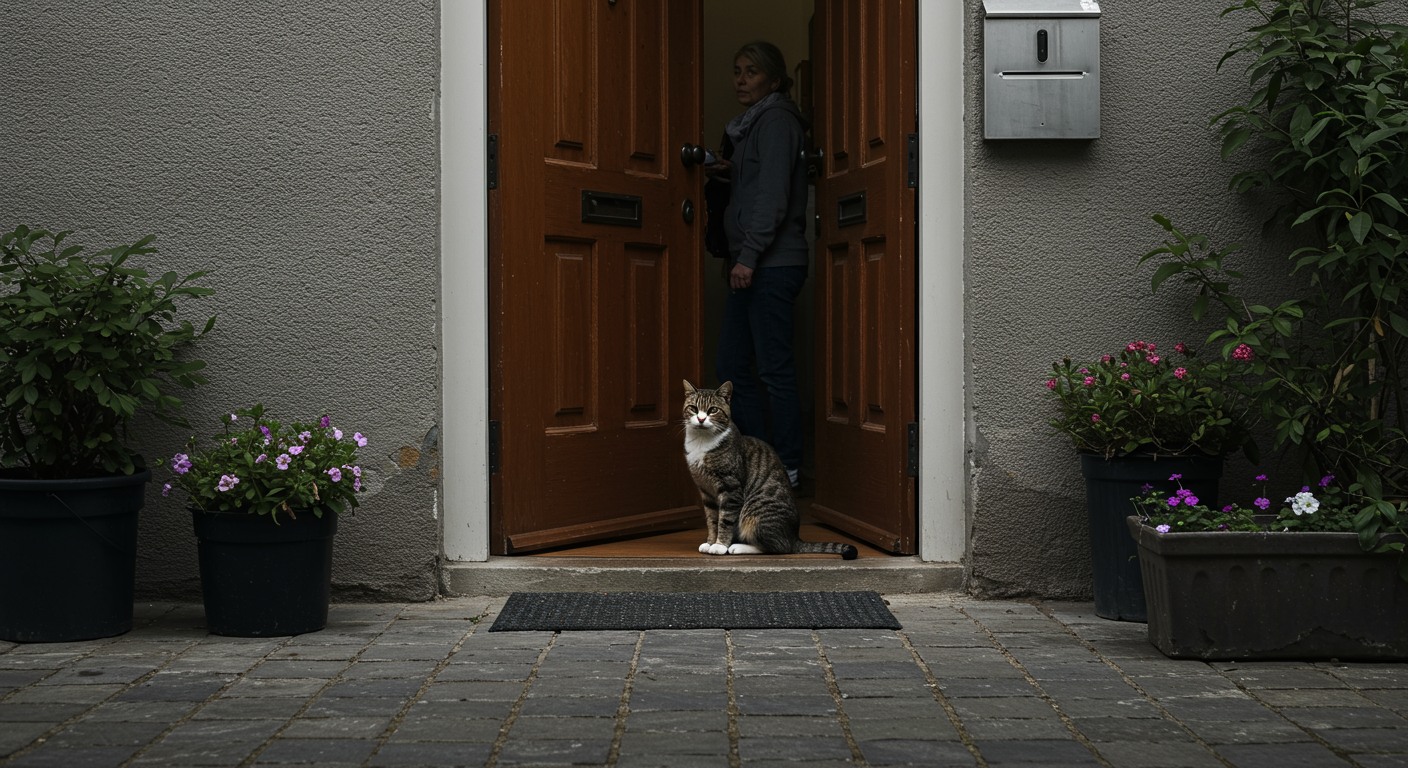
When I first arrived in Cuenca, everything felt slightly out of rhythm. The mornings were thinner and cooler than I expected, the church bells seemed to mark time differently, and even the sounds from the street below my apartment carried meanings I had not yet learned to read. Vendors called out in voices I could not always understand. Dogs barked at odd hours. Doors opened and closed in the courtyard with a confidence I still lacked. I was grateful to be there, but gratitude and loneliness can live side by side.
The cat appeared during that uncertain stretch, as if it had been watching me settle in and decided I needed supervision. It was a small, ash-colored creature with sharp ears, pale green eyes, and the kind of steady stare that makes you feel assessed rather than admired. It did not arrive with theatrics. No crying at the door, no dramatic leap into my lap. It simply began showing up on the back steps at almost the same time each evening, sitting just far enough away to suggest independence and just close enough to imply intent.
From the beginning, it stood out because it seemed less interested in affection than in observation. It studied the hallway before entering. It paused at every unfamiliar sound. If I moved from room to room unpacking dishes or folding clothes, it followed with measured patience, as though memorizing the geography of my new life. I told myself it was only a cat being a cat. Still, there was something in its composure that made the apartment feel less empty.
How the Cat Chose Its Role
The bond did not form in a single moment. It built itself through repetition. Each morning, the cat waited near the door while I made coffee, then inspected the windowsill as if checking the perimeter. In the evenings, it took up a position beside the entryway before finally moving to the foot of the sofa. When I worked late or found myself staring too long at my phone, homesick and restless, it would rise, stretch, and press lightly against my ankle before settling nearby again. It was not clingy. It was present.
Over time, I noticed a pattern that made me think of it less as a visitor and more as a watchman. If footsteps slowed outside my door, the cat became alert before I did. If someone lingered in the stairwell, its head turned sharply toward the sound. On windy nights, when loose metal somewhere in the building rattled and made the old place feel less secure, it did not hide. It moved toward the noise and sat facing it, listening. That stillness had a strange effect on me. If the cat was calm enough to investigate, I could breathe a little easier too.
There was loyalty in these small acts, but not the theatrical kind people often assign to animals in stories. Nothing about it felt exaggerated. It simply developed a habit of placing itself between me and whatever it had decided required attention. I began to trust that habit. In a city that was still becoming familiar, trust mattered more than I expected.
The Moment That Changed the Story
One night, during the rainy season, the idea of the cat as a guardian stopped feeling like a private joke and became something I could not dismiss. The power had flickered twice that evening, and the apartment was full of damp shadows. Rain tapped at the windows in uneven bursts, and the lights in the courtyard below had gone dim. I had just turned off the kitchen light and was getting ready for bed when the cat, which had been half asleep in a chair, snapped upright.
It did not bolt or puff itself up. It moved with purpose to the front door and froze there, body low, ears forward, eyes fixed. A second later I heard it too: a soft scrape outside, then another, not the familiar rhythm of a neighbor coming home but the uncertain sound of someone testing a gate or shifting weight in the hallway. In a building where every stair and hinge had its own voice, this noise did not belong.
The cat let out a sound I had never heard from it before, not a full growl and not a meow, but a rough warning pulled from deep in its chest. It held that position without taking its eyes off the door. I stood still, suddenly more awake than I had been all day, listening to the rain, the silence, then a faint retreating step. Another pause. Then nothing.
I did not open the door. I waited. The cat waited too, rigid and attentive until the tension slowly dissolved from the room. Only after several minutes did it step back, glance up at me, and walk toward the bedroom as though the matter had been handled. Maybe it had reacted to an ordinary disturbance. Maybe the person outside had no intention beyond confusion or curiosity. But what stayed with me was not the mystery in the hallway. It was the certainty in the cat.
What Protection Looked Like in Everyday Life
After that night, I started noticing its routines with new respect. It waited near the door when I came home, not with frantic excitement but with a kind of measured relief. If I was upset, it stayed unusually close, choosing the nearest chair or curling up at the edge of the bed instead of disappearing for hours. When noises in the building unsettled me, especially those unfamiliar late-night sounds that seem louder when you are far from everyone you have known for years, the cat became attentive before fear had fully reached me.
There is a difference between ordinary pet behavior and the habits that become personally meaningful. Plenty of cats like windows, doorways, warm blankets, and predictable feeding times. What made this one feel protective was its timing. It appeared when I was uneasy. It checked the hallway when I hesitated. It settled only after I had settled. Whether that was instinct, routine, or some small mystery of companionship did not matter much in practice. What mattered was the comfort it gave.
Protection, I learned, is not always dramatic. Sometimes it looks like a quiet body stationed near the entrance while rain moves across the roof. Sometimes it is the sound of paws crossing the floor at 2 a.m., just to make sure you are still there. Sometimes it is the relief of sharing a room with another living thing that seems to believe, absolutely, that your safety is worth monitoring.
Why This Cat Mattered So Much Far From Home
If I had met that cat in a place where I felt fully rooted, I would have loved it differently. I might have seen it as charming, eccentric, and good company. But far from home, in the fragile period when even simple errands could leave me tired and self-conscious, its presence took on more weight. Expat life can be full of beauty, but also of small daily unsteadiness. You can be surrounded by new streets and kind people and still miss the effortless belonging of your old life.
The cat became part of the structure that held me together. It gave shape to my mornings. It made the apartment feel claimed. It turned silence into companionship rather than absence. On difficult days, when language felt like a wall and distance from family felt especially sharp, I would come home and find it waiting in its usual place, as if to say that at least one thing in this unfamiliar city recognized me on sight.
That kind of companionship creates its own form of grounding. It does not erase loneliness, but it softens it. It does not solve the instability that can come with starting over in another country, but it gives that instability a center. The cat made me feel watched over in a season when I was still learning how to watch over myself.
A Small Guardian, a Lasting Memory
I do not remember exactly when I stopped thinking of it as the neighborhood cat and started thinking of it as mine, or perhaps, more accurately, of myself as one of its responsibilities. Some relationships never announce themselves. They become important through repetition, through the accumulation of ordinary moments, until one day you realize they have changed the emotional architecture of your life.
That cat came to symbolize something larger than comfort. It made me think differently about home. Home, I learned, is not only where you arrived from or where your paperwork says you belong. Sometimes it is the place where a small creature waits for you at the door, where your fear is noticed, where your presence matters enough to be guarded.
Even now, when I think back to those first uncertain months, I do not picture documents, maps, or checklists. I picture a narrow apartment hallway, rain tapping the windows, and a gray cat seated in perfect stillness by the door, keeping watch as if that had always been its job.