600,000 Pilgrims, One Small Town: Yaguachi's Extraordinary Day of Faith
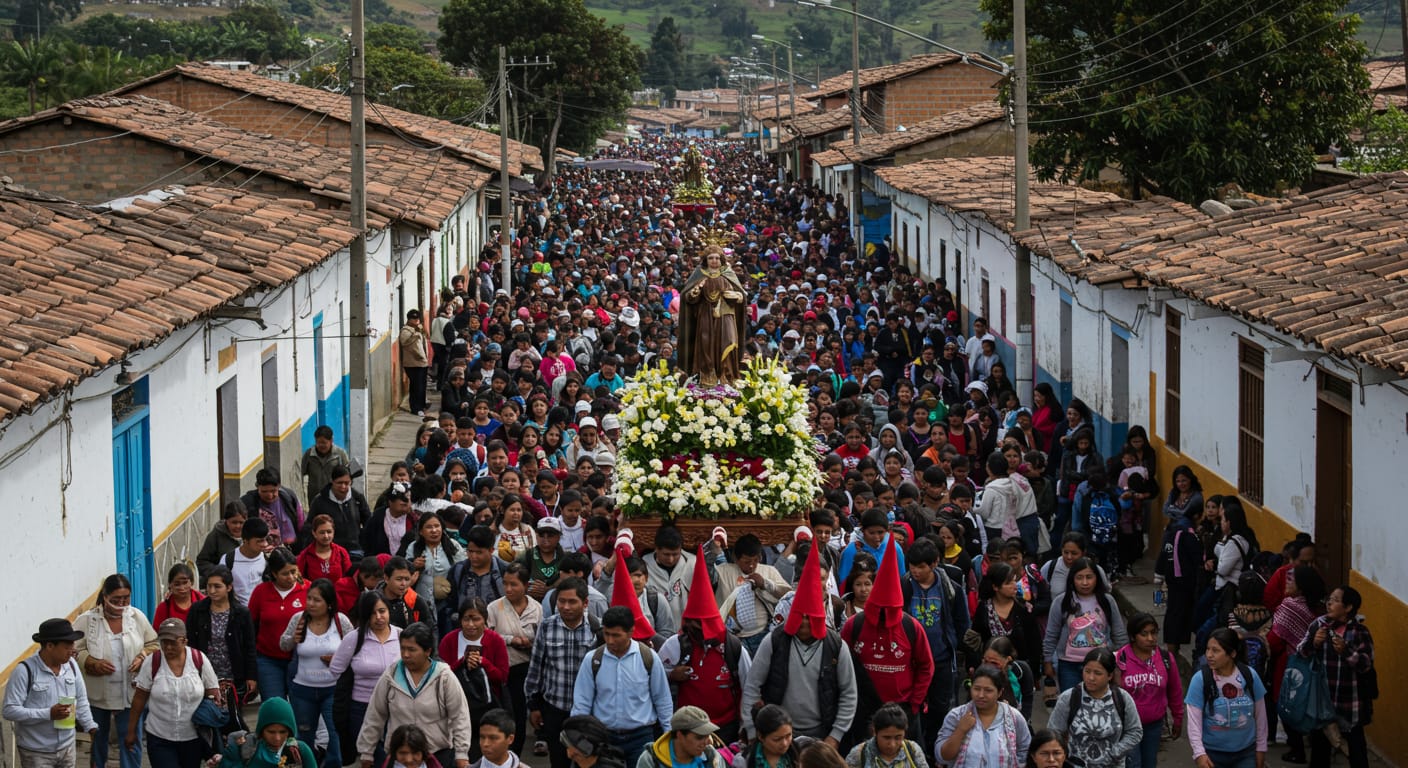
600,000 Pilgrims, One Small Town: Yaguachi's Extraordinary Day of Faith
For most of the year, Yaguachi is a quiet town in Guayas Province, the kind of place a visitor might drive through without a second glance. But each August 16, that changes dramatically. Local tradition and widely repeated estimates suggest that as many as 600,000 pilgrims converge on the town to honor San Jacinto de Yaguachi, a figure that dwarfs the town's everyday population many times over. This oft-cited number functions more as a commonly repeated estimate than a precisely verified statistic, but even allowing for some uncertainty, the scale of the gathering is by all accounts remarkable.
The contrast is part of what makes the story compelling. A town built for everyday coastal life suddenly becomes the center of a massive religious and cultural event, straining infrastructure, transforming streets into rivers of people, and turning ordinary business into a season of heightened activity.
Who is San Jacinto de Yaguachi?
San Jacinto de Yaguachi holds a place of deep significance in the religious life of coastal Ecuador, particularly within Guayas Province. According to popular tradition, devotion to this saint has been passed down through generations, becoming a defining feature of local Catholic identity. Many communities in the region consider the yearly celebration a cornerstone of their cultural and spiritual calendar.
It's worth noting that specific historical details, such as the exact origins of the devotion or how it took root in Yaguachi, rest primarily on popular tradition and general regional knowledge rather than documented historical record. Still, the endurance of the practice across generations speaks to its importance, even where precise historical specifics remain part of oral tradition rather than confirmed history.
What the Pilgrimage Looks Like
Celebrations of this kind in Ecuador typically follow familiar patterns seen at other large patron saint festivities: processions winding through town streets, Masses held at capacity, all-night vigils, and a general atmosphere that blends solemnity with celebration. Pilgrims often travel long distances, some on foot, as an act of devotion and personal sacrifice.
Alongside the religious elements, these events tend to take on a festive character. Food stalls, music, and vendors selling religious items and local goods commonly line the streets, creating a mix of spiritual reflection and community celebration that many observers describe as one of the most vivid expressions of Ecuadorian coastal culture.
It's worth flagging that specific logistical details for this year's event, such as official processional routes, exact schedules, or crowd control measures, are not independently confirmed here. Those attending would do well to seek local or official updates closer to the date rather than rely on general assumptions.
An Expat's Perspective on the Experience
For expats considering attending, the sheer scale of the event calls for some practical preparation. Crowds of this size inevitably affect transportation, parking, and general mobility around town, and many long-term residents suggest planning for significant delays or arriving well ahead of peak hours.
Beyond the logistics, though, many expats describe events like this as a powerful window into the depth of faith and community bonds that shape daily life in Ecuador. Witnessing a small town absorb such an enormous influx of devotion, and seemingly do so with organized hospitality, can offer a meaningful sense of the country's cultural fabric that's harder to grasp from the sidelines.
For those thinking about attending, a few general suggestions tend to hold true for large religious gatherings: arrive early, expect road closures and shifted local schedules, dress and behave with an awareness of the event's religious nature, and approach the experience with curiosity rather than as a spectator event alone.
Why This Matters Beyond the Numbers
Whether the true attendance is exactly 600,000 or simply a very large and widely repeated estimate, the underlying significance of the Yaguachi pilgrimage isn't really about precise counting. It's about what the event represents: a recurring, deeply rooted expression of communal faith and cultural identity that shapes how a region understands itself.
For long-term residents and visitors alike, this pilgrimage stands as a fixture worth understanding, not just as a logistical challenge or a curiosity, but as a genuine entry point into Ecuadorian life. As with many local traditions, curiosity paired with respect tends to offer far more insight than an obsession with exact figures ever could.