17 Hikers, Including 12 Children, Rescued After Getting Lost North of Quito
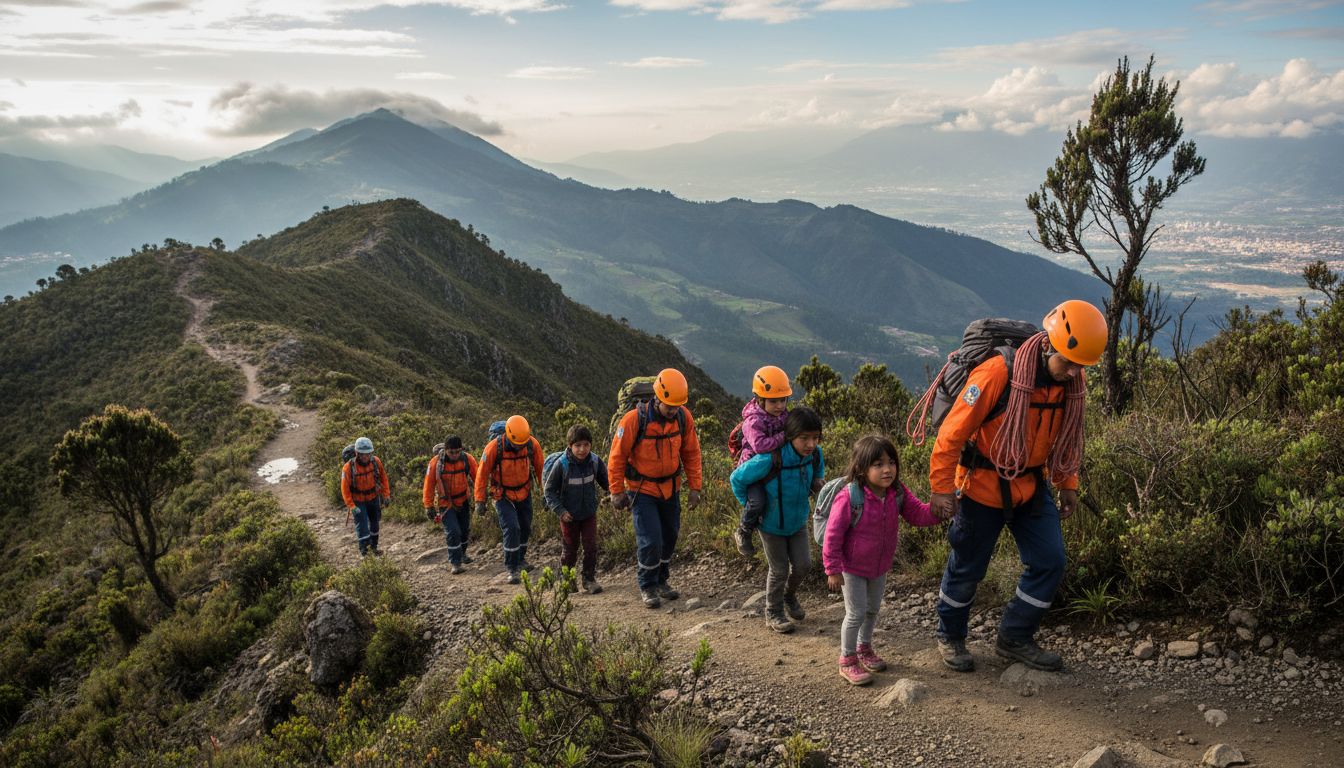
Early reports suggest that 17 hikers, including 12 children, were rescued after getting lost while descending a mountain in northern Quito. So far, though, public details appear limited, and several key facts still await official confirmation.
That caution matters. In the first hours after a rescue, numbers, locations, timing, and the sequence of events often change as emergency agencies piece together a fuller account. For now, the central claim is simply that a mixed group of adults and children became disoriented on the descent and was later brought to safety.
What was reported about the rescue near northern Quito
The main detail circulating is that the group totaled 17 hikers, 12 of them children, and that they ran into trouble on the way down rather than during the ascent. That distinction matters because many hikes around Quito can feel manageable on the climb but become more confusing and physically demanding once people are tired and trying to get back before dark.
Beyond that basic account, much remains unclear. Without official statements or verified local reporting, it is best not to assume exactly where the group was hiking, how far they had gone, or what caused them to lose the route.
What details still need confirmation
Several basic facts have not yet been independently verified. The name of the mountain, the exact trail or route, and the point at which the group became disoriented are not confirmed in the material available for this draft.
It is also unclear whether any of the children or adults needed medical attention, how long the group was missing, or whether weather, darkness, terrain, or navigation problems played the biggest role. Another open question is which agency led the rescue effort and whether firefighters, police, municipal emergency teams, or volunteer rescue units all took part.
As often happens in developing incidents, those details may become clearer only after authorities issue statements or local media publish follow-up reports.
Why mountain descents around Quito can become risky
For residents, expats, and visitors alike, this kind of incident is a useful reminder that descents around Quito can be harder than expected. Fatigue often sets in after the high point of a hike, and focus can slip just when good decisions matter most.
Weather is another factor. Conditions in the mountains around Quito can change quickly, with clouds, wind, mist, or cooler temperatures reducing visibility and making familiar-looking trail junctions harder to read. Fading afternoon light adds another layer of pressure, especially for groups trying to keep children moving at a steady pace.
People who spend time hiking in the Andes also know that some routes are less straightforward than they first appear. Trails can split, informal paths can look like official ones, and phone signal or digital maps may not be reliable in every area. None of that means local hikes are unusually dangerous by default, but it does mean preparation matters.
What expats and visiting families should take from this incident
The practical takeaway is not fear but planning. Families and newcomers heading into the hills around Quito should check route difficulty in advance, start early enough to avoid a late descent, and make sure phones are fully charged before leaving. Carrying layers, water, snacks, and a simple backup plan can make a big difference if a walk takes longer than expected.
Hiking with children requires even more margin for error. The pace is usually slower, attention can wander, and turnaround decisions need to happen earlier. It makes sense to choose routes that match the ability of the youngest hiker, keep the group close together on the descent, and avoid unfamiliar trails without local guidance or solid route knowledge.
For expats still learning Quito’s terrain, one of the best habits is to treat mountain outings as more serious than a city park walk, even when a trail is popular. A route that sounds easy online can become more complicated once altitude, weather, and timing enter the picture.
What to watch for as reporting develops
This story will become more useful once official information is released. The most important updates to watch for are statements from rescue services, firefighters, police, or municipal emergency authorities confirming the exact location, the number of people involved, and the condition of those rescued.
Credible local reporting may also clarify names, ages, injuries, if any, how the group was located, and how long the rescue took. Until then, readers should keep in mind that early incident reports often shift as authorities assemble a complete timeline.
If confirmed, the incident would serve as a timely reminder for Quito-area hikers: the way down can be the part of the day that requires the most caution.