Ceviche, Chochos and Yuca: How Coast and Andes Each Feed an Ecuadorian Plate
Why Ecuadorian Food Is Healthier Than You Might Expect
Latin American cuisine is often stereotyped as heavy, fried, or cheese-laden — an association that owes more to Tex-Mex fast food than to the region's actual culinary traditions. Ecuadorian food, in particular, gets overlooked in this conversation, which is unfortunate given how much its everyday cooking relies on fresh, minimally processed ingredients.
Ecuador's geography helps explain why. The country spans three distinct regions — the Pacific coast, the Andean highlands, and the Amazon basin — each contributing different staples to the national diet. That diversity, more than any single dish, is what makes the case for Ecuadorian food's everyday healthfulness.
Ceviche and the Coastal Advantage: Lean Protein Without the Fryer
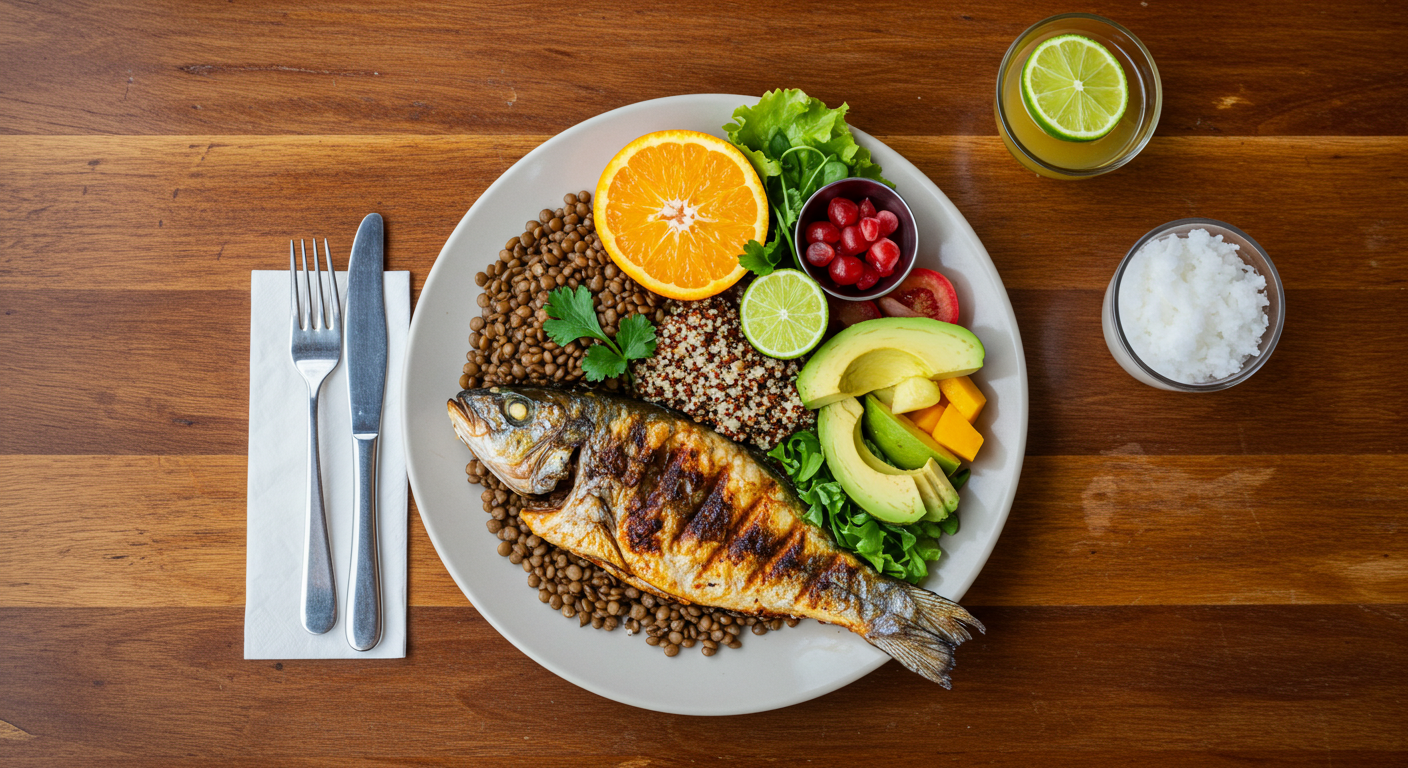
Coastal Ecuadorian cooking centers on seafood, and its signature dish, ceviche, is prepared through citrus-curing rather than frying. Fish or shrimp is marinated in lime juice, which denatures the proteins without added oil, resulting in a dish that's naturally lean.
Ecuador's coastline supports a wide variety of seafood — shrimp, corvina, and various shellfish among them — giving coastal households a rotating menu of protein sources that don't rely on deep frying, unlike many fried-fish preparations found elsewhere in the world.
Andean Staples: Quinoa, Chochos, and Yuca as Nutritional Workhorses
Highland Ecuador contributes some of the diet's most nutrient-dense staples. Quinoa, a grain native to the Andes, stands out for its fiber and complete protein content, making it a workhorse ingredient in soups and side dishes.
Chochos, or lupini beans, are a less internationally known but nutritionally significant legume — high in protein and commonly served as a simple, minimally processed snack or side. Yuca, a starchy tuber, rounds out the trio as a fiber-rich staple that's typically boiled or roasted rather than heavily processed.
Soups and Stews: Vegetable-Forward Comfort Food
Traditional Ecuadorian soups, like locro and various caldos, stand in contrast to cream- or roux-thickened soups common in other culinary traditions. These dishes are generally broth-based and vegetable-heavy, built around potatoes, squash, corn, and other produce rather than dairy fat.
Lean proteins — chicken, fish, or small portions of meat — are often simmered into these stews, reinforcing a pattern where vegetables and broth do the heavy lifting rather than butter or cream.
Fresh Fruit as the Default Sweet Treat
Ecuador's varied geography also yields an unusually wide range of native and tropical fruits, from naranjilla and tree tomato to passionfruit and multiple varieties of banana. In everyday life, fresh fruit tends to fill the role that processed sugar or packaged snacks occupy in many Western diets.
This abundance shapes eating habits at a basic level: when fresh fruit is cheap, available, and culturally normalized as a snack, it naturally displaces some processed sugar consumption.
Where Indulgence Enters: Fried Foods and How They're Balanced
None of this is to suggest Ecuadorian food is without indulgence. Fried pork dishes like fritada and hornado, along with fried plantain chips, are beloved staples, particularly at markets and family gatherings.
What's notable is how these dishes are typically balanced. Fresh sides — avocado, curtido (a lightly pickled vegetable slaw), and simple salads — commonly accompany fried or fatty dishes, tempering the meal as a whole. In everyday eating patterns, this kind of indulgence tends to appear occasionally rather than as the default.
What Nutrition Guidance Says About These Patterns
General public health guidance from organizations like the World Health Organization and the U.S. Department of Agriculture emphasizes diets rich in legumes, whole grains, fish, and fresh produce as supportive of long-term health. Many staples of everyday Ecuadorian cooking — quinoa, chochos, fish-based ceviche, vegetable-forward soups — align directionally with these broader recommendations from the WHO and USDA.
It's worth being clear about the limits of this comparison: this is general dietary pattern alignment, not a clinical nutritional study of the Ecuadorian population specifically. Individual health outcomes depend on far more than the presence of healthy staples in a national cuisine.
Why Ecuadorian Food Flies Under the Radar
Despite these strengths, Ecuadorian cuisine has far less global visibility than that of neighboring countries like Peru, or larger Latin American food cultures such as Mexico's or Brazil's. Travel and food journalism, including coverage from outlets like BBC Travel and Smithsonian Magazine, has occasionally noted this gap, describing Ecuadorian food as underappreciated relative to its regional peers.
That relative obscurity may itself feed the misconception. Cuisines that aren't well known internationally rarely get the benefit of nuanced coverage, and Ecuadorian food's health-forward staples simply haven't had the same spotlight as more globally recognized dishes.
Conclusion: Reassessing Assumptions About Ecuadorian Cuisine
Taken as a whole, the case for Ecuadorian food's everyday healthfulness rests on genuine patterns: citrus-cured seafood instead of fried fish, protein-rich legumes and grains, vegetable-forward soups, and fresh fruit as a go-to snack. Fried and indulgent dishes exist, but they tend to function as occasional treats rather than daily fare, often balanced by fresh sides.
For readers who associate Latin American cooking primarily with fried, heavy dishes, Ecuadorian cuisine offers a useful corrective — and a good reason to seek out its dishes with fresh eyes.