Whale Season Meets Ceviche Season: What to Eat in Manabí as Humpbacks Return
Whale Season Meets Ceviche Season: What to Eat in Manabí as Humpbacks Return
Every year, two very different rhythms converge on Ecuador's Manabí coast. Humpback whales arrive offshore in large numbers, drawing visitors to Puerto López and the surrounding coastline, while the region's fishing boats keep local kitchens stocked with the shrimp, crab, and fish that define Manabí's seafood identity. Tourism officials point to figures in the thousands of humpbacks passing through Ecuadorian waters during this window, a scale that helps explain why visitor traffic to the coast surges during these months.
For travelers, this overlap creates a distinct kind of trip: mornings spent scanning the horizon for breaching whales, followed by afternoons at plastic tables eating ceviche just steps from the beach. Understanding how these two seasons intersect can help visitors plan a trip that makes the most of both.
Whale Season 101: Where and When to Look
Puerto López serves as the primary hub for whale-watching along this stretch of coast, with boat tours typically departing toward Isla de la Plata and the waters around Machalilla National Park. According to Ecuador's Ministry of Tourism, the humpback migration season generally runs from around June through September, with peak sightings often reported in the middle months of that window.
This seasonal migration has a visible effect on the town itself. Hotels fill up, tour operators add departures, and the pace of Puerto López shifts to accommodate visitors moving between boat trips, the beach, and meals. The whale-watching economy and the local dining scene are closely linked, since most tours return to shore around midday, right as lunch service picks up.
Manabí's Seafood Identity: What Makes It Ceviche Country
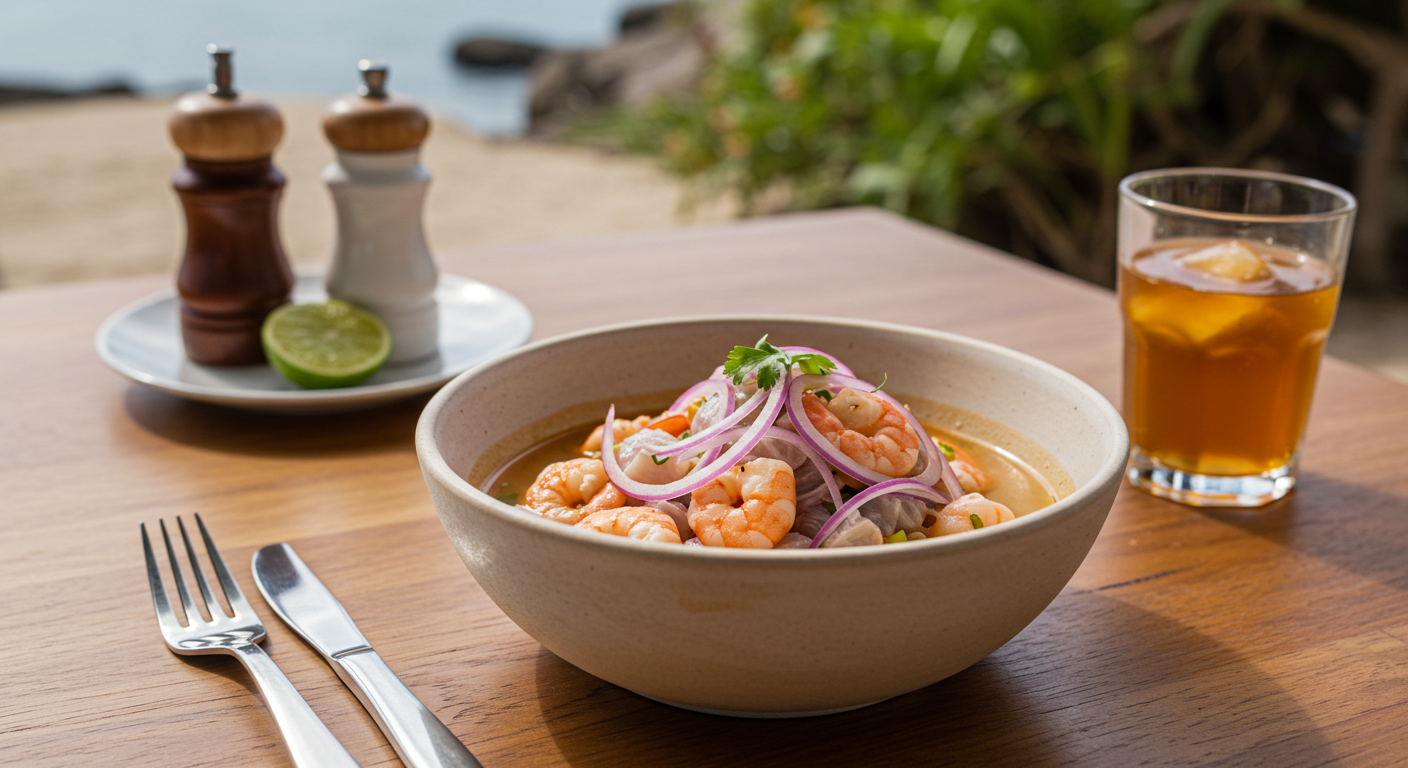
Manabí is widely regarded as one of the heartlands of Ecuadorian coastal cuisine, and ceviche is at the center of that reputation. Ceviche de camarón (shrimp), ceviche de cangrejo (crab), and ceviche de pescado (fish) are all staples along this coast, typically served cold or at room temperature with a citrus-forward marinade, accompanied by toasted corn, plantain chips, or popcorn.
Beyond ceviche, the region's food culture includes other staples worth seeking out. Encebollado, a hearty fish soup built around cassava and pickled onions, is a common comfort food any time of year. Viche, a thicker seafood stew often made with peanut and coconut, is another dish closely associated with Manabí's coastal kitchens and reflects the province's deep ties to the sea.
Where Whale Watchers End Up Eating
The timing of whale-watching tours naturally shapes when and where visitors eat in Puerto López. Because most boats head out in the morning and return by early afternoon, many travelers end up looking for lunch right around the time the town's seafront eateries are busiest.
Puerto López's dining scene includes a mix of seafront marisquerías, market-style stalls, and casual seafood shacks, generally reflecting the informal, catch-of-the-day character common along this part of the coast. Given the limited detail available from current sourcing, this piece intentionally avoids naming or ranking specific restaurants; instead, travelers are encouraged to explore the waterfront strip and ask locally about what's freshest that day, a common and often rewarding approach in small coastal towns like this one.
Tips for Timing Your Trip Around Both Seasons
Travelers hoping to combine whale-watching and seafood dining in the same day may want to book tours earlier in the morning, leaving room for a leisurely lunch once back on shore. Because fishing schedules and boat availability can shift with weather and season, seafood freshness and availability often track with the same seasonal rhythms that govern the fishing fleet.
Whale-watching dates can shift slightly year to year depending on migration patterns, so checking official tourism resources, such as the national tourism ministry or the Puerto López municipal government, closer to a planned trip is a sensible way to confirm current-season timing and any visitor guidelines before booking tours.
Why This Pairing Defines Manabí's Appeal
Manabí's identity as a destination rests on this kind of overlap between nature and food. Whale season draws visitors to the coast for a dramatic wildlife encounter, and once they're there, the province's ceviche culture gives them a reason to linger at the table as well. For many travelers, the two seasons aren't separate attractions but part of the same experience: a coastline where the rhythms of the ocean shape both what visitors come to see and what ends up on their plate.