The Role of Local Farms in Ecuador's Food Supply
The Role of Local Farms in Ecuador's Food Supply
Ecuador's dining scene, from humble family-run comedores to ambitious farm-to-table restaurants in Quito and Guayaquil, rests on a foundation few diners think about: the country's local farms. Ecuador's remarkable geographic diversity, spanning coastal lowlands, Andean highlands, and the Amazon basin, gives rise to an unusually wide range of crops grown within a relatively compact national footprint. This variety underpins both food security for everyday households and the fresh-ingredient sourcing that increasingly defines Ecuadorian cuisine.
Ecuador's Agricultural Landscape: A Foundation for the Table
Each of Ecuador's three main growing regions contributes something distinct to the national food supply. The coastal lowlands support large-scale production of rice, bananas, and cacao, while the Andean highlands are known for potatoes, corn, and a range of vegetables suited to cooler elevations. The Amazon basin, though less prominent in export statistics, contributes tropical fruits and other regionally significant crops. Together, this geographic diversity means that local farms are not a niche supplement to Ecuador's food system but its very backbone, supplying both the staples found in everyday meals and the specialty ingredients that chefs increasingly seek out.
From Coast to Highlands: What Local Farms Produce
Staple crops such as rice, plantains, corn, and potatoes remain central to Ecuadorian diets, forming the base of countless traditional dishes served in homes and restaurants alike. Alongside these staples, cacao and coffee have drawn growing attention, both for their export value and for their role in an emerging specialty food culture that chefs and baristas are eager to showcase. Tropical fruits, often grown on smaller plots, add further variety to local markets and menus.
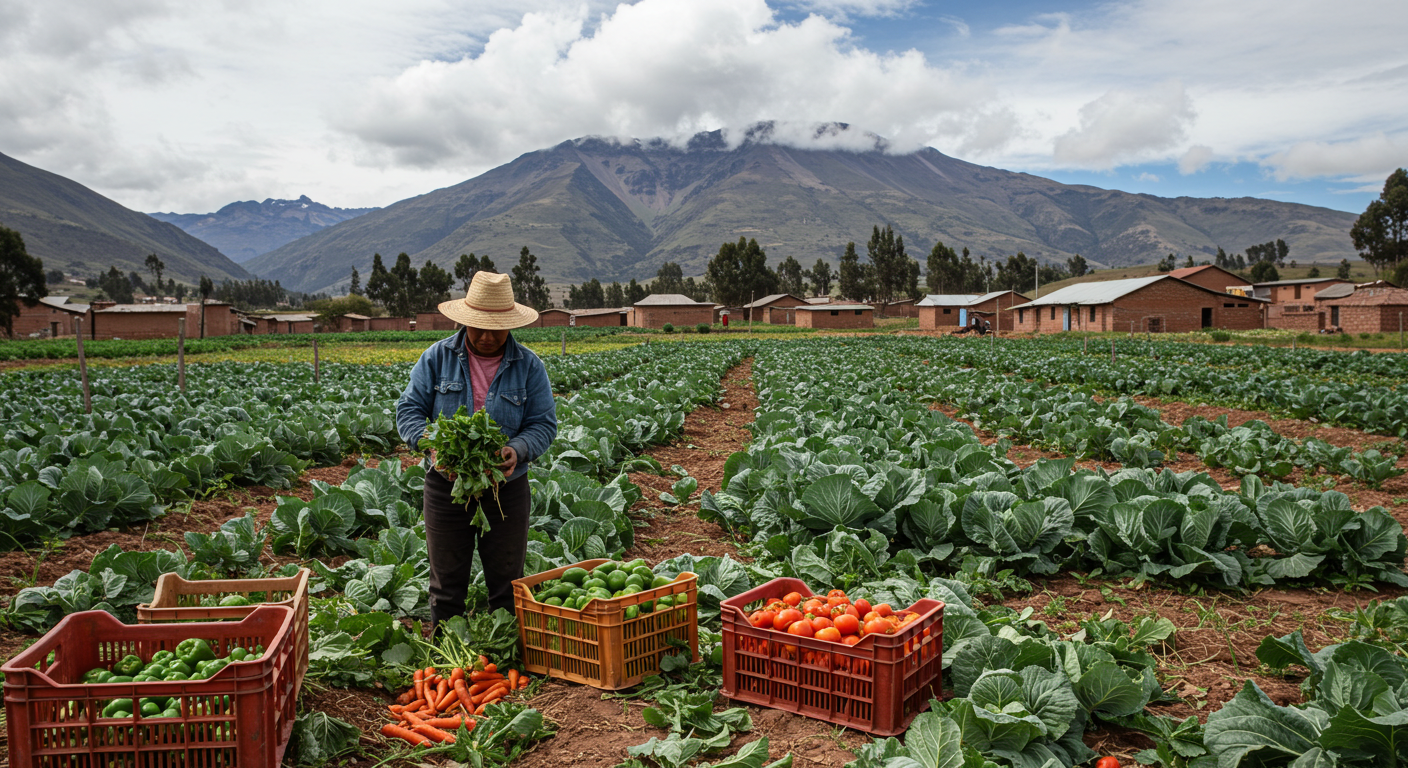
Much of this production comes not from large industrial operations but from smallholder and family farms. These operations play an outsized role in supplying fresh produce to local markets and, increasingly, to restaurants seeking closer relationships with the people growing their ingredients.
Policy and Institutional Support for Rural Producers
Ecuador's Ministry of Agriculture and Livestock supports rural producers through programs aimed at improving productivity and expanding market access. This work does not happen in isolation. International organizations, including the Food and Agriculture Organization, the Inter-American Institute for Cooperation on Agriculture, and the World Bank, have been involved in rural development initiatives across the country, offering technical support and investment aimed at strengthening agricultural value chains.
These combined efforts generally aim to reduce Ecuador's reliance on food imports and help stabilize prices for consumers nationwide, an objective that has direct implications for both household food security and the cost structures restaurants face when sourcing ingredients.
Farm-to-Table in Practice: Restaurants Embracing Local Sourcing
Against this backdrop, a growing number of Ecuadorian restaurants have moved to prioritize fresh, locally grown ingredients over imported alternatives. Chefs in cities like Cuenca and Quito have built direct relationships with nearby farms, sometimes visiting growers personally or working with intermediaries who specialize in connecting small producers to commercial kitchens.
This shift reflects not only culinary considerations but also evolving consumer expectations. Diners are showing increased interest in transparency about where their food comes from, and many express a preference for supporting local producers through their dining choices, a trend that mirrors farm-to-table movements seen elsewhere in the world.
Persistent Challenges Along the Supply Chain
Despite this momentum, the path from farm to restaurant table is not without obstacles. Infrastructure gaps, particularly in rural transport networks, can make it difficult to move perishable goods efficiently from farms to urban centers. Climate vulnerability adds another layer of uncertainty, as shifting weather patterns affect crop reliability and yields in ways that ripple through supply chains.
Smallholder farmers also often face market access barriers when trying to connect with restaurant buyers directly, including limited resources for marketing, transportation, or meeting the volume and consistency requirements that larger dining establishments may expect. Addressing these barriers remains an ongoing focus for both policymakers and industry groups working to strengthen rural-urban food linkages.
What This Means for Ecuador's Dining Future
Stronger farm-to-market linkages carry implications well beyond individual restaurant menus. As infrastructure improves and smallholder farmers gain better access to urban markets, the potential grows for a more resilient dining culture, one less exposed to import disruptions and better positioned to showcase the country's agricultural diversity.
For diners, supporting restaurants that source locally can mean fresher ingredients and a more direct connection to Ecuador's farming communities. For restaurateurs, deepening relationships with local producers offers a path toward differentiation and resilience alike. As farm-to-table practices continue to grow, Ecuador's local farms look set to remain central not just to what appears on the table, but to the broader story of the country's food system.