The Grandmothers of Las Herrerías Are Keeping Cuenca's Street Food Alive — For Now
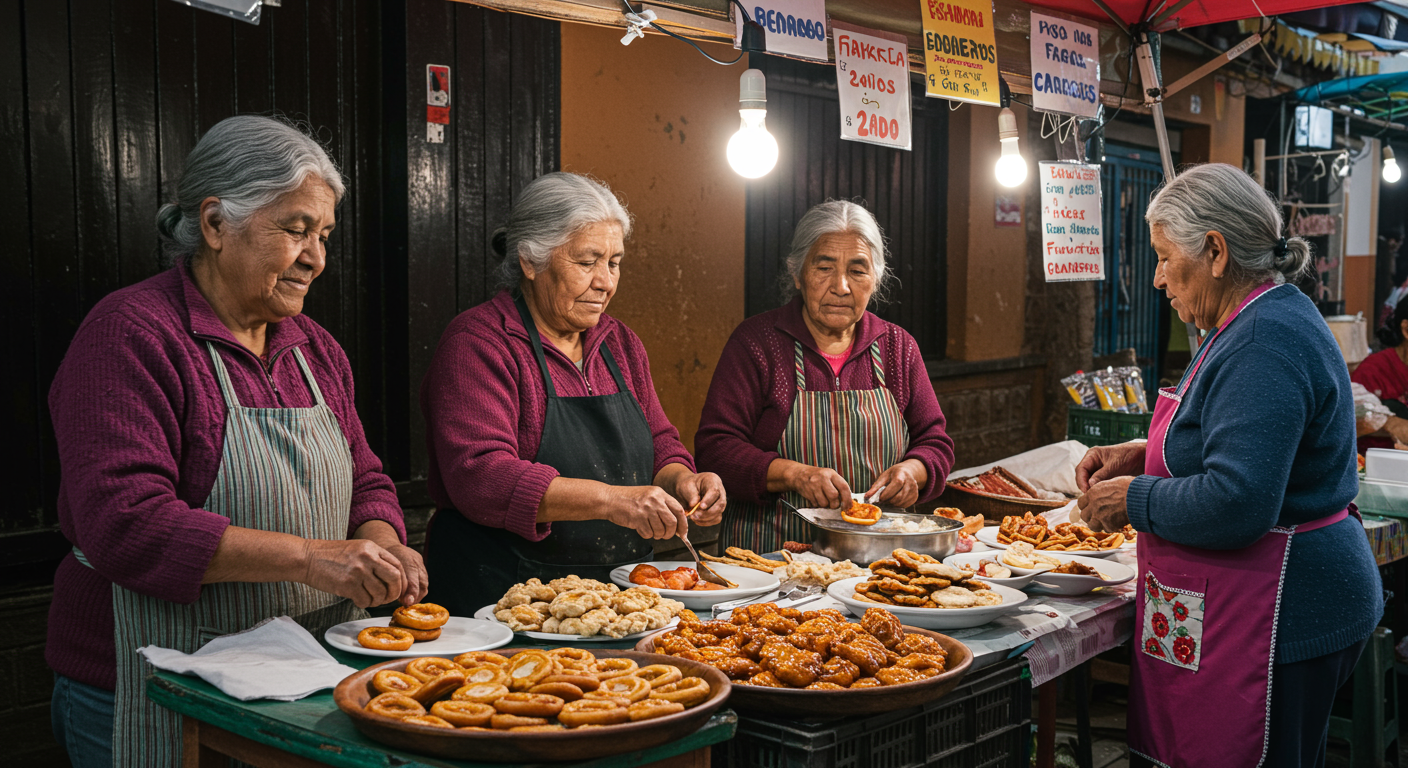
Las Herrerías remains one of Cuenca's most recognizable food corridors, a place where eating on the street is tied as much to neighborhood habit as to visitor curiosity. Its appeal lies not only in what is served, but in how it is served: in a setting where routine, repetition, and familiarity matter just as much as novelty.
That is what gives the area its staying power. Las Herrerías is often described as one of the city's traditional food strips, but its continuity depends less on branding than on the people who open their stalls, prepare the same dishes day after day, and keep customers coming back. From the sidewalk, the tradition can look permanent. In practice, it is sustained by labor that is personal, physical, and easy to overlook.
Why Las Herrerías Still Matters in Cuenca
Official institutions such as the Municipio de Cuenca, along with local outlets including El Mercurio, have long treated Las Herrerías as part of the city's living food culture rather than as a simple tourist stop. Its importance comes from the way it brings together everyday eating, local memory, and civic identity in one compact stretch of the city. People go there to meet, grab a snack, continue a habit, or show visitors a version of Cuenca that still feels unmistakably local.
That local quality matters. Streets like this become meaningful not because they are frozen in time, but because they remain in use. Las Herrerías works as a public ritual: cooks preparing familiar foods, regulars ordering without much explanation, and passersby drawn in by steam, smoke, and the sound of a busy food corridor doing what it has done for years.
The Women Behind the Steam, Griddles, and Recipes
At the center of that ritual are the women who cook there, many of them older vendors whose experience shapes both the food and the atmosphere. Local reporting in El Mercurio has often highlighted veteran stallholders as custodians of technique and continuity, the people who know exactly how a batter should look, how long a griddle needs to heat, or when a certain item will sell best.
Whether every vendor is literally a grandmother matters less than the role these women play. They carry practical knowledge that does not always exist in written recipes: proportions learned by eye, timing refined through repetition, and serving customs built over years of direct contact with customers. In places like Las Herrerías, tradition survives through these repeated gestures.
There is also a social dimension to their work. Returning customers are not only buying food; they are returning to a familiar hand, a known flavor, and a style of service that belongs to the street itself. That continuity helps explain why the corridor still feels rooted even as Cuenca changes around it.
What People Come to Eat on Las Herrerías
Las Herrerías is associated with the kinds of prepared foods and drinks that reward immediacy: items served hot, assembled quickly, and eaten close to where they are cooked. The draw is sensory as much as culinary. Steam rising from a pot, a griddle turning out another batch, the smell of toasted corn or frying dough, and the quick exchange between vendor and customer all shape the experience.
What makes the food feel distinctly Cuencano is not just the ingredients, but the context. Street-side eating here is part of a local rhythm in which timing, place, and custom matter. Some people arrive for a favorite snack at a familiar hour. Others come because the corridor itself has become part of how they understand the city: a place where traditional preparations remain visible, public, and woven into daily life.
That visibility matters. Unlike restaurant traditions hidden behind a kitchen door, Las Herrerías puts the method on display. People can see the pace of preparation, the consistency of technique, and the human effort behind each serving. That openness gives the food a different kind of credibility and charm.
A Street Food Tradition Between Daily Life and Tourism
Las Herrerías operates in two registers at once. It is a neighborhood place where locals maintain ordinary eating habits, and it is also a destination that appears in broader conversations about Cuenca's cultural appeal. The Municipio de Cuenca and other public-facing institutions have helped frame traditional food corridors as part of the city's identity, giving streets like this added visibility.
That attention can help. Recognition brings customers, keeps the corridor in civic conversation, and reinforces the value of preserving local food practices in an urban setting. A well-known food street is easier to celebrate than one that has slipped from view.
But popularity also changes a place's rhythm. A corridor that serves regulars may gradually adapt to visitors' expectations, peak hours may shift, and presentation can become part of the product. None of that automatically erases authenticity, but it does remind us that living traditions are never static. They are shaped by whoever shows up to eat.
What Keeps the Tradition Going — and What Could Threaten It
The strongest supports for Las Herrerías are human-scale ones: learned skill, long habits, family knowledge, and customer loyalty. Traditions like this survive because someone still wakes up early to prepare, because patrons still prefer a known stall, and because the street still makes sense as a place to eat.
At the same time, continuity should not be taken for granted. Reporting in Ecuadorian outlets such as El Universo and El Mercurio on traditional commerce and food culture often points to familiar pressures, including aging vendors, generational turnover, changing consumer habits, and the demands that come with regulation and urban change. That does not mean Las Herrerías is disappearing. It does mean its future depends on whether the work remains worth doing for the people who know how to do it.
The phrase “for now” belongs in that modest sense. The tradition is alive because it is still being practiced, not because its survival is guaranteed. If fewer younger relatives choose the trade, or if the street's economics shift too far, the corridor could change in ways that are subtle at first and obvious only later.
Keeping the Story Honest
The most honest way to understand Las Herrerías is also the simplest: it survives through use. People cook there, serve there, eat there, and return. The street food tradition does not live on nostalgia alone, and it does not need grand claims to feel important. Its value is visible in the daily persistence of skilled vendors and the customers who continue to meet them where they are.
If the grandmothers of Las Herrerías are keeping something alive, they are preserving a practice more than a myth. They keep alive a way of making food public, local, and personal in a city that is always balancing heritage with change. For now, that is enough to keep the corridor recognizable as itself.