South American Cuisine Explained Through Ecuador's Food
South American Cuisine Explained Through Ecuador's Food
Ecuador packs an unusual amount of geographic diversity into a relatively small footprint. Within a few hours' drive, the landscape shifts from Pacific coastline to Andean peaks to Amazonian rainforest. This compressed geography makes Ecuador an unusually clear lens for understanding South American cuisine as a whole, since each region echoes food traditions found across the wider continent.
Despite this complexity, Ecuador's food scene tends to be overlooked in global food media compared to neighbors like Peru, or even compared to Mexico. Yet the layering of indigenous, Afro-descendant, and colonial influences across its three regions offers a kind of miniature map of South American culinary history.
Coastal Cuisine: Seafood, Plantains, and Afro-Ecuadorian Influence
Ecuador's coast is defined by seafood, and ceviche is its signature dish. Variations abound, with citrus-marinated shrimp, fish, or shellfish served differently depending on the region and household. Alongside ceviche, encocado—a coconut-based seafood stew—reflects the deep imprint of Afro-Ecuadorian culinary tradition along the coast, a legacy tied to Afro-descendant communities with roots stretching back generations.
Plantains are the coastal starch of choice, appearing fried, mashed, or baked, and their versatility mirrors their role throughout coastal South America. These Pacific-influenced flavors echo culinary patterns seen in parts of Peru and Colombia, where seafood, citrus, and coconut play a similarly central role.
Andean Highland Cuisine: Indigenous Roots and Pre-Colonial Staples
Moving into the highlands, the ingredients shift dramatically. Potatoes, corn, and quinoa form the backbone of Andean cooking, crops that were cultivated long before European contact. Cuy, or guinea pig, remains a traditional dish tied closely to Indigenous foodways that predate colonization, often reserved for special occasions or celebrations.
This highland cuisine reflects a culinary continuity stretching back centuries, largely unbroken despite colonial disruption. Similar patterns of potato- and corn-based cooking, along with the presence of cuy, appear in the Andean regions of Peru and Bolivia, suggesting a shared highland food culture that predates modern national borders.
Amazonian Cuisine: The Overlooked Culinary Frontier
Ecuador's Amazonian region remains the least represented in mainstream food media, both domestically and internationally. Staples here include yuca, native fruits, and river fish, ingredients suited to the rainforest environment but rarely seen outside it.
This relative obscurity isn't unique to Ecuador. Amazonian cuisine across Brazil, Peru, and Colombia shares a similar fate, often overshadowed by coastal or highland food traditions in national and global food narratives. Ecuador's Amazonian dishes offer a window into indigenous practices shared broadly across the Amazon basin.
The Colonial Fusion: How Spanish Influence Reshaped Ecuadorian Food
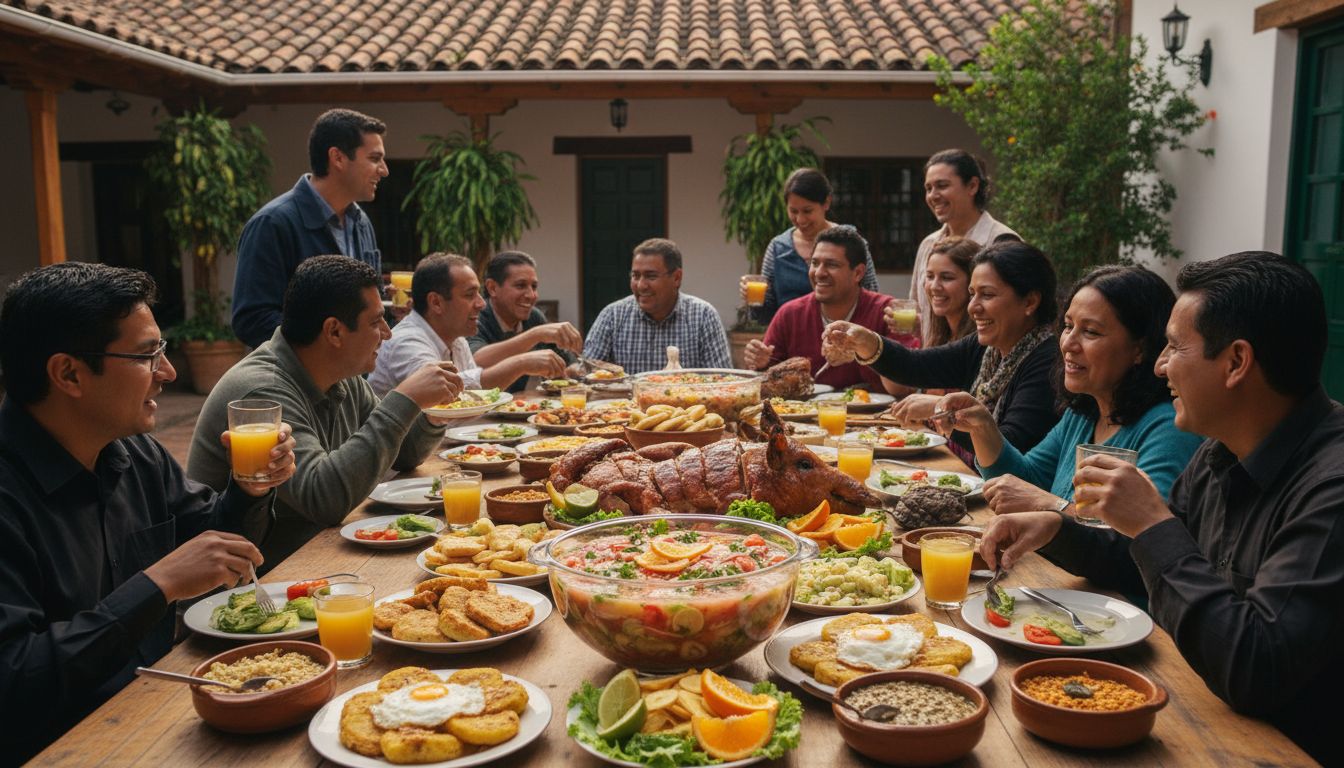
Spanish colonization introduced pork, dairy, and wheat, ingredients that didn't exist in pre-Columbian Ecuador. Over time, these elements blended with indigenous staples to create hybrid dishes. Llapingachos, potato cakes often filled with cheese, and hornado, slow-roasted pork, are two clear examples of this fusion.
This pattern of colonial blending—indigenous staples merging with European ingredients—repeats across South America, where similar fusion dishes emerged as colonizers introduced livestock and grains into existing indigenous food systems.
Ecuador's Food Identity and the Rise of Culinary Tourism
Ecuador's tourism board has increasingly promoted gastronomy as part of the country's cultural branding, positioning food as a gateway into its regional diversity. Food-focused travel to Ecuador appears to be gaining interest, with visitors drawn to the contrast between coastal ceviche, highland cuy, and Amazonian dishes within a single trip.
Taken together, Ecuador's layered cuisine offers a microcosm for understanding South American food traditions as a whole: indigenous staples forming the foundation, Afro-descendant influence shaping coastal flavors, colonial contact introducing new ingredients, and geography dictating what ends up on the plate.