South American Cuisine Explained Through Ecuador's Food
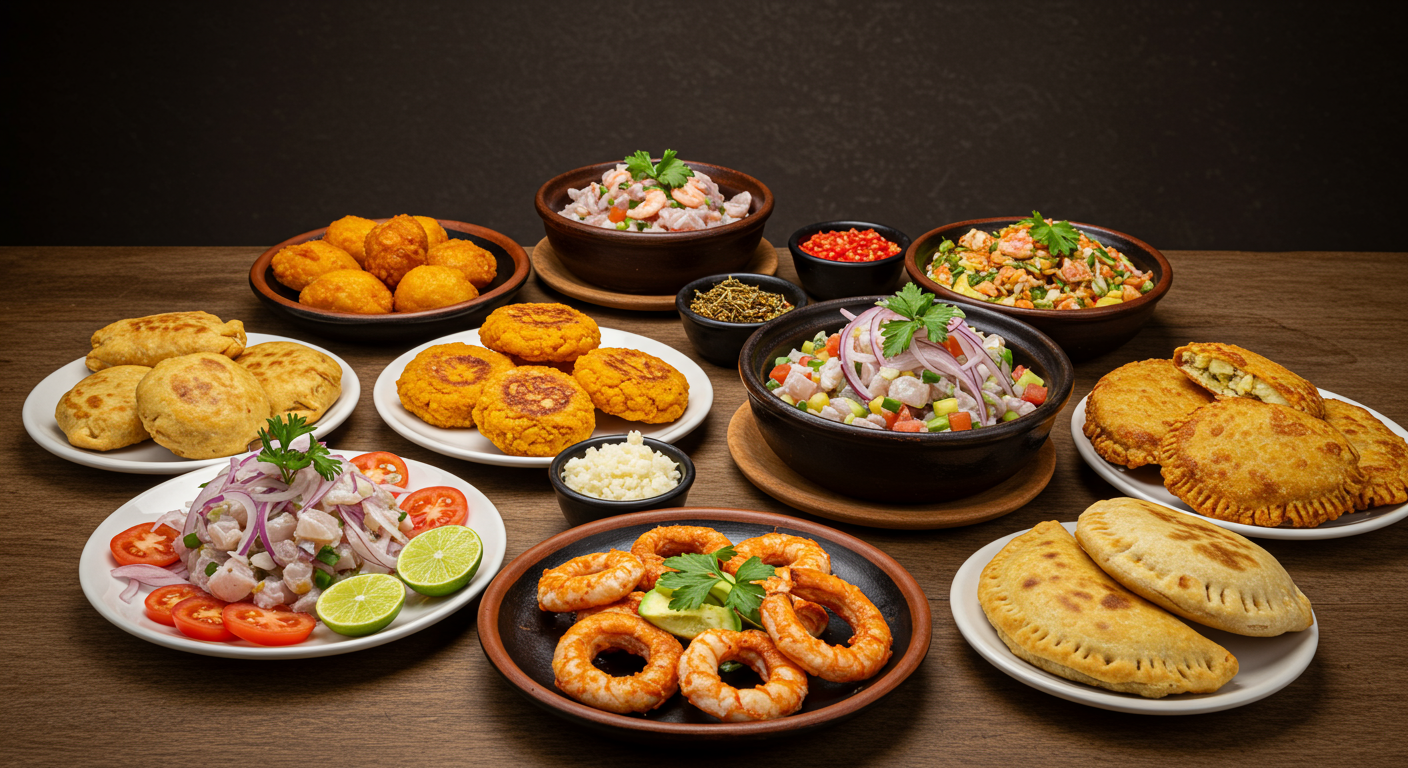
Want to understand South American cuisine? Look no further than Ecuador. This compact country serves as the continent's culinary encyclopedia, where three distinct ecosystems—coast, mountains, and Amazon—create a natural showcase of South America's incredible food diversity. From Pacific shorelines to towering Andean peaks and lush rainforests, Ecuador offers a perfect introduction to the indigenous foundations and colonial influences that shaped an entire continent's way of eating.
The Coast: Where Ocean Meets Tradition
Ecuador's Pacific coast tells the story of South American seafood culture in every bite. Take ceviche, the country's most famous export—fresh corvina or shrimp "cooked" in lime juice, topped with red onions and cilantro. This technique isn't unique to Ecuador; you'll find similar preparations from Peru to Chile, each with local twists that reflect coastal South America's shared love affair with the sea.
What makes Ecuadorian ceviche special? The playful addition of popcorn or crispy plantain chips that add unexpected crunch. Speaking of plantains, these versatile fruits appear everywhere on the coast—fried, mashed, or baked—alongside rice dishes that showcase the Spanish colonial influence still evident in coastal South American cooking.
Tropical fruits like passion fruit and naranjilla (a citrus that tastes like sunshine) brighten everything from drinks to desserts, proving that Ecuador's coast is as much about bold, fresh flavors as it is about the ocean's bounty.
The Highlands: Ancient Flavors at Altitude
Head up into Ecuador's mountains and you'll discover the heart of Andean cuisine—food traditions that stretch unbroken across South America's spine from Colombia to Chile. Here, three ingredients rule supreme: quinoa, potatoes, and corn. These aren't just foods; they're cultural touchstones that connect modern Ecuadorians to civilizations that thrived here thousands of years before Spanish arrival.
Ecuador grows hundreds of potato varieties, from purple fingerlings to yellow giants, each with distinct flavors and textures. Try locro, a soul-warming soup that combines potatoes with cheese and vegetables—comfort food that you'll recognize in different forms throughout the Andes.
Perhaps most fascinating is cuy (guinea pig), still prepared in highland communities using pre-Columbian techniques. While it might sound unusual to outside palates, cuy represents an unbroken link to indigenous protein sources that sustained Andean peoples for millennia.
Rural kitchens still rely on clay pots and wood-fired ovens, cooking methods that produce flavors you simply can't achieve with modern equipment. These traditional techniques preserve tastes that define authentic Andean cuisine across the continent.
The Amazon: Nature's Pantry
Ecuador's slice of the Amazon reveals why South America became such a culinary powerhouse. The incredible biodiversity here—from familiar fruits like cacao and açaí to dozens of varieties most outsiders have never heard of—demonstrates the rainforest's role as nature's experimental kitchen.
Yuca (cassava) appears at nearly every meal, prepared using techniques that indigenous communities have perfected across the entire Amazon basin. Fish dishes showcase sophisticated preservation methods like smoking and leaf-wrapping that create complex, earthy flavors unique to jungle cuisine.
What's remarkable is how indigenous cooks seamlessly blend medicinal plants and herbs into everyday dishes. This isn't just cooking—it's applied botany that reveals the deep understanding of forest resources that Amazon communities have maintained for generations.
When Worlds Collide: The Spanish Legacy
Ecuador's mestizo food culture—the beautiful fusion of indigenous and Spanish influences—tells the story of South American cuisine in miniature. Spanish colonizers brought pork, beef, and dairy products that indigenous cooks brilliantly incorporated using traditional techniques and local ingredients.
Picture this fusion in action: Andean potatoes sautéed with Spanish-introduced onions and garlic, creating flavors that are neither purely indigenous nor European but something entirely new. This creative adaptation happened across South America, creating distinctive national cuisines while maintaining common threads that unite the continent's food culture.
Today's Ecuadorian chefs continue this evolution, reinterpreting traditional dishes for modern palates while preserving the essential flavors and techniques that connect to the broader South American culinary story.
Three Dishes That Tell the Continental Story
Want to taste South America's diversity in three bites? Start with encebollado, a coastal fish stew combining fresh seafood with yuca and tangy pickled red onions. This dish represents the coastal tradition of marrying ocean bounty with indigenous starches—a pattern you'll find from Venezuela to Chile.
Next, try hornado—whole roasted pork that appears at highland celebrations from Ecuador to Peru. The communal preparation and ceremonial serving, alongside hominy corn and fried plantains, embodies the Andean approach to feast foods that bring communities together.
Finally, seek out maito—fish or chicken wrapped in aromatic bijao leaves and cooked over coals. This Amazonian technique preserves moisture while imparting subtle botanical flavors, representing cooking methods found throughout South America's rainforest regions.
Your Gateway to South American Flavors
Ecuador's concentrated biodiversity makes it the perfect introduction to South American cuisine. In this one accessible country, you can trace the agricultural wealth, indigenous wisdom, and cultural fusion that characterize an entire continent's approach to food.
The ingredients that appear throughout South American cooking—corn, potatoes, beans, quinoa—all show up in Ecuador, along with the techniques and cultural attitudes that unite diverse national cuisines. From the Pacific's fresh ceviches to the Amazon's exotic fruits to the Andes' ancient grains, Ecuador offers a delicious education in what makes South American food so extraordinary.
Whether you're planning a food-focused trip or simply want to understand one of the world's most exciting culinary regions, Ecuador provides the perfect starting point for exploring flavors that have been thousands of years in the making.