South American Cuisine Explained Through Ecuador’s Food
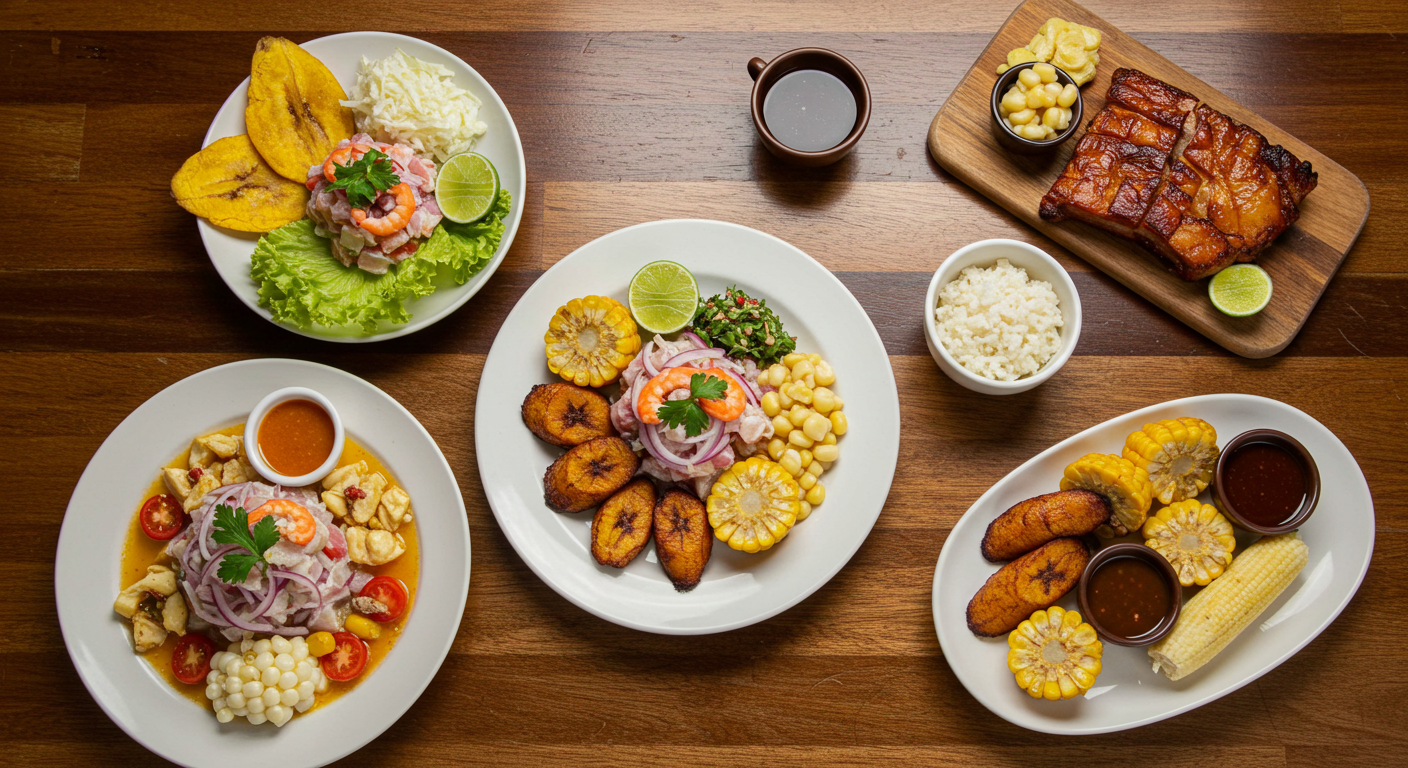
If you want a useful introduction to South American cuisine, Ecuador is a smart place to start. Not because it represents an entire continent, but because it clearly shows how food across South America is shaped by geography, Indigenous foodways, and the long afterlife of colonial history. In one relatively small country, you can move from highland soups and potato dishes to coastal seafood and plantain cooking, then to Amazonian traditions that complicate any simple map.
That is the real lesson of Ecuadorian food: there is no single South American cuisine. What exists instead is a collection of regional traditions built around place, staple crops, climate, and local habits of eating. Ecuador makes that idea easy to see.
Why Ecuador Is a Useful Way Into South American Cuisine
Across South America, food changes dramatically from one landscape to another. Mountains encourage one style of cooking, coasts another, and river systems another still. Ecuador contains all of those contrasts in concentrated form. The Andes shape hearty, high-altitude meals; the Pacific coast supports seafood-rich cooking with rice and plantains; the Amazon introduces its own ingredients and techniques tied to rainforest life.
That range helps explain a broader truth about the continent. South American food is best understood region by region, not as a single menu. Ecuador is vivid enough to make that pattern memorable.
The Big Idea: South American Food Is Deeply Regional
One of the easiest mistakes a diner can make is assuming that South American cuisine works as a unified category. In practice, it is far more local than that. Altitude changes what can be grown. Coastlines change the proteins people rely on. Trade routes, migration, and local farming traditions all shape how ingredients are combined.
In Ecuador, that means the cooking of Quito and the central highlands does not feel like the cooking of Guayaquil or the coast. Even within the same country, the starch on the plate, the kind of soup served, the preferred seasoning, and the role of seafood or pork can shift quickly. That is not an exception to the South American story. It is the story.
Indigenous Staples Still Anchor the Table
Long before colonial rule, the foods that anchored everyday life in the region were already in place: corn, potatoes, grains, cassava, plantains in some zones, and local herbs and chiles. Many of those ingredients still define daily cooking. They are not historical curiosities. They remain the backbone of real meals.
In Ecuador, corn and potatoes are especially important in the highlands, while plantains play a major role on the coast. Cassava appears more strongly in Amazonian cooking. These ingredients help connect Ecuador to wider South American patterns, where staple crops often matter more than flashy sauces or formal restaurant traditions. Day-to-day eating is usually built around the local starch first, then shaped around it.
How Spanish Influence Changed the Mix
Spanish colonial influence did not erase Indigenous food traditions so much as layer new ingredients and methods onto them. Pork, dairy, wheat, and certain roasting and stewing techniques became part of the culinary mix. Over time, those imported elements were absorbed into local cooking rather than remaining separate from it.
In Ecuador, that blend is easy to spot. You see Indigenous staples like corn and potatoes alongside pork dishes, cheeses, breads, and slow-cooked preparations that reflect colonial-era change. The result is not a pure preservation of one tradition or another, but a fusion shaped over centuries. That blended history is common across South America, even if the specific combinations differ from country to country.
The Andes: Hearty, High-Altitude Cooking
The Ecuadorian Andes offer one of the clearest examples of mountain cooking in South America. Meals tend to be filling, warming, and built for cooler climates. Soups and stews matter. Potatoes matter. Corn matters. Pork appears often, and many dishes lean toward substantial, comforting textures.
Locro, a rich potato soup often made creamy with cheese and avocado, shows how highland ingredients become deeply satisfying meals. Llapingachos, potato patties griddled until crisp outside and soft inside, highlight the central role of the tuber in Andean cooking. Hornado, roast pork served with traditional accompaniments, reveals the colonial layer folded into an older regional base. Together, these dishes show how mountain food often prioritizes warmth, density, and everyday nourishment.
The Coast: Seafood, Rice, Plantains, and Bright Flavors
If the Andes speak in soups and potatoes, coastal Ecuador speaks in seafood, rice, peanuts, and plantains. The ingredients shift because the environment shifts. Access to fish and shellfish changes the daily table, and the heat encourages dishes that feel vivid, fresh, brothy, or sharply seasoned.
Ceviche is one of the best-known examples, but in Ecuador it often tells a slightly different story than diners expect elsewhere. It can be more liquid, more tomato-forward, and more closely tied to the broader logic of coastal eating. Encebollado, a beloved fish soup, pushes the point further: coastal cuisine is not only about acidity and chilled seafood preparations, but also about deep savory broths and restorative bowls. The coast is bright, yes, but it is also comforting and substantial.
The Amazon Adds Another Layer
It would be a mistake to explain Ecuadorian food only through an Andes-versus-coast contrast. Amazonian Ecuador adds another culinary layer, one tied to rainforest ecosystems, river foods, local produce, and preparation methods adapted to that environment. Even when the focus stays mostly on better-known mountain and coastal dishes, the Amazon remains an important reminder that national cuisines are often more complex than their most famous exports suggest.
That complexity matters when thinking about South America more broadly. Every time the food seems easy to summarize, another region appears and challenges the summary.
What Signature Ecuadorian Dishes Reveal About the Continent
Signature dishes are useful not just because they are delicious, but because they reveal patterns. A dish like locro points to the importance of soup traditions and highland staples. Llapingachos show how potatoes can become the center of a meal rather than a side. Hornado demonstrates how introduced meats and local serving styles blended over time.
On the coast, ceviche and encebollado reveal a seafood culture that is broader than a single preparation style. Empanadas, in their many forms, suggest how portable foods travel and adapt across regions. Plantain dishes make visible a recurring South American principle: local starches are often the true stars, whether mashed, fried, stuffed, baked, or turned into savory bases for other ingredients.
Taken together, these foods suggest that the continent’s cuisines are often organized around staple ingredients, climate, and local daily habits more than around rigid national definitions.
Markets, Street Food, and Everyday Eating
To understand Ecuadorian cuisine, it helps to look beyond destination restaurants. Markets, food stalls, small lunch spots, and neighborhood snack counters often explain the food culture more honestly. Soups, empanadas, fresh juices, rice plates, fried snacks, and quick seafood meals show what people actually eat in rhythm with the day.
This is another lesson that carries across South America. Many of the continent’s food traditions are best learned informally: in markets, at street stands, over set lunches, or through dishes that are affordable, filling, and familiar. The everyday table often teaches more than the polished menu.
How to Read a South American Menu After Starting With Ecuador
Once you use Ecuador as a starting point, South American menus become easier to read. Look first for the regional starches: potatoes in mountain zones, rice and plantains on the coast, cassava where tropical and riverine influences are stronger. Notice whether a place builds its identity around soups and stews, grilled meats, seafood bowls, or fried snacks. Pay attention to where Indigenous staples remain central and where colonial-era ingredients like pork, cheese, or wheat have been folded in.
Ecuador does not explain every cuisine on the continent. What it does offer is a powerful framework. South American food is not unified by one flavor profile or one canonical dish. It is held together more loosely by respect for place, by the persistence of staple crops, and by strong regional identities that keep local cooking distinct. Start with Ecuador, and the rest of the continent begins to come into sharper focus.