Shrimp in Ecuador: From Farm to Table
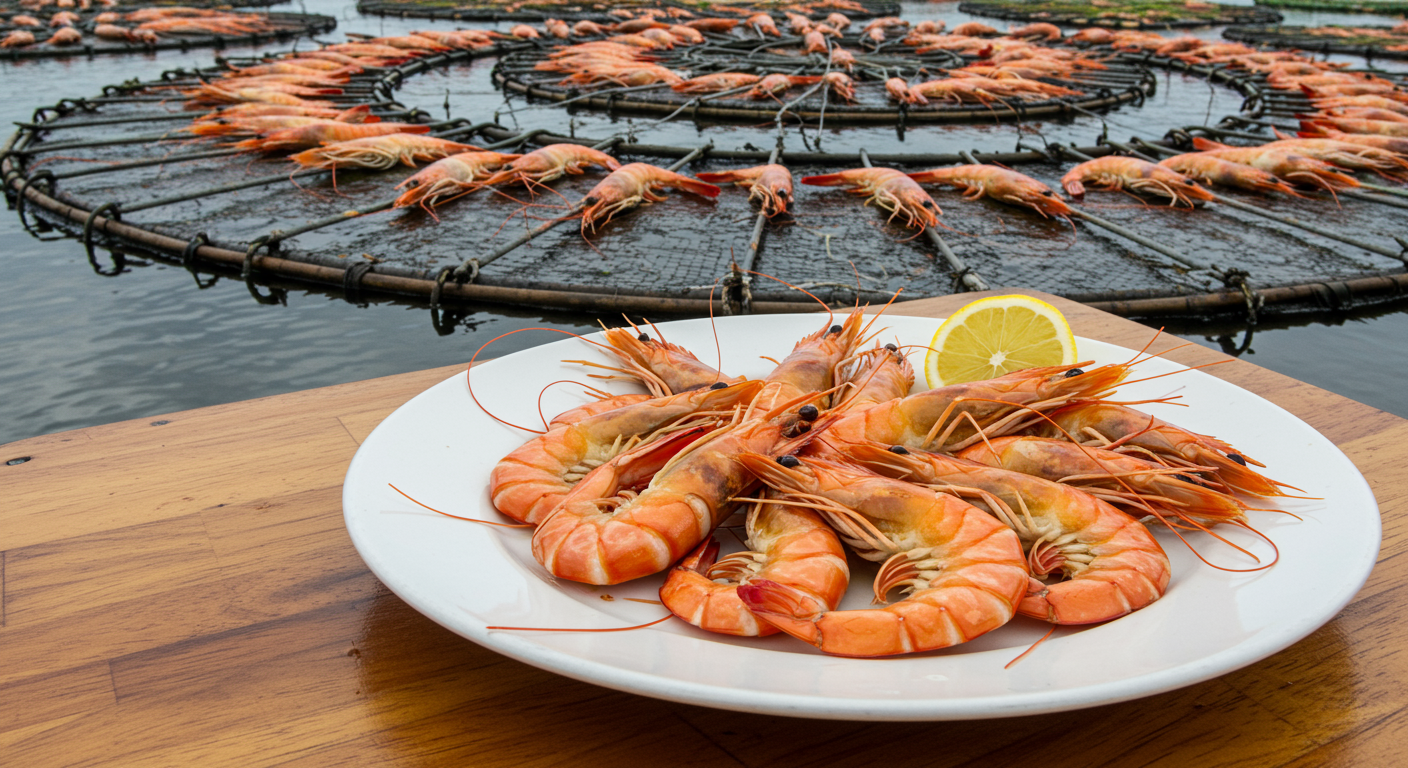
Ecuadorian shrimp appears on menus, in seafood cases, and across global foodservice for a simple reason: Ecuador is one of the world’s leading shrimp producers and exporters. For diners, that matters because origin is often part of the quality story. In Ecuador’s case, though, that story is usually less about wild catch and more about aquaculture, processing, cold-chain handling, and export logistics.
Origin alone does not tell you everything. What arrives on the plate depends just as much on harvesting, packing, transport, storage, and kitchen execution. Still, understanding how Ecuadorian shrimp moves from farm to table can help diners and restaurant buyers ask better questions.
Where Ecuador’s Shrimp Comes From
Most shrimp in Ecuador’s seafood supply chain is farm-raised in coastal aquaculture systems. The country’s geography and climate support year-round production, which helps explain both the scale and consistency of its shrimp output. That production base has made Ecuador a major player in international seafood trade.
For consumers, this distinction matters. Terms like fresh and local can be used loosely in restaurant settings, but Ecuadorian shrimp is typically part of a longer commercial chain. It usually begins on farms, moves through processing and export, and then reaches overseas distributors, retailers, or restaurants.
From Farm to Processing to Export
The route from farm to table usually starts with hatcheries and grow-out ponds, where shrimp are raised to market size. After harvest, the shrimp move to processing facilities for sorting, cleaning, grading, packing, and chilling or freezing. From there, they enter a cold chain designed to preserve quality during domestic transport and international shipment.
This supply-chain structure helps explain why Ecuadorian shrimp is so common in global markets. Large-scale production and export capacity make it easier for importers, wholesalers, and restaurant groups to buy consistent volumes. For diners, that means the shrimp on a menu may have traveled far, but it may also have passed through a highly organized handling system.
That handling is critical. Texture, flavor, and overall eating quality can be shaped by how quickly shrimp is processed after harvest, how consistently it is kept cold, and how carefully it is thawed and cooked before service.
What Restaurants and Diners Should Look For
When a menu lists shrimp without much detail, origin is only one clue. A more useful question is whether the restaurant or supplier can explain where the shrimp came from, whether it was farmed, and how it was handled before reaching the kitchen.
Buyers often focus on traceability, harvest and packing discipline, and supplier transparency. Diners can use a simpler version of that same approach by asking a few practical questions:
- Is the shrimp farm-raised or wild-caught?
- What country was it sourced from?
- Was it previously frozen?
- Does the restaurant work with a known seafood supplier?
- Are there any certification or sourcing standards behind it?
In many cases, the best quality cues come less from origin alone and more from the sourcing discipline behind the product. A well-handled imported shrimp can easily outperform a poorly handled one from almost anywhere.
Certification, Sustainability, and Claims to Treat Carefully
Sustainability claims deserve careful reading. Ecuadorian shrimp is a large and varied category, and not every producer follows the same farming practices or carries the same certifications. Broad statements about environmental performance, labor practices, or food safety can oversimplify a complex industry.
For that reason, restaurants and consumers should treat marketing language cautiously unless it points to a recognized standard or specific supplier documentation. Certification may be relevant in some cases, but it should be verified rather than assumed from country of origin alone.
The same caution applies to menu storytelling. A label like responsibly sourced means more when it is backed by traceable information, a known supplier relationship, or a recognized certification framework.
How to Read Ecuadorian Shrimp on a Menu
If you see Ecuadorian shrimp on a menu, the most useful takeaway is not simply that it came from Ecuador. It is that the shrimp likely comes from a farmed production system built around aquaculture, processing, export logistics, and cold-chain management.
For diners, origin is one useful signal alongside size, texture, freshness, preparation, and the reputation of the kitchen serving it. Ask whether the shrimp is farmed, where it was sourced, and how it was handled. Those answers often reveal more than a menu adjective ever will.
From farm to table, Ecuadorian shrimp is ultimately a story about scale, logistics, and transparency. The better the sourcing and handling, the better the chances that story ends well on the plate.