Scallops in Ecuador: Where They Come From and How They're Harvested
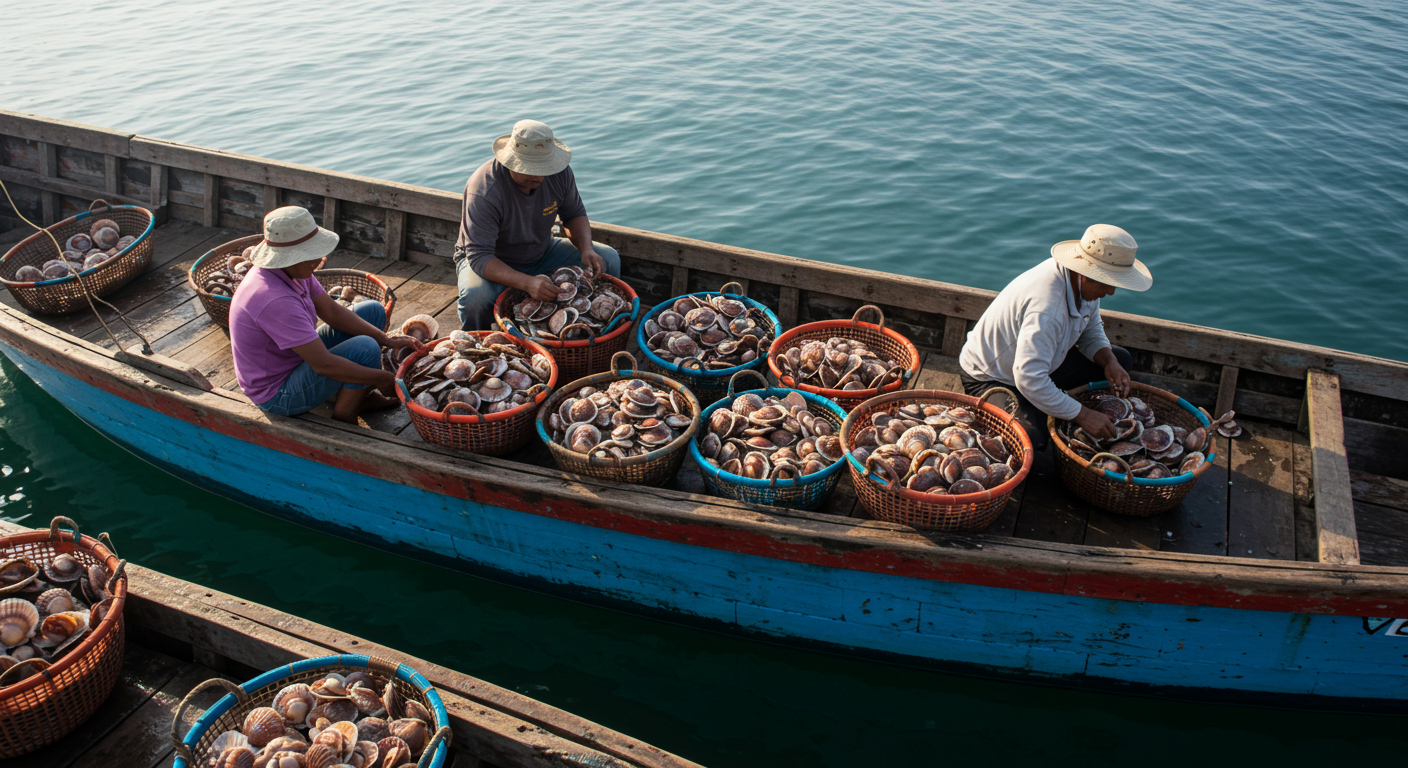
Ecuador's Pacific coastline stretches over 2,000 kilometers, offering some of the most productive scallop waters in South America. The country has become a major player in global scallop production, combining time-tested harvesting methods with modern aquaculture techniques to meet growing demand both at home and abroad.
Ecuador's Prime Scallop Waters
The Ecuadorian coast benefits from unique oceanographic conditions that make it ideal for scallop cultivation. The convergence of warm and cool ocean currents creates nutrient-rich waters that support abundant marine life, including the prized Peruvian bay scallop (Argopecten purpuratus).
Key production regions span from Esmeraldas in the north down to Santa Elena province in the south. The provinces of Manabí and Santa Elena are particularly important, with their protected bays and estuaries providing optimal conditions for both wild scallop populations and aquaculture operations.
Water temperatures along this coast typically range from 18-26°C year-round, while upwelling currents bring essential nutrients from deeper waters. These conditions, combined with relatively shallow coastal areas, create the perfect environment for scallop growth and reproduction.
Two Approaches: Wild Harvest vs. Aquaculture
Ecuador's scallop industry operates through two primary methods: traditional wild harvesting and increasingly sophisticated aquaculture operations.
Wild scallop harvesting relies on free divers who can descend 15-20 meters to collect scallops from natural beds. These skilled divers, known locally as buzos, use simple equipment and can harvest dozens of scallops in a single dive. Some operations also employ dredging techniques in deeper waters, though this method is less common due to environmental concerns.
Aquaculture has transformed Ecuador's scallop production since the 1980s. Farmers use suspended cultivation methods, growing scallops in mesh bags or on ropes attached to floating platforms. This controlled environment allows for higher survival rates and more predictable harvests.
Production follows natural seasonal patterns, with peak harvesting typically occurring during cooler months when scallops reach optimal size and condition. A complete growth cycle from seed to market-ready scallop usually takes 8-12 months in Ecuador's favorable conditions.
The Harvesting Process
Scallop harvesting begins before dawn, as fishing crews head out in small boats called pangas or larger vessels depending on the operation size. Wild harvest divers work in teams, with one person diving while others manage the boat and collect the catch.
Equipment is relatively simple but effective: diving masks, fins, collection nets or bags, and sometimes basic breathing apparatus for deeper dives. Experienced divers can identify prime scallop beds and select specimens of optimal size, leaving smaller ones to continue growing.
Aquaculture harvesting involves retrieving the suspended cultivation systems and sorting scallops by size and quality. This method allows for more selective harvesting and better inventory management.
Immediately after collection, scallops undergo initial processing on the boat or at nearby facilities. Workers clean the shells, remove debris, and often shuck the scallops on-site to preserve freshness. Proper temperature control during this phase is crucial for maintaining quality.
From Coast to Market
Ecuador's scallops follow two main distribution channels: domestic consumption and international export.
Locally, fresh scallops appear in coastal markets within hours of harvest. Cities like Manta, Guayaquil, and coastal towns throughout Manabí province feature scallops prominently in their cuisine. Popular preparations include concha asada (grilled scallops) and various ceviche dishes.
The export industry has grown substantially, with Ecuadorian scallops reaching markets in the United States, Europe, and Asia. Processing facilities along the coast handle cleaning, packaging, and freezing for international shipments. These operations must meet strict food safety and quality standards for export certification.
The economic impact extends beyond the harvesters themselves. Coastal communities benefit from processing jobs, transportation services, and supporting businesses. Many families depend directly or indirectly on scallop production for their livelihoods.
Sustainability and Future Challenges
Ecuador has implemented various regulations to ensure sustainable scallop production. Size limits, seasonal restrictions, and area closures help protect breeding populations and maintain ecosystem balance.
According to the Food and Agriculture Organization, the government works with industry associations to monitor harvest levels and water quality. Marine protected areas have been established in key breeding zones, while aquaculture operations must comply with environmental impact assessments.
Climate change presents ongoing challenges, as shifting ocean temperatures and currents could affect scallop populations. El Niño and La Niña events already cause significant variations in annual production, requiring adaptive management strategies.
Ocean acidification and pollution concerns also influence long-term planning. Many producers are investing in more sustainable practices and exploring ways to reduce environmental impacts while maintaining economic viability.
The industry continues to balance economic opportunities with environmental responsibility, working toward a future where Ecuador's scallop resources can support both thriving marine ecosystems and prosperous coastal communities.