Pacific Flavors in the Andes: How Ceviche and Encebollado Reach Cuenca’s Tables
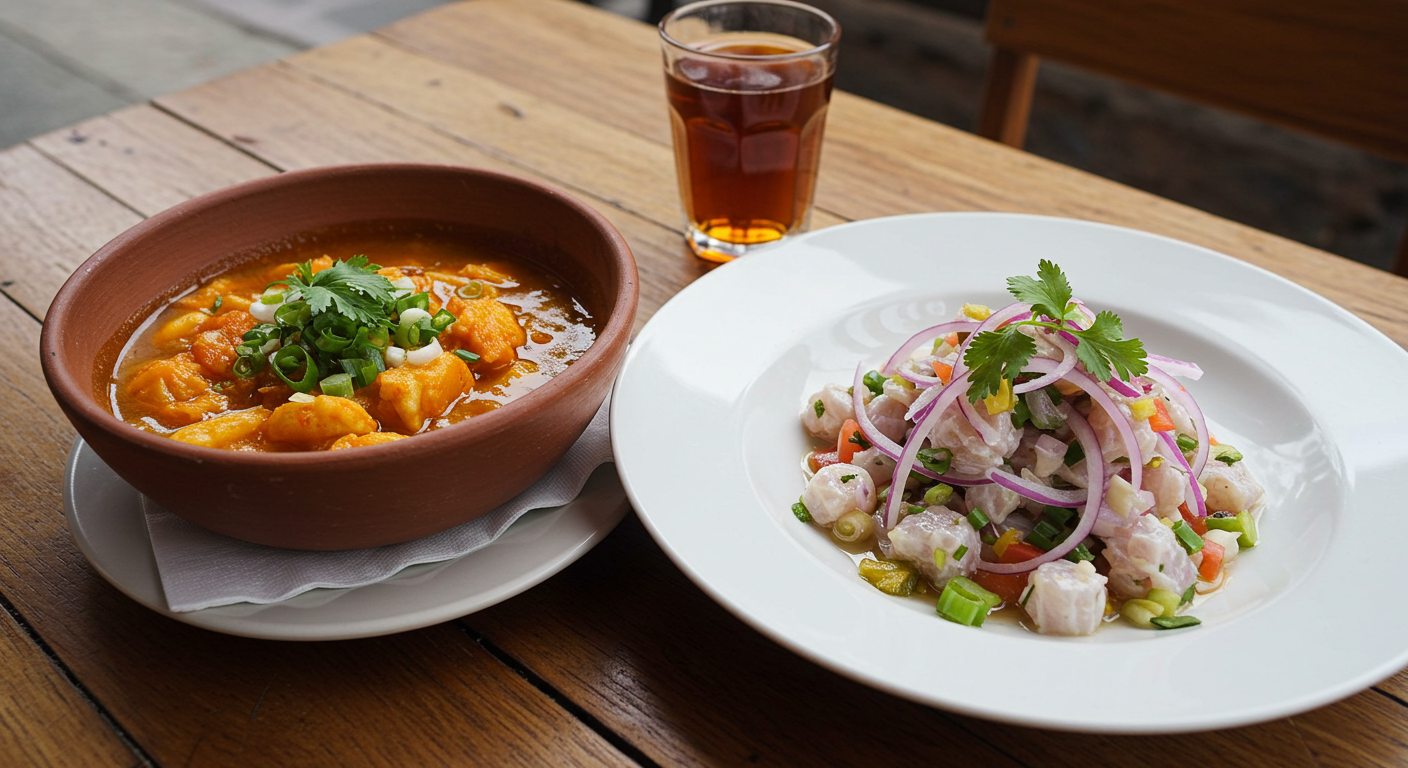
There is something immediately striking about sitting down to a cold seafood ceviche or a steaming bowl of encebollado in Cuenca. The city is known for its Andean setting, historic center, and cool mountain air, not for surf, fishing docks, or salt on the breeze. Yet some of Ecuador’s most recognizable coastal dishes appear here with complete ease, reminding diners that a national cuisine does not stay neatly confined to one region.
That contrast is part of the appeal. In a city roughly 2,500 meters above the Pacific, ceviche and encebollado feel both familiar and transporting. They offer more than a meal; they provide a sensory shortcut to another part of the country through bright citrus, sliced onion, herbs, seafood, and broths that evoke the coast even when served far inland.
What ceviche and encebollado mean in Ecuador
Ceviche holds a strong place in Ecuadorian food culture as a seafood staple closely associated with the coast. Depending on the kitchen, it can be refreshing, briny, citrusy, and generously dressed, often arriving with familiar accompaniments that make it feel casual and celebratory at the same time.
Encebollado carries a different kind of emotional weight. Widely regarded as one of Ecuador’s most beloved soups, it is hearty, savory, and deeply tied to everyday eating. For many people, it is comfort food as much as a regional specialty, the kind of dish that travels easily in the national imagination because it is already embedded in routines, cravings, and shared references.
Together, the two dishes show how Ecuadorian cuisine moves across geography. They may be rooted in coastal traditions, but their popularity beyond the shoreline reflects a broader national identity shaped by regional exchange.
How these dishes make sense in Cuenca
In practical terms, serving seafood in an Andean city depends on the basics diners expect any good restaurant to take seriously: transport, refrigeration, kitchen handling, and consistent preparation. Without direct reporting from individual suppliers or restaurateurs, it is best not to overstate the exact route from coast to table. For diners, what matters most is how well a restaurant handles the ingredients once they arrive.
That is where freshness becomes less a romantic idea and more a question of practice. A well-run seafood kitchen depends on proper storage, careful timing, steady turnover, and confident seasoning. In other words, the success of ceviche and encebollado in Cuenca is not only about the distance from the ocean. It is also about whether the restaurant can deliver the brightness, texture, and balance those dishes demand.
For diners, the result is often less about supply-chain mystery than about trust. If a bowl tastes clean, lively, and well composed, or if a ceviche arrives with the right snap of onion and acidity, the geographic surprise becomes part of the pleasure rather than a source of doubt.
What diners actually encounter
On the table, these dishes can feel vividly coastal even in the mountains. Ceviche brings citrus, seafood, herbs, and the refreshing contrast of cool liquid against Cuenca’s mild air. Encebollado offers a different kind of satisfaction: warmth, depth, and the unmistakable comfort of a substantial broth layered with onion and seafood character.
Menus in Cuenca may also reflect local dining preferences through portion size, accompaniments, or presentation. Some places lean generous and home-style, while others serve these classics in a more polished restaurant format. That flexibility is part of why the dishes travel so well. They remain recognizably Ecuadorian while still adapting to different dining rooms and expectations.
There is also a simple pleasure in ordering a coastal favorite in a city better known for churches, plazas, and highland views. The meal carries a note of contrast: a taste associated with the Pacific enjoyed in a place defined by altitude.
The “record-sized” encebollado angle
The idea of a “record-sized” encebollado is best understood as promotional or anecdotal unless it is tied to a clearly verifiable event. In restaurant language, oversized servings and superlative descriptions often work as part of the invitation. They promise spectacle, abundance, and a story worth retelling.
Used that way, the phrase still has value. It suggests hospitality and theatricality, the sort of bowl ordered partly out of appetite and partly for the experience. But without firm confirmation, it is better read as colorful local framing than as an established record in any formal sense.
Why this resonates beyond novelty
What makes the story interesting is not only that seafood dishes appear in a mountain city. It is that they feel so natural once they are there. Ceviche and encebollado show how easily Ecuador’s regional foods can travel while still keeping their original associations intact.
In Cuenca, that means diners can enjoy dishes that point clearly toward the coast without leaving the Andes. That combination gives the experience its appeal: Pacific-rooted flavors served high above sea level, familiar enough to crave and distinctive enough to remember.