How Safe Is Seafood in Ecuador Compared to Other Countries?
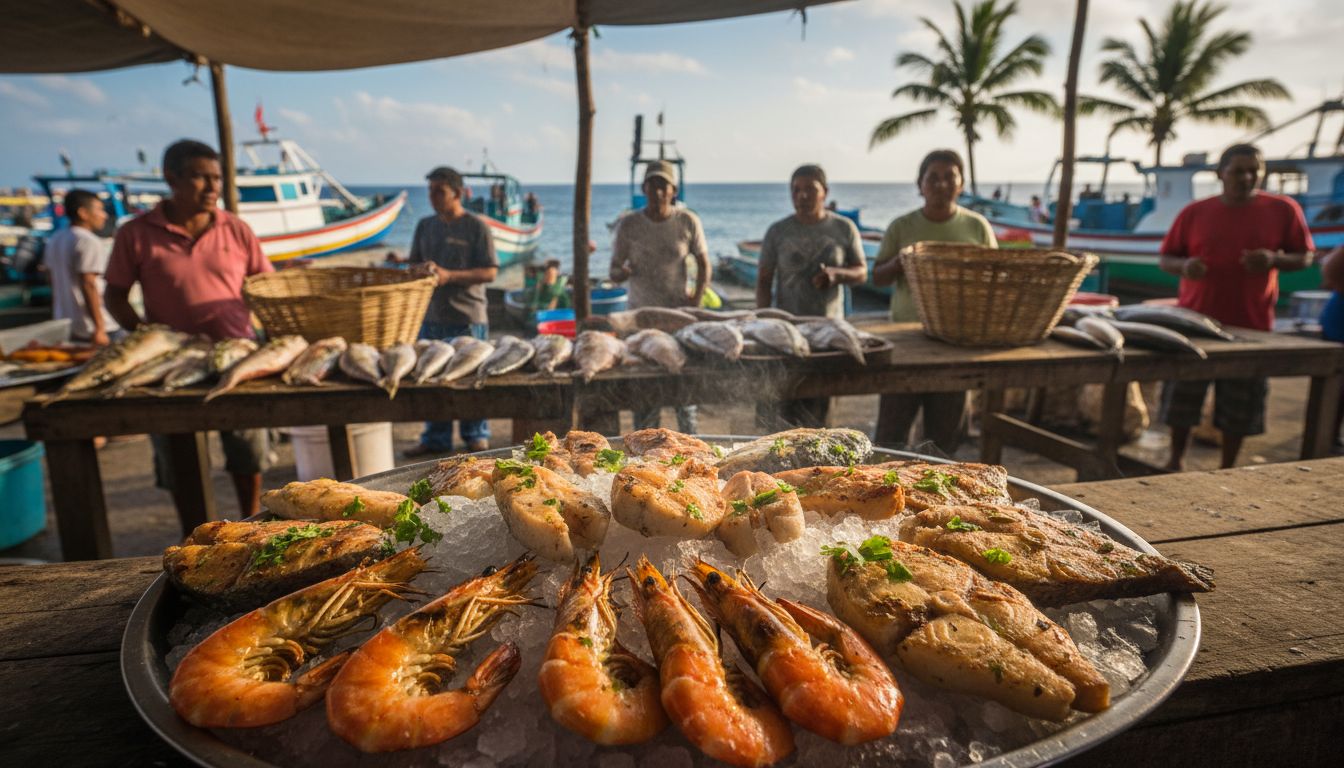
How Safe Is Seafood in Ecuador Compared to Other Countries?
Ecuador has become an increasingly popular destination for seafood lovers, with ceviche, fresh shrimp, and the daily catch featured prominently on menus from coastal towns to mountain cities like Cuenca. With that popularity comes a natural question for travelers and residents alike: how does seafood safety in Ecuador actually compare to what diners experience in the US or Europe?
This is a harder question to answer than it might seem. Direct, publicly available data on seafood-related illness or inspection outcomes specific to Ecuador is limited. Instead, a more reliable comparison can be built by looking at the regulatory frameworks that govern seafood entering major international markets, then weighing that against what's known about Ecuador's own oversight system.
Why Travelers Ask This Question
Concerns about contamination, improper handling, and foodborne illness are common whenever people eat seafood while traveling, regardless of destination. Raw or lightly cooked preparations like ceviche add another layer of caution, since these dishes rely heavily on freshness and proper handling rather than cooking to eliminate pathogens.
Because comprehensive incident-level data for Ecuador isn't readily available in public reporting, a useful approach is to frame the comparison around regulatory benchmarks, specifically the standards Ecuadorian seafood must meet to be exported to the US and EU, rather than attempting a direct statistical comparison of illness rates.
How Seafood Safety Is Measured Globally
International bodies like the World Health Organization and the US Centers for Disease Control and Prevention publish general food safety and traveler health guidance that applies broadly to seafood consumption worldwide. These frameworks typically focus on a few key risk categories:
- Bacterial contamination from improper storage or handling
- Biotoxins, particularly in shellfish
- Heavy metal accumulation in certain fish species
- Parasitic risks, especially in raw or undercooked preparations
These categories serve as a consistent baseline for evaluating seafood safety in any country, including Ecuador, even when country-specific incident data is sparse.
US Standards: The FDA's Seafood Import Framework
The US Food and Drug Administration requires imported seafood, including products from Ecuador, to meet Hazard Analysis and Critical Control Point (HACCP) standards. This system mandates that exporters identify and control specific risk points throughout processing and handling, backed by FDA inspection protocols.
In practical terms, this means Ecuadorian seafood reaching US shelves has passed a defined compliance bar focused on contamination control, traceability, and documented handling practices. This doesn't speak to domestic consumption within Ecuador, but it does establish that the country's seafood industry is capable of meeting internationally recognized safety standards when export markets require it.
EU Standards: EFSA's Risk-Based Benchmarks
The European Food Safety Authority applies a somewhat different, risk-based model, with particular attention to biotoxins, heavy metals, and parasitic contamination in seafood. EU import requirements also emphasize traceability throughout the supply chain, often with more granular documentation requirements than their US counterparts.
As an export partner to European markets, Ecuador's seafood industry must also align with these EFSA-driven expectations. Taken together, FDA and EFSA compliance suggest that Ecuador's export-oriented seafood sector operates under meaningful international oversight, even if that oversight doesn't extend uniformly to every corner of the domestic market.
Ecuador's Domestic Regulatory Landscape
Within Ecuador, the Ministry of Production, Foreign Trade, Investment and Fisheries serves as the official body overseeing fisheries and aquaculture. This agency plays a role analogous to fisheries regulators elsewhere, though publicly available inspection results or incident reports comparable to FDA or EFSA databases are not readily accessible in current research.
This gap matters. It means that while Ecuador's export sector is measurably held to international standards, assessing on-the-ground safety at local markets, street vendors, or smaller restaurants is considerably more difficult using publicly available data alone.
What We Can (and Can't) Conclude From the Data
The clearest takeaway is that Ecuadorian seafood destined for export, particularly to the US and EU, must meet recognized international compliance standards. This is a meaningful indicator of baseline safety capability within the industry.
What's less clear is how closely domestic consumption mirrors those export standards. Local markets, roadside stands, and smaller restaurants operate with less visible regulation and less documentation. The absence of widely reported seafood safety incidents in Ecuador should not be interpreted as proof that domestic practices match export-grade standards; it may simply reflect limited public reporting rather than an absence of risk.
Practical Guidance for Diners in Ecuador
Given these uncertainties, practical precautions remain the most useful tool for diners:
- Favor establishments with visible hygiene practices and high customer turnover, which generally correlates with fresher product and more consistent handling
- Exercise additional caution with raw preparations like ceviche at lower-traffic or informal venues
- Follow general traveler food safety guidance applicable to any seafood-heavy destination, such as being cautious with unrefrigerated displays
These are the same common-sense precautions recommended by health agencies for seafood consumption in many countries, not unique warnings specific to Ecuador.
The Bottom Line
Ecuador's export seafood sector is held to internationally recognized standards through FDA and EFSA compliance, which offers a reasonable degree of confidence in products meeting those specific regulatory bars. However, domestic seafood safety practices remain under-documented in available sourcing, making direct safety comparisons to the US or EU inferential rather than fact-based.
Diners and travelers should treat claims about Ecuador's comparative seafood safety with appropriate caution, applying standard food safety precautions rather than assuming either exceptional risk or exceptional safety based on limited available data.