Gallo Caldo, Champús, and Mote: Andean Harvest Flavors of Ecuador’s San Pedro Season
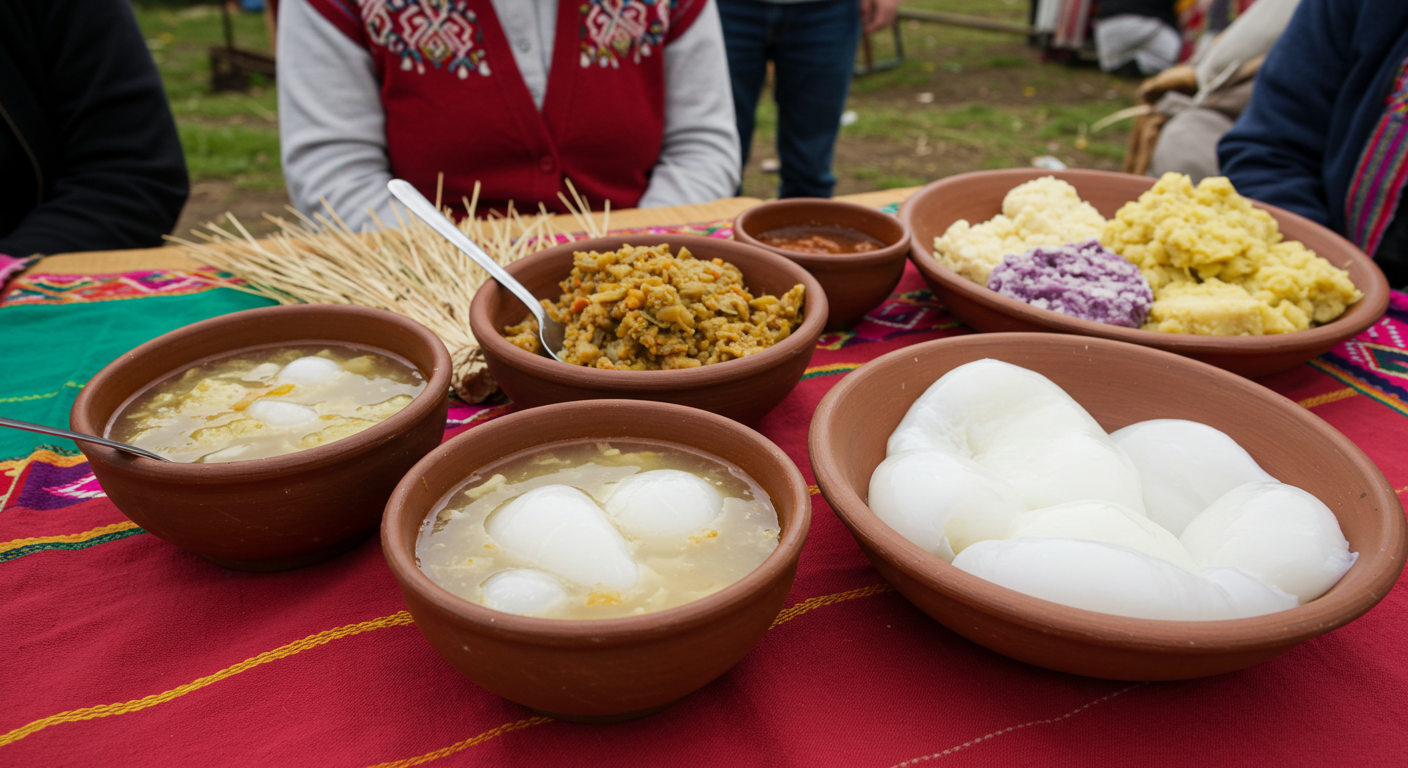
San Pedro fiestas in Ecuador are not defined by a single national menu. In the highlands, celebrations can change from town to town, with local crops, family cooking habits, and parish traditions shaping what appears on the table. Even so, foods such as gallo caldo, champús, and mote belong in the conversation because they reflect a broader Andean tradition of communal eating, seasonal abundance, and generous hospitality.
That distinction matters. Rather than treating these dishes as universal to every San Pedro celebration, it is more accurate to see them as part of a wider highland festive repertoire. They suit the mood and purpose of communal gatherings: warming, filling, and closely tied to the ingredients and cooking patterns of the Andes.
The Andean harvest table: corn, warmth, and communal cooking
Across Ecuador’s mountain regions, festive food traditions often center on practical abundance. Corn in its many forms, substantial broths, and large-batch preparations all lend themselves to feeding groups during religious feasts, neighborhood events, and family gatherings. These dishes and drinks are made not only to nourish, but also to bring people together through shared preparation and serving.
Mote offers one of the clearest entry points into that culinary world. As boiled mature corn, it is both simple and foundational, a staple that connects everyday cooking to feast-day meals. Around it, richer and more celebratory dishes can take shape, while drinks like champús add sweetness, aroma, and a sense of occasion.
Seen together, mote, champús, and gallo caldo show how highland cuisine balances comfort with ceremony. None needs elaborate presentation to feel festive; their importance comes from familiarity, labor, and the way they support gathering on a generous scale.
Mote, the corn staple that anchors the feast
Mote is one of the most recognizable staples in Andean cooking, often described as boiled hominy-style corn. Its texture is tender but substantial, and its mild flavor makes it easy to pair with a wide range of foods. In Ecuadorian highland kitchens, it can appear on its own, beside meats, alongside soups, or as part of a larger celebratory spread.
What makes mote especially meaningful in seasonal and festive contexts is its connection to agricultural continuity. Corn has long been central to Andean foodways, and mote expresses that heritage in a direct, unadorned form. It can signal abundance without extravagance, reminding diners that staple ingredients often carry the deepest cultural memory.
For a feast table, mote also makes practical sense. It is sustaining, adaptable, and easy to pair with stronger flavors. In communal settings, that versatility helps explain why it remains such an enduring presence in highland cooking.
Champús, the festive drink with many local accents
Champús is one of those celebratory drinks that resists a single definition. Depending on the region, household, or cook, it may vary in thickness, sweetness, fruit character, spice profile, and grain content. Some versions lean more aromatic and fruity, while others emphasize a denser, more textured body.
That variation is part of its identity. Champús is less a rigid recipe than a traditional category of festive beverage, shaped by local ingredients and inherited preferences. In Ecuador and across the Andes, this kind of fluid tradition is common: the drink remains recognizable even as the formula changes.
Its role in celebratory settings is easy to understand. Champús often requires time, attention, and a sense of balance in preparation, which gives it a special-occasion aura. Served cold or cool, depending on style, it can bring contrast to heavier savory foods while still feeling deeply rooted in the same agricultural and communal landscape.
Gallo caldo and the appeal of a hearty communal bowl
Gallo caldo represents another side of the festive table: warmth, nourishment, and the comfort of a deeply flavored bowl served to many people. Though preparations can differ, the dish is generally understood as a robust soup or stew, the kind of food that feels especially at home in cooler highland climates and communal gatherings.
Its appeal during fiesta season is practical as much as culinary. A hearty caldo can be prepared in quantity, served efficiently, and appreciated across generations. It offers depth, warmth, and satiety, all qualities that matter when celebrations stretch across long hours and move between ritual, music, and social visiting.
As with the other dishes in this trio, any direct association with San Pedro should be understood through local custom rather than national uniformity. In some places, a dish like gallo caldo may feel especially linked to festivities; in others, it may simply belong to the broader repertoire of gathering foods that naturally appear on feast days.
How local fiestas shape what gets served
One of the most important things to understand about Ecuadorian San Pedro celebrations is that they are local by nature. A town’s agricultural base, devotional traditions, household economies, and community history can all influence what is cooked and shared. That means the food of one parish fiesta may not match the food of another, even when the calendar occasion is similar.
This localism is not a contradiction but a strength. It helps explain why foods like mote, champús, and gallo caldo can feel relevant to San Pedro season without needing to form an official or universal trio. They belong to the wider highland vocabulary of celebration, where staple crops, communal labor, and inherited tastes matter more than rigid standardization.
For diners and readers, this is a useful lens: instead of asking whether one dish is the definitive San Pedro food, it is often better to ask what each dish reveals about the place serving it. The answer often lies in local harvest rhythms, family memory, and the practical wisdom of feeding a crowd well.
What diners should notice when encountering these foods today
For anyone exploring Ecuador’s Andean table, these foods reward close attention. Mote offers quiet depth through texture and accompaniment rather than bold seasoning. Champús stands out for its layered aroma, sweetness, and grain-fruit interplay, especially when a recipe carries a distinctly local signature. Gallo caldo, meanwhile, shows its character through broth, body, and the slow-building comfort of a dish designed to satisfy fully.
Contemporary restaurants, markets, and home-style kitchens may all interpret these traditions a little differently. Some presentations may be more polished, others more rustic, but the core identity usually remains intact: nourishment, generosity, and a connection to highland food memory.
Taken together, gallo caldo, champús, and mote offer more than a list of traditional items. They open a window onto Ecuador’s Andean way of celebrating through food, especially at moments when harvest, community, and festivity come together around the same table.