Egg Prices Hit $4.75 a Crate in Cuenca as Ecuador's Laying-Hen Flock Shrinks by Millions
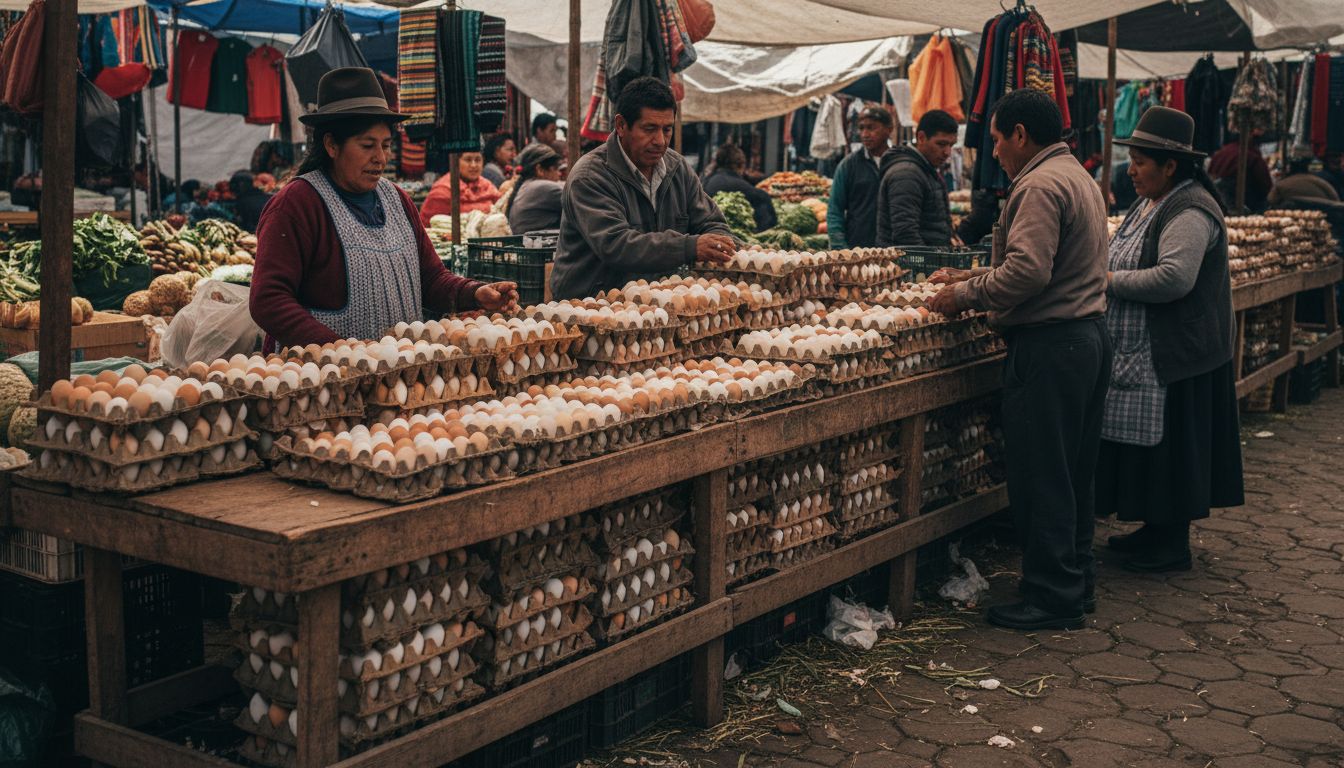
Shoppers in Cuenca have been feeling it at the checkout counter for weeks: a cubeta, the standard crate of 30 large eggs, now costs as much as $4.75 at some retail points, up from roughly $3.30 just a short time earlier. The increase has been steady rather than sudden, and local vendors describe it as part of a broader squeeze on household food budgets that extends well beyond eggs.
Egg Prices Hit Record Highs Across Ecuador, With Cuenca Feeling the Squeeze
By late September, cubeta prices in Cuenca and other Ecuadorian markets had climbed to between $4.50 and $4.75 at retail. Farm-level prices also rose, reaching $3.80 during the fourth week of September. Many observers note that this marks the highest pricing seen since October 2023, when a comparable spike pushed crates to around $4.08. The scale and persistence of the current increase have made it a recurring topic among vendors, producers, and shoppers alike.
What's Driving the Shortage: A Shrinking Laying-Hen Flock
At the center of the price increase is a contraction in Ecuador's laying-hen population, which industry sources estimate fell from approximately 17 million birds to somewhere between 14 and 15 million. That decline has reduced daily egg production to an estimated 12 to 13 million eggs nationwide, down from prior levels. Figures from the industry association CONAVE indicate that national egg production fell from 3,815 million eggs in 2024 to 3,544 million in 2025, a drop consistent with the reported flock reduction.
Producers reportedly scaled back flock repopulation following an earlier period of oversupply and financial losses, choosing not to reinvest in new birds at previous levels. Because a hen needs roughly five months to reach laying maturity, any decision to rebuild the flock now would take time to translate into more eggs on store shelves, suggesting the current shortage may not ease quickly.
Rising Costs Squeeze Producers From Multiple Directions
Producers also point to higher input costs as a compounding pressure. Feed costs tied to corn, soy, and palm oil have pushed production costs per cubeta from an estimated $2.60-$2.70 up to nearly $3.00. Transport costs add further strain on producers and distributors trying to move product to market.
A recurring concern among those following the sector is the anticipated arrival of El Niño conditions, which could affect corn production along Ecuador's Coast. If that materializes, it could prolong elevated feed costs and further delay any meaningful price relief, though the extent of this impact remains uncertain and forward-looking.
Export Diversion and Cross-Border Trade: A Contested Factor
Accounts of the crisis diverge on how much weight to give cross-border trade as a contributing cause. Some reporting has pointed to informal trade diverting eggs toward Peru and Colombia as a meaningful drain on domestic supply, a factor some observers describe using the term "contrabando," or informal cross-border movement of goods.
Other reporting, drawing more heavily on producer interviews, explicitly downplays the role of export diversion and speculation, instead favoring a straightforward supply-and-demand explanation rooted in the shrinking flock and rising costs. This divergence suggests the full picture may involve multiple overlapping factors, with no single account able to claim definitive authority on which cause matters most. Readers should treat the export-diversion claims as a contested and not fully verified part of the story rather than an established fact.
Beyond Eggs: Cuenca's Broader Cost-of-Living Pressure
Local reporting in Cuenca suggests the egg price spike is not an isolated phenomenon. Vendors have also described sharp increases in other staples: a sack of carrots reportedly rose from $8 to $12, and cilantro from $10 to $18, both within a two-week span. Many observers see this as evidence of a wider pattern of supply-chain and climate-related pressure on regional food costs, rather than a problem specific to poultry alone.
For households already managing tight budgets, vendors and producers describe a compounding effect: as multiple staple prices rise simultaneously, the strain becomes more difficult to absorb than any single price increase would be on its own.
What Comes Next for Ecuador's Egg Supply
Any recovery in supply is likely tied to the roughly five-month maturation window required for newly repopulated flocks to begin laying. Should producers move to rebuild their hen populations in response to current prices, meaningful supply relief would not be expected for several months at minimum.
The trajectory of El Niño and its potential effect on Coastal corn production remains a key variable that could either ease or extend the current feed-cost pressures. Likewise, it remains unclear whether cross-border trade dynamics will continue to compound domestic shortages or diminish as a factor. For now, consumers in Cuenca and across Ecuador are likely to continue facing elevated egg prices, with the broader question of staple food affordability remaining an active concern for shoppers and small producers alike.